 |
 |
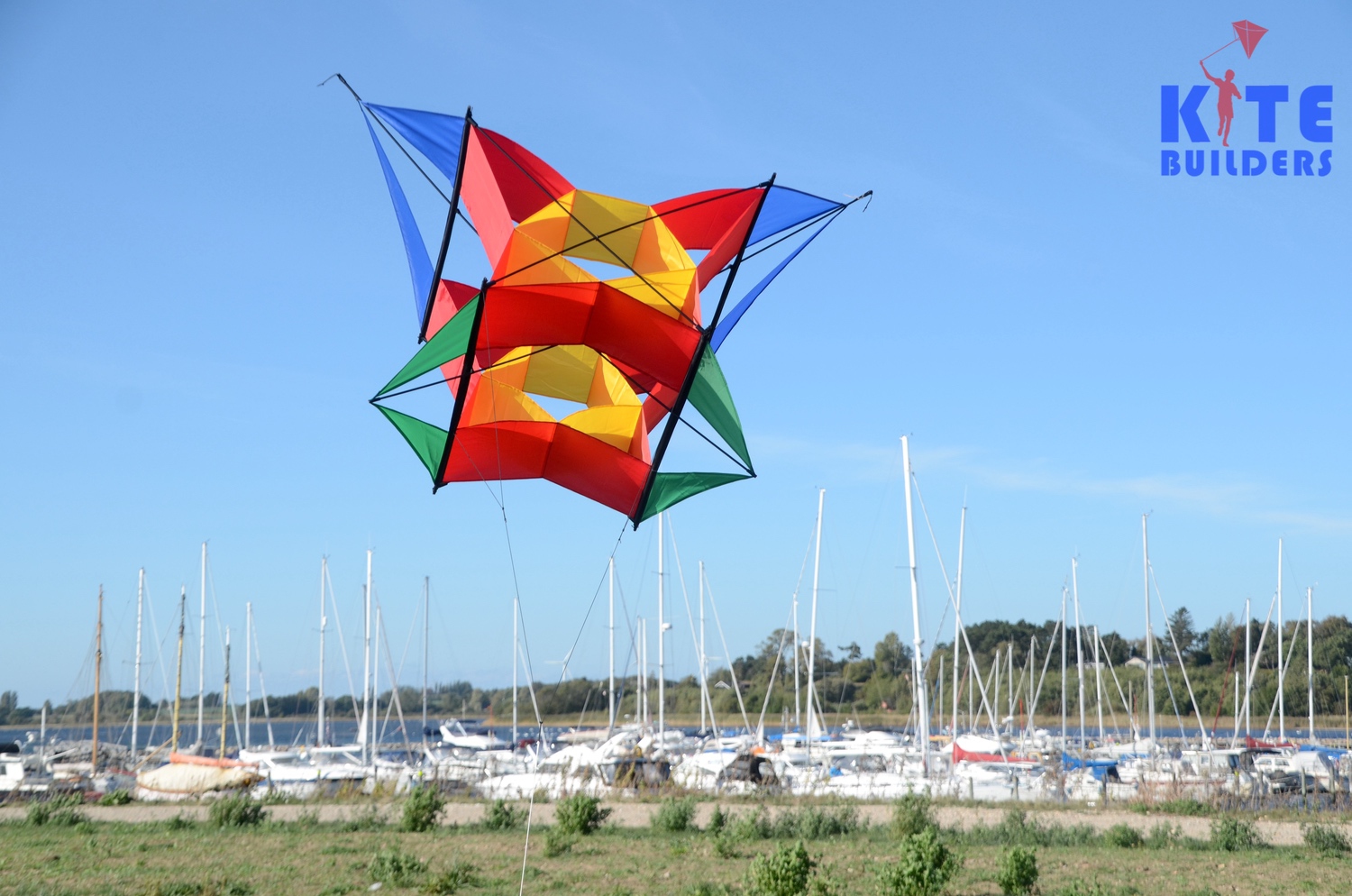
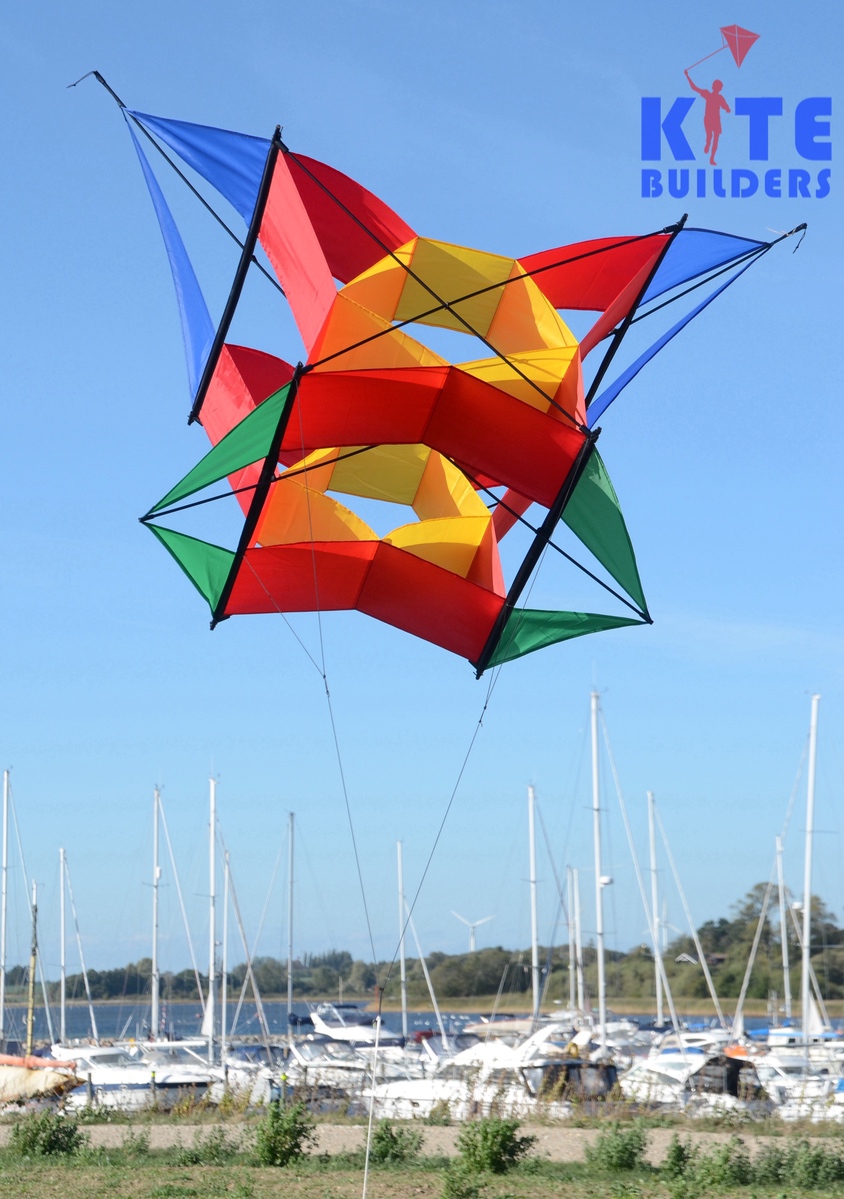
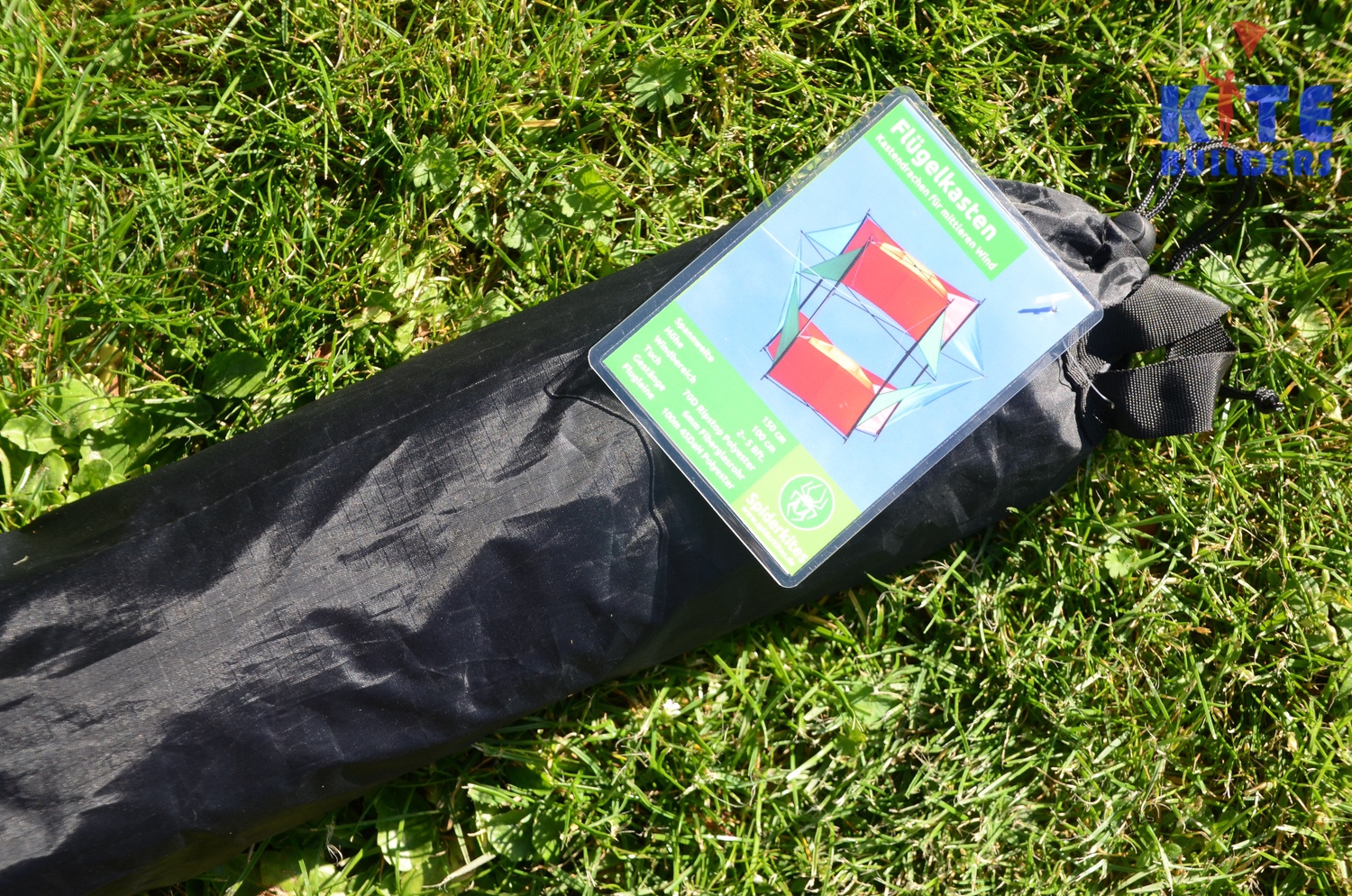
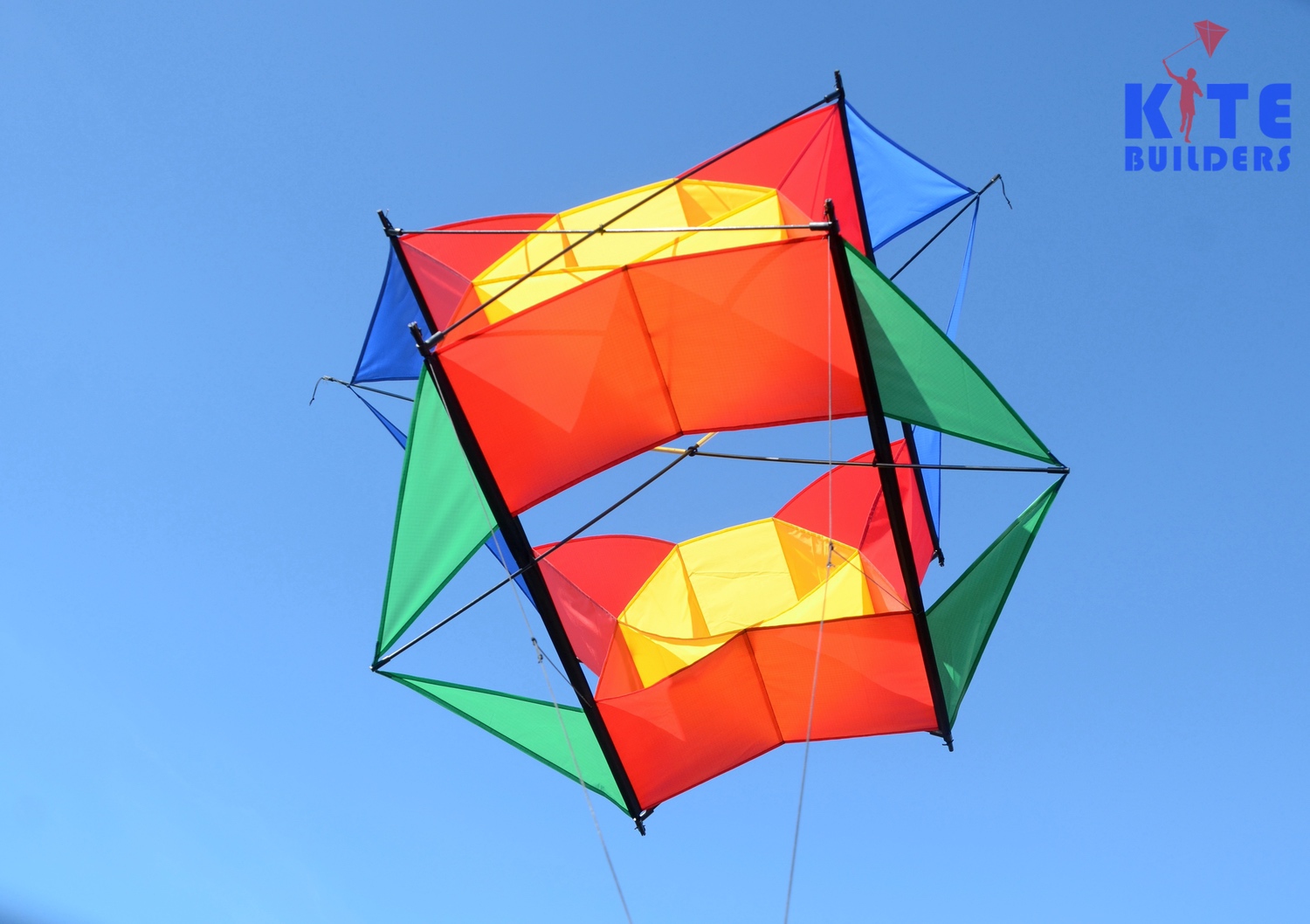
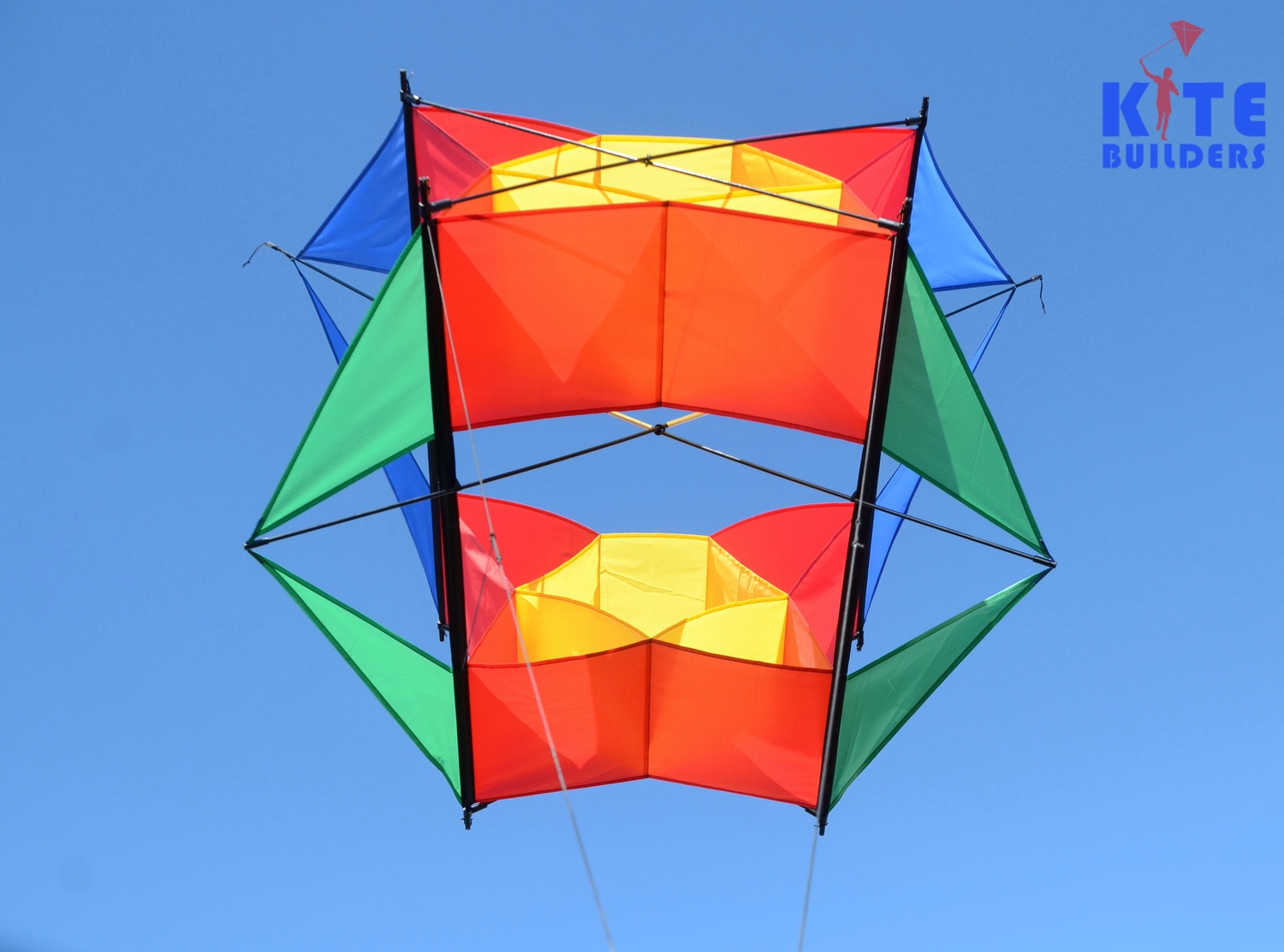
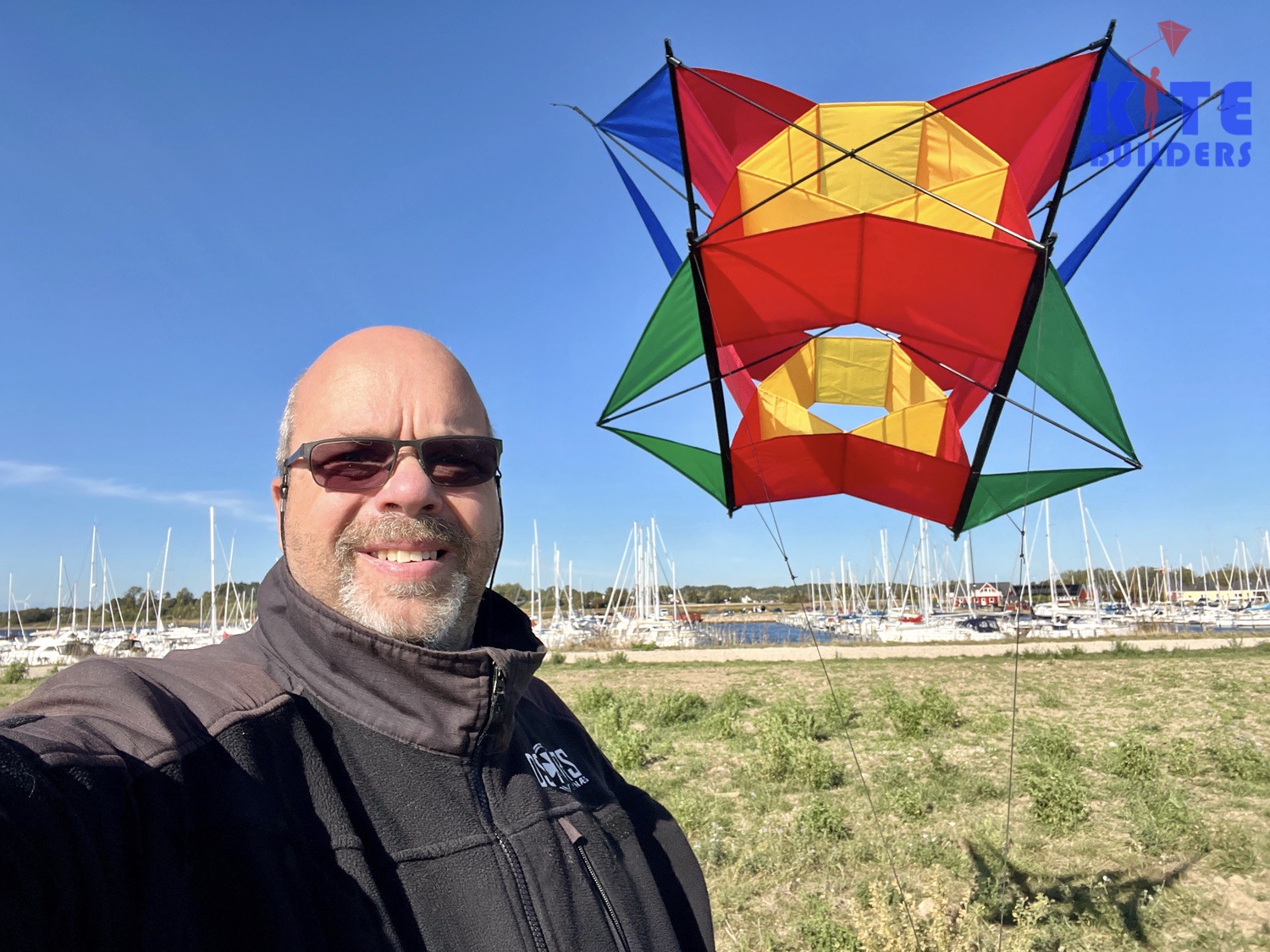
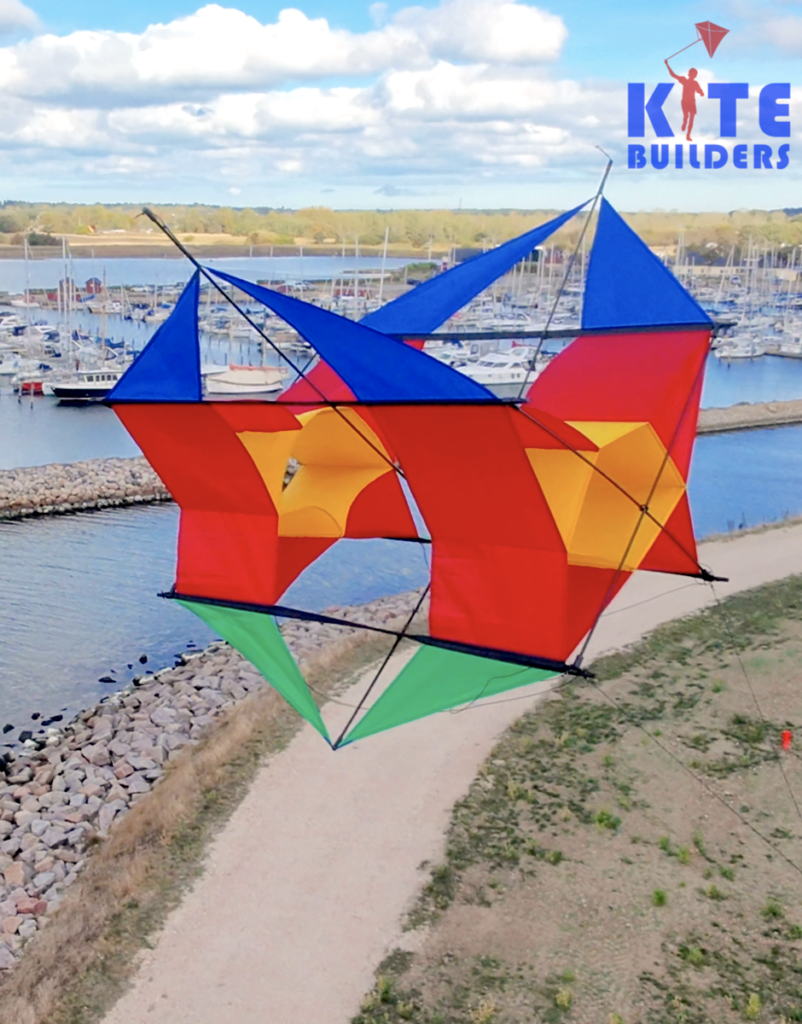
Winged Box – Volkskasten mit SpaßfaktorKastendrachen haben für mich etwas ganz Besonderes. Vielleicht liegt es daran, dass sie schon konstruktiv etwas völlig anderes sind als ein klassischer Flachdrachen. Vielleicht ist es aber auch einfach das Spiel von Licht und Schatten in den Zellen, das mich immer wieder fasziniert. Die Winged Box von Spiderkites hat mich jedenfalls vom ersten Aufbau an neugierig gemacht. Auf den ersten Blick wirkt sie wie ein ziemlich komplexes Gebilde aus Segelflächen, Stäben und Schnüren. Schaut man genauer hin, stellt man allerdings fest, dass die Konstruktion erstaunlich konsequent auf das Wesentliche konzentriert ist. Und genau das gefällt mir. |
Winged Box – A Box Kite for Everyone, with Plenty of FunBox kites have always had a special appeal for me. Maybe it is because, from a design point of view, they are so fundamentally different from a conventional flat kite. Or maybe it is simply the way light and shadow play across the cells that keeps fascinating me. Whatever the reason, the Winged Box from Spiderkites had me intrigued from the moment I first put it together. At first glance, it looks like quite a complex arrangement of sailcloth, spars and lines. But take a closer look and you quickly discover that the construction is remarkably focused on what is actually needed. And I like that. |
|
|
Der Hersteller: SpiderkitesSpiderkites ist eine deutsche Drachenmarke aus Norden in Ostfriesland. Hinter der Marke steht Christoph Fokken und Carsten Gutsell, die sich seit vielen Jahren mit der Konstruktion und dem Bau von Drachen beschäftigen. Das Unternehmen verbindet eigene Entwicklungen mit Konstruktionen und Kooperationen verschiedener Drachenbauer. Das Sortiment reicht vom Einsteigerdrachen bis zu aufwendigeren Designer-Konstruktionen. Gerade diese Mischung finde ich interessant: Spiderkites kann robuste Drachen für den unkomplizierten Einstieg bauen, beschäftigt sich aber gleichzeitig sehr intensiv mit Konstruktion, Materialien und Flugverhalten. Und diese Kombination findet sich auch bei der Winged Box wieder. Je länger ich mich mit dem Drachen beschäftige, desto mehr gefällt mir, wie konsequent Spiderkites hier auf das Wesentliche setzt. Nicht möglichst viel Material, nicht möglichst viel Technik – sondern genau das, was diese Konstruktion braucht, damit sie funktioniert. |
The Manufacturer: SpiderkitesSpiderkites is a German kite brand based in Norden, East Frisia. The driving force behind the brand is Christoph Fokken and Carsten Gutsell, who has spent many years designing and building kites. The company combines its own designs with collaborations and constructions from a range of kite designers. The product range runs from entry-level kites to sophisticated designer models. I find that combination particularly interesting: Spiderkites can build robust kites for straightforward entry into the hobby, while at the same time taking construction, materials and flight characteristics very seriously. That same combination can be found in the Winged Box. The longer I look at this kite, the more I appreciate how deliberately Spiderkites has focused on what is actually needed. Not more material for the sake of it, not more technology for the sake of it – just what this particular construction needs to work properly. |
|
|
Die technischen DatenSpiderkites gibt für die Winged Box folgende Daten an:
Unsere eigene Messung ergab eine Höhe von 103 cm. Bei einem Drachen dieser Art hängt das Messergebnis natürlich auch davon ab, welche Punkte man als Bezug nimmt. Die 103 cm sind deshalb unser eigener Messwert. |
Technical DataSpiderkites specifies the following data for the Winged Box:
Our own measurement gave us a height of 103 cm. With a kite like this, the result naturally depends on which points are used as reference. The 103 cm should therefore be regarded as our own measurement. |
|
|
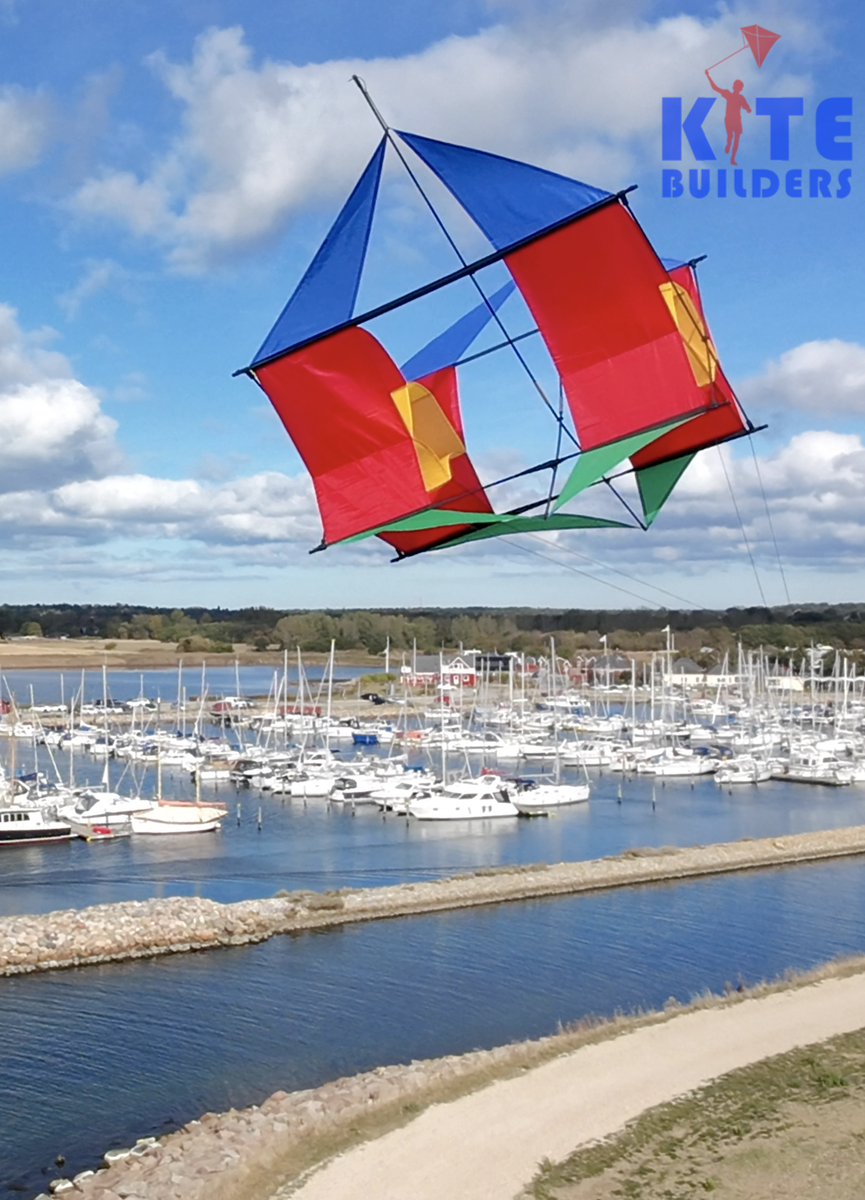
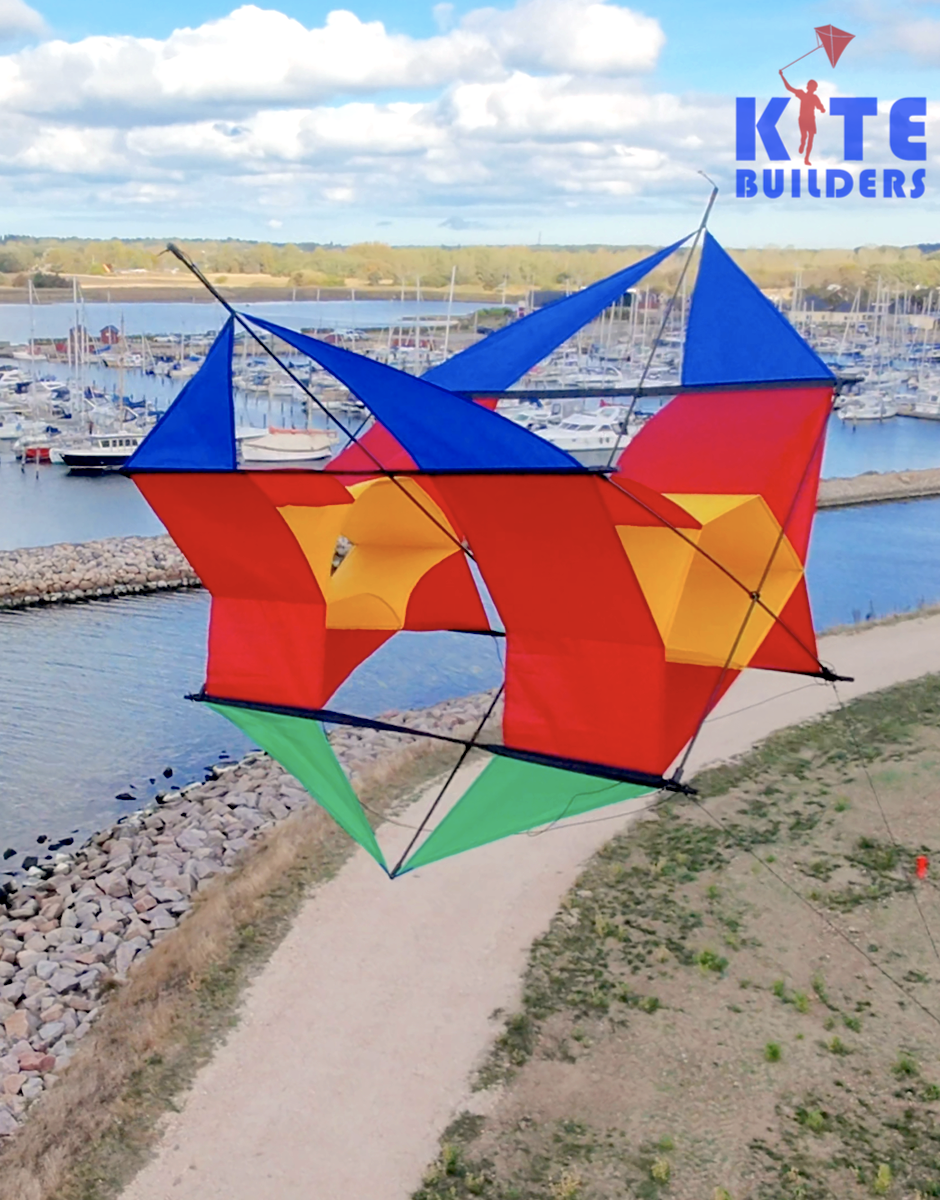
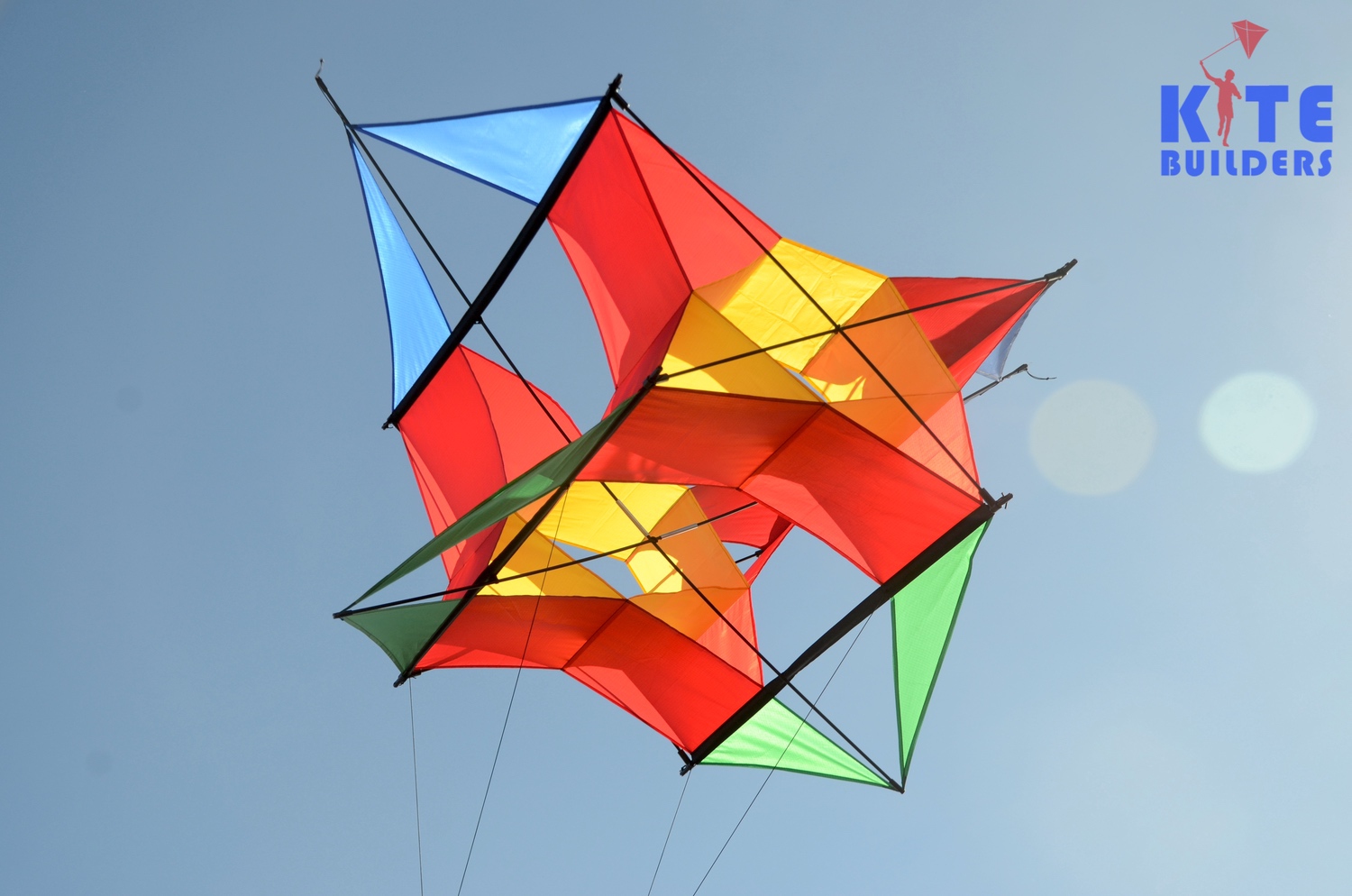
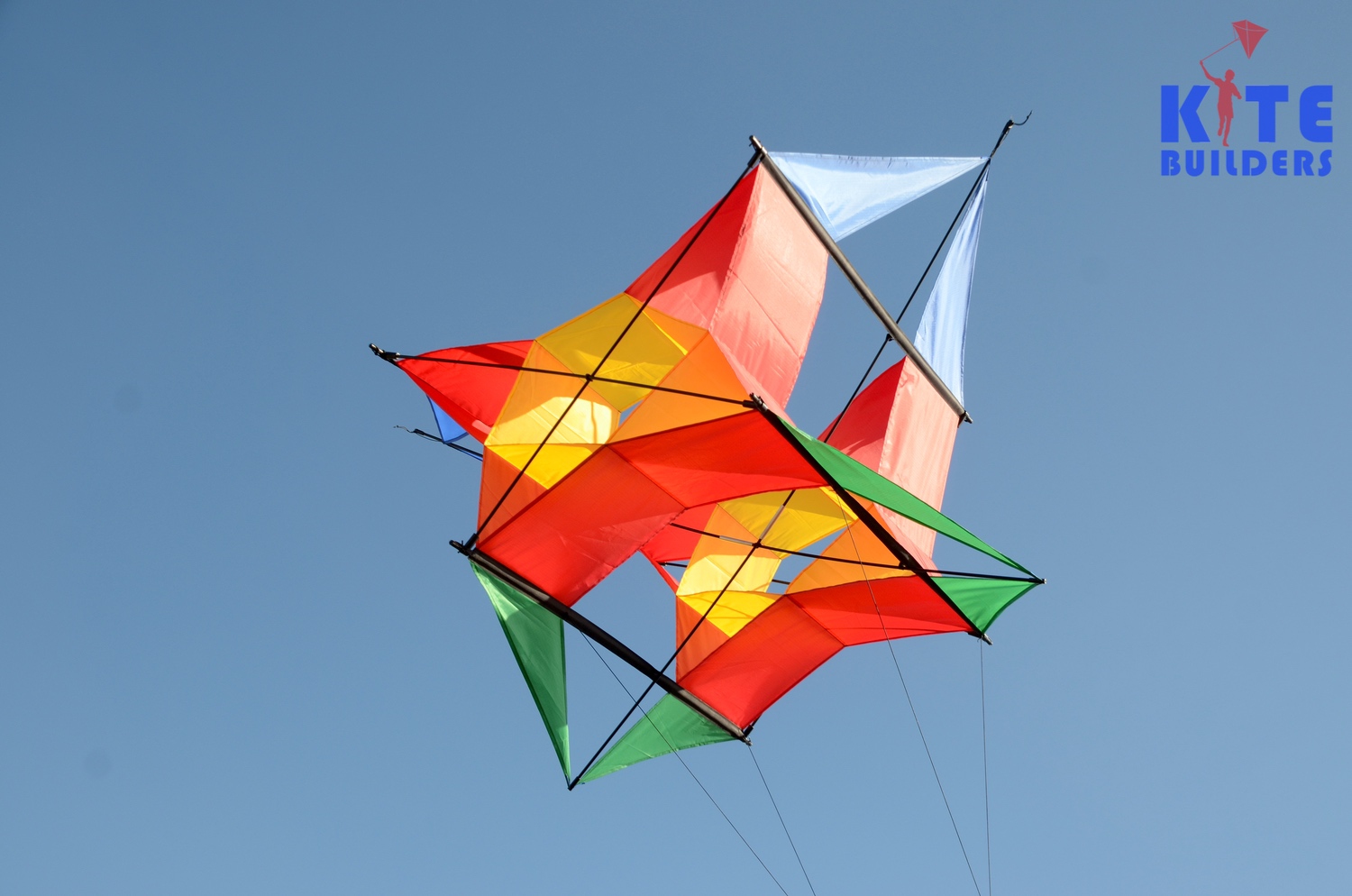
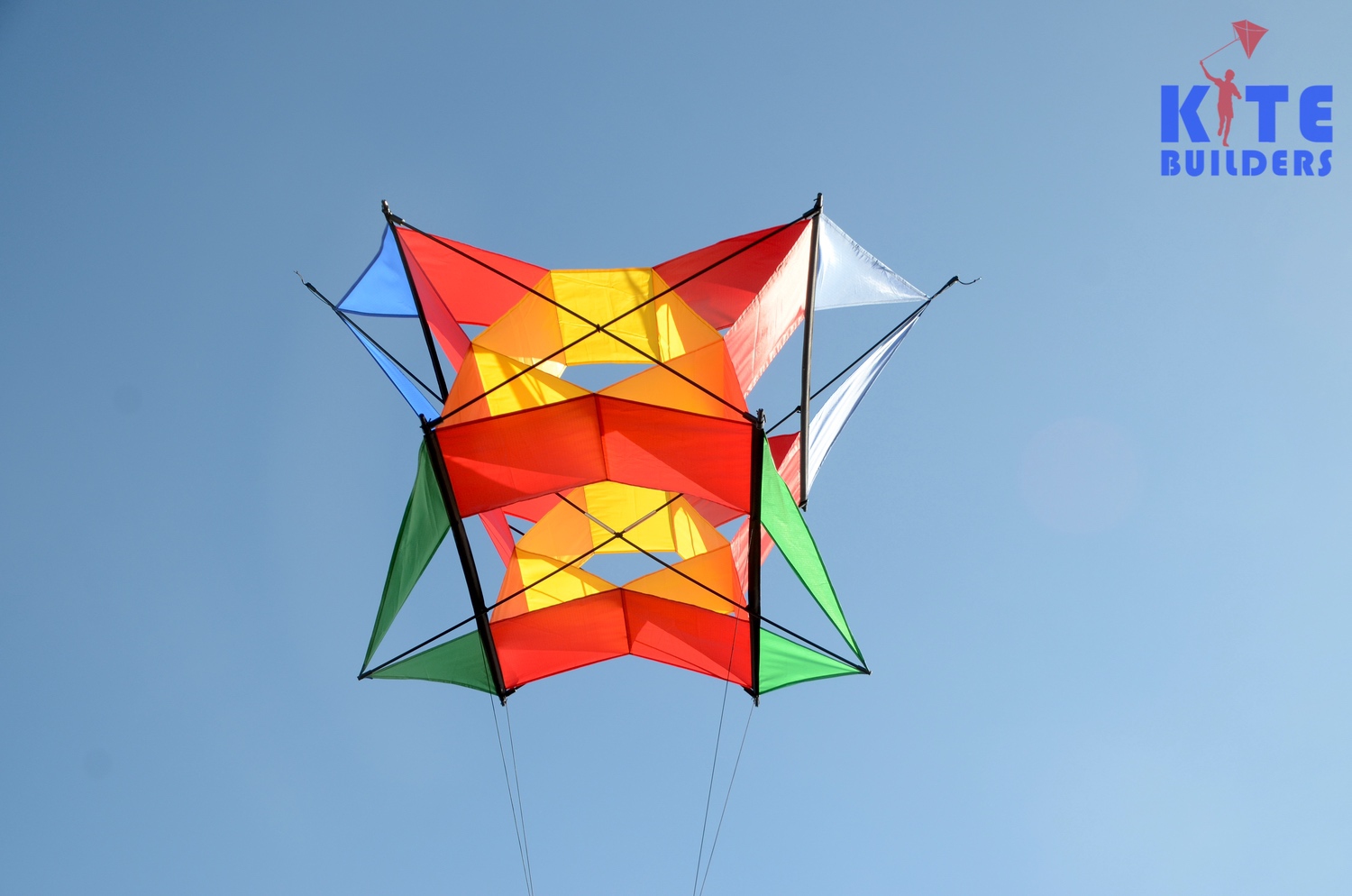
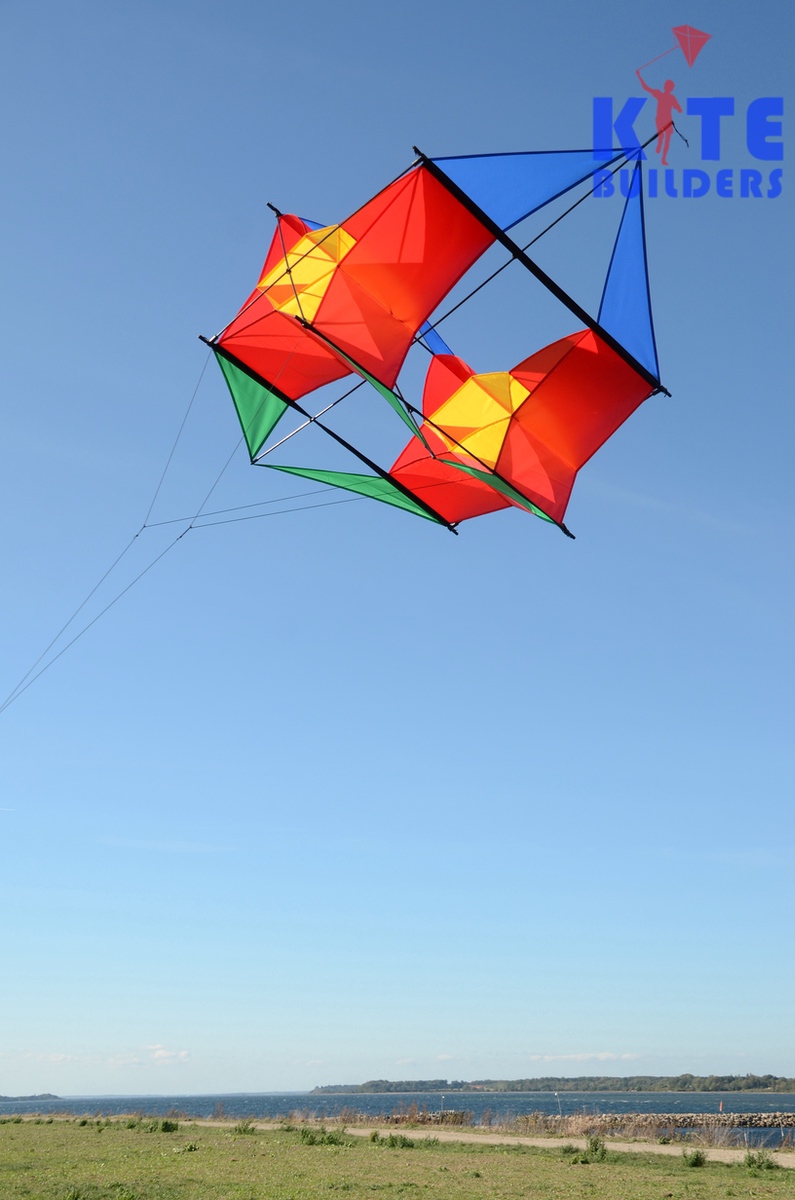
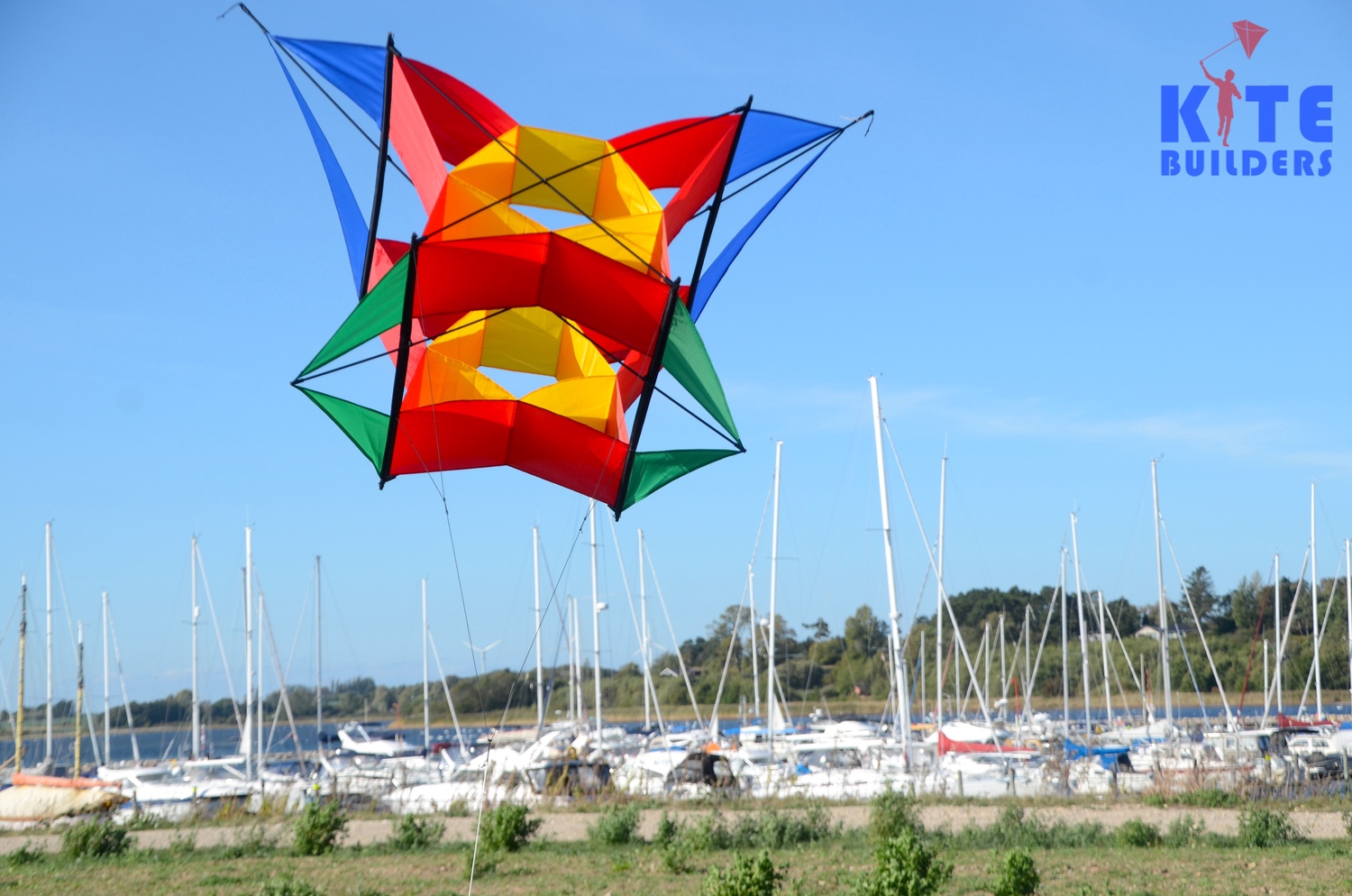
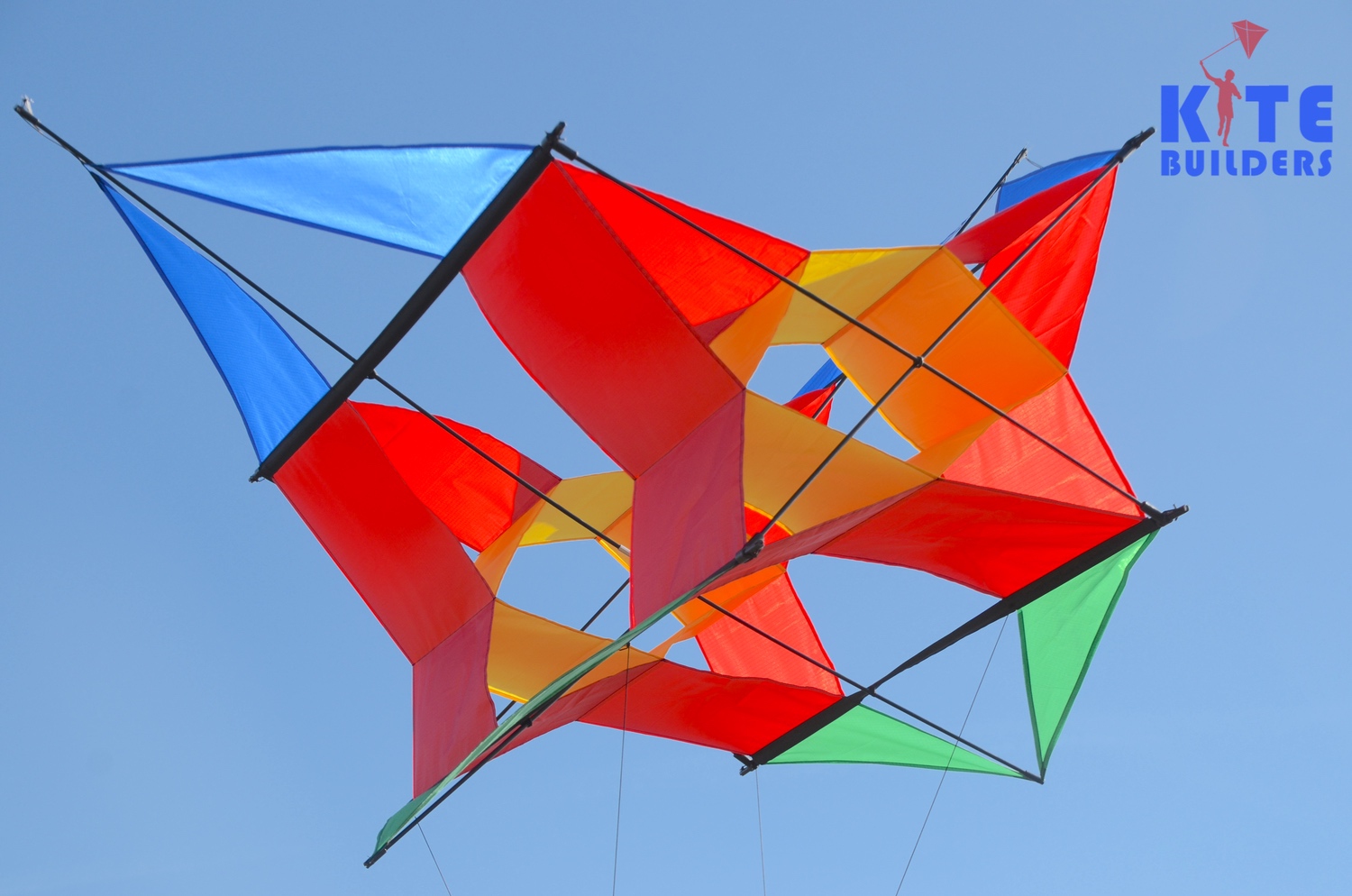
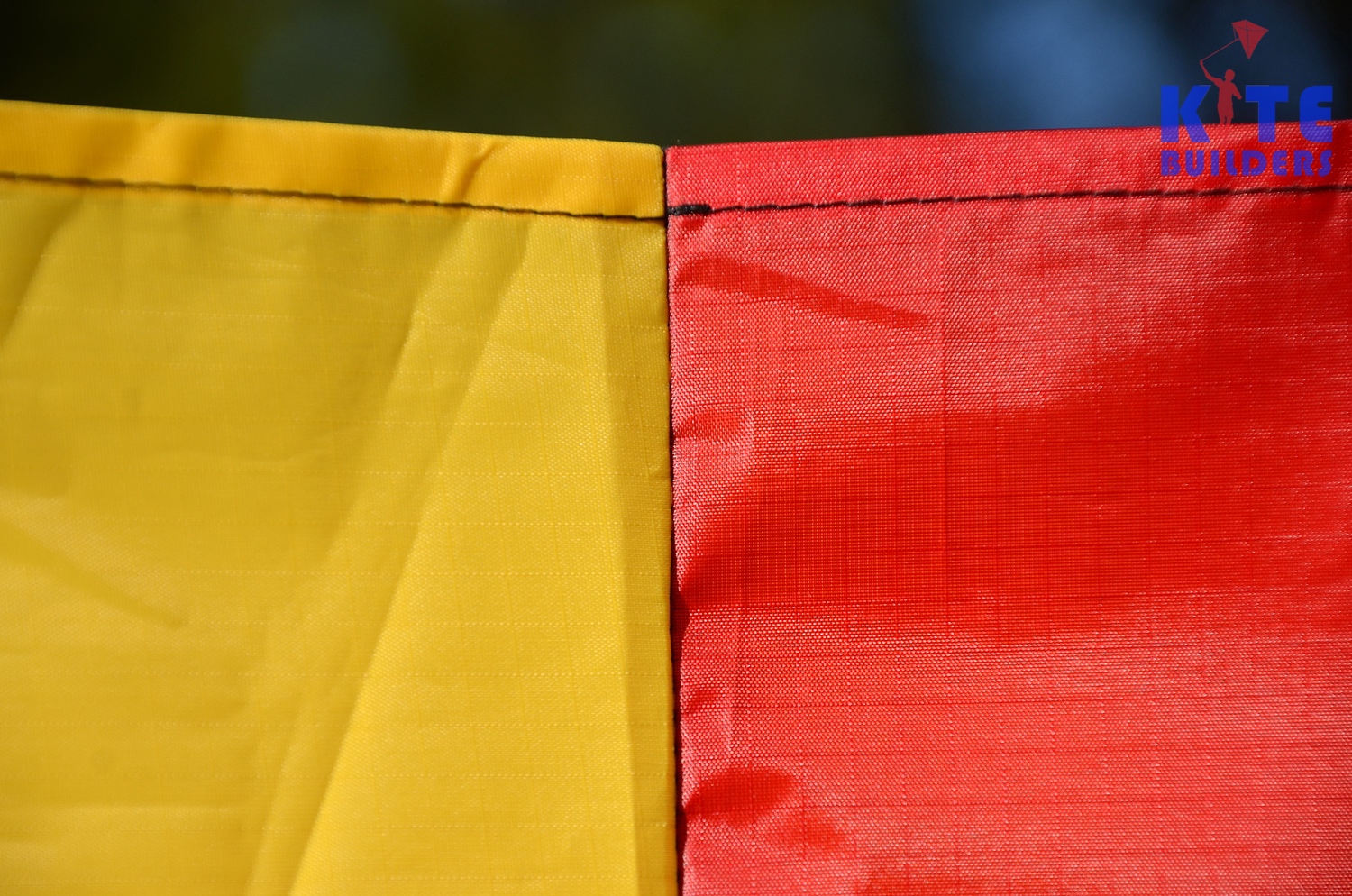
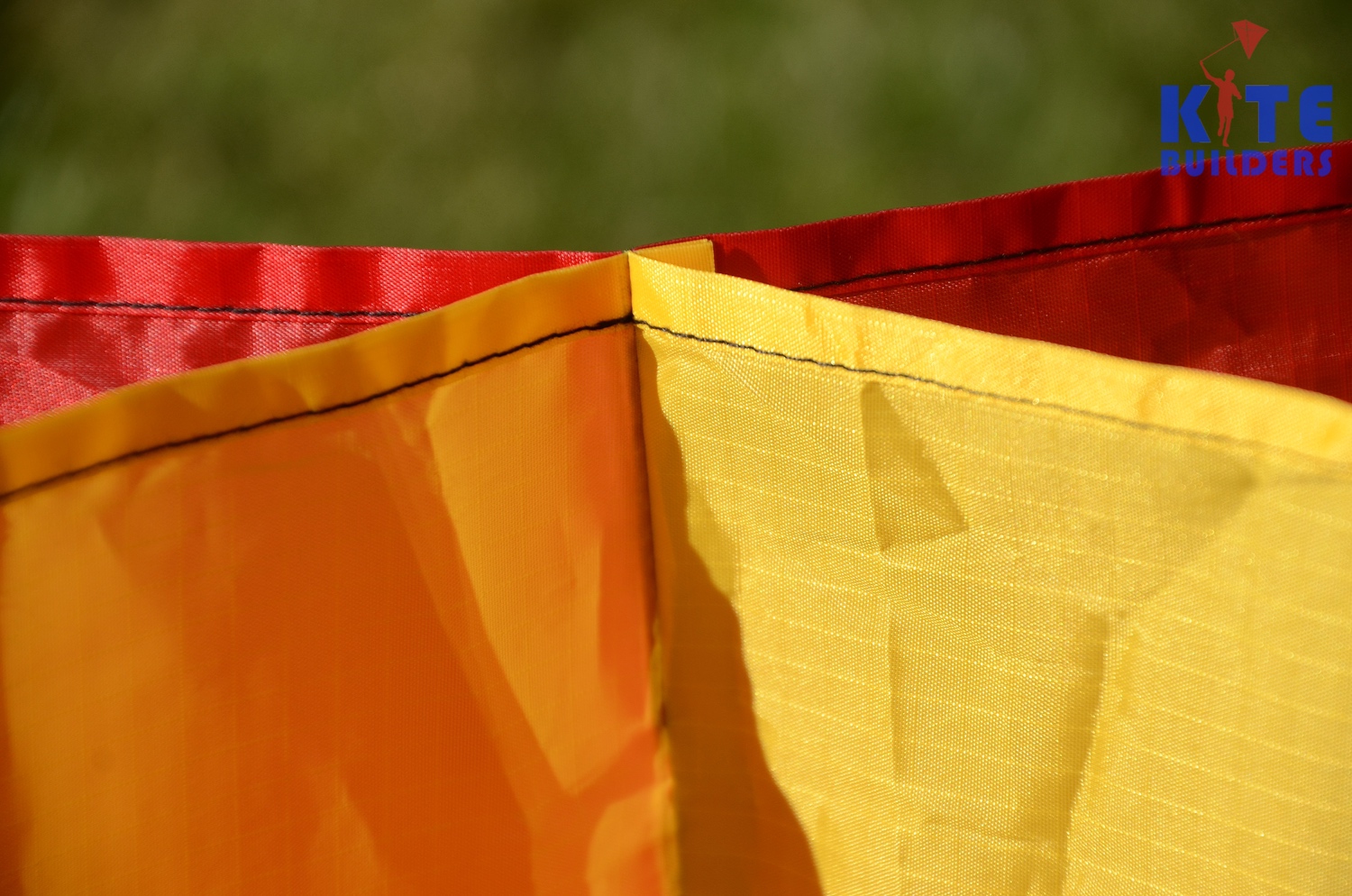
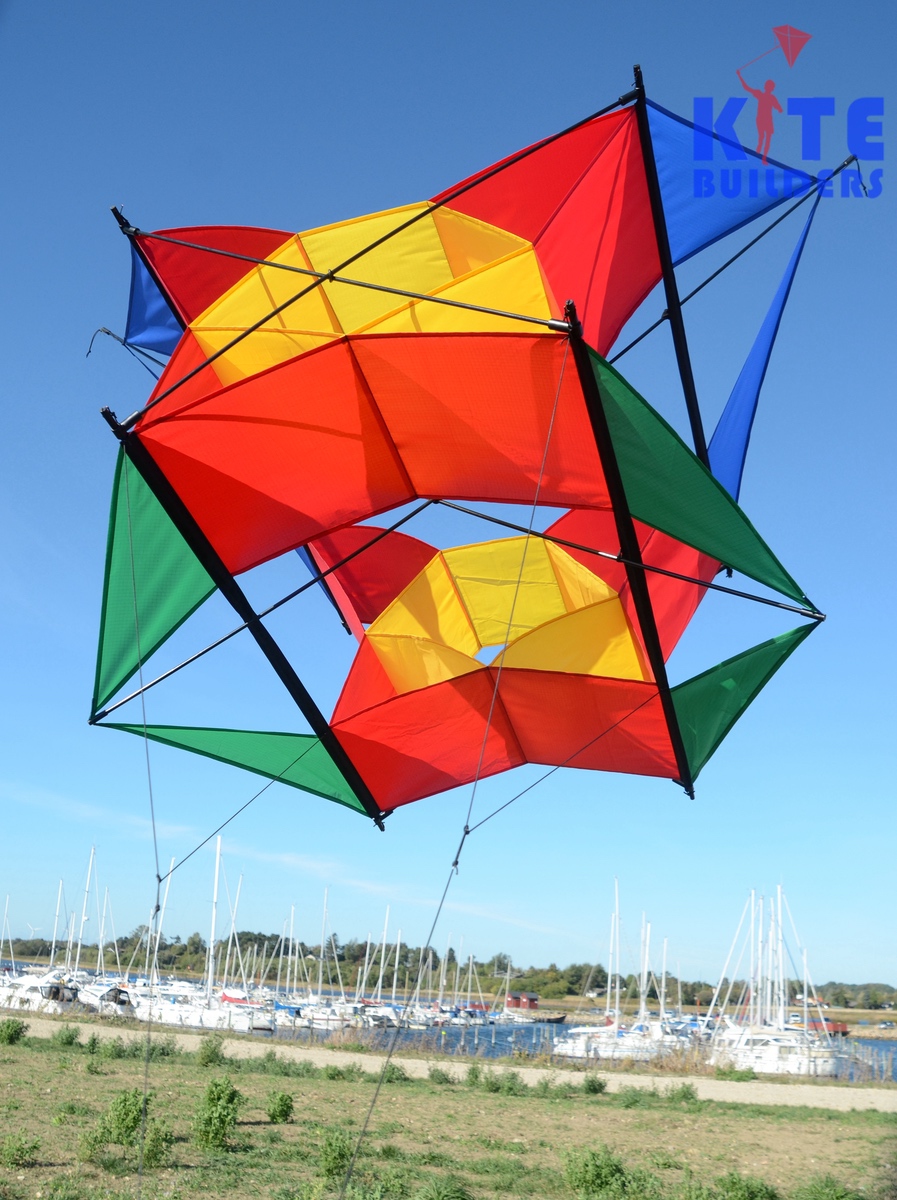
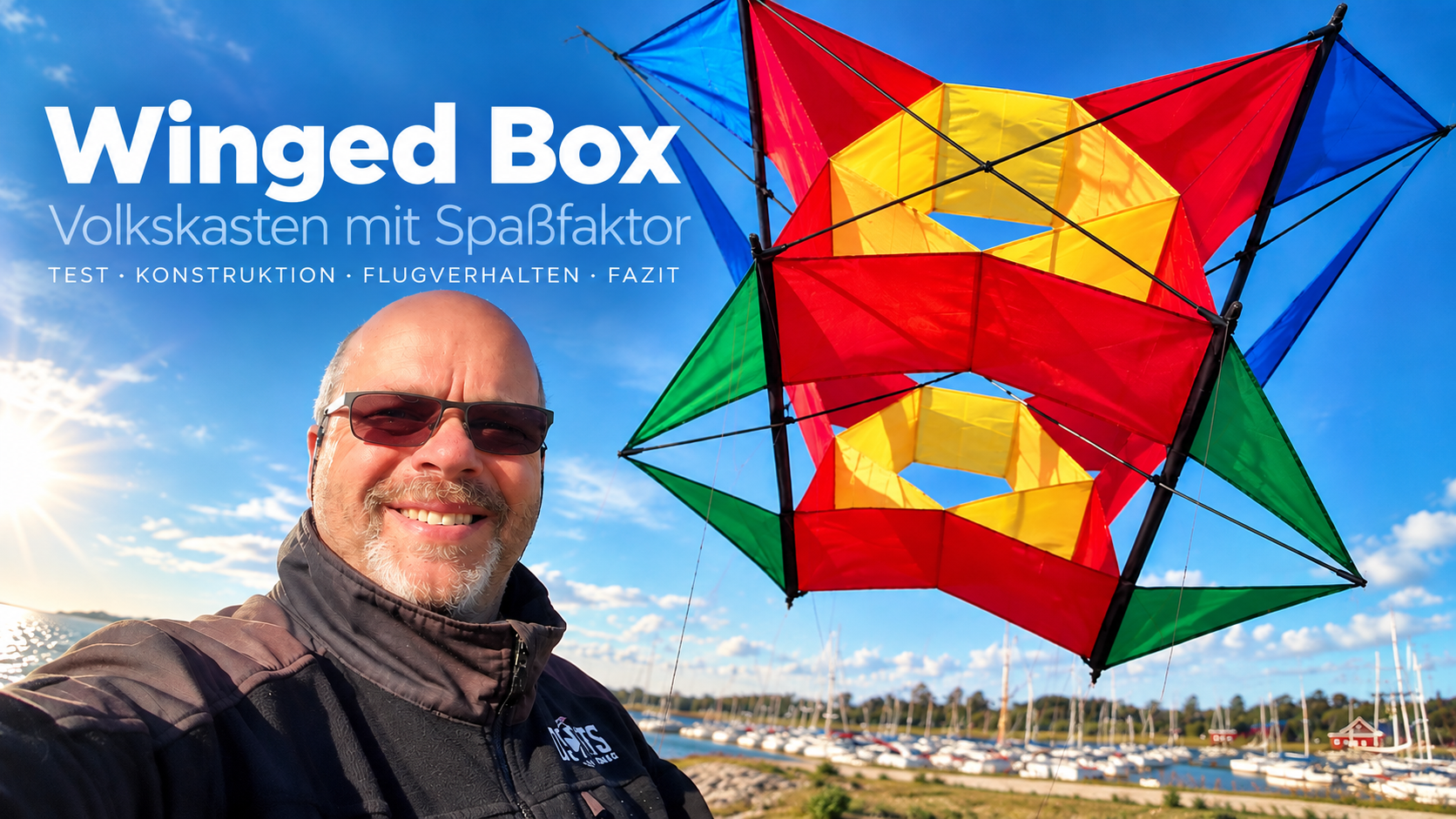
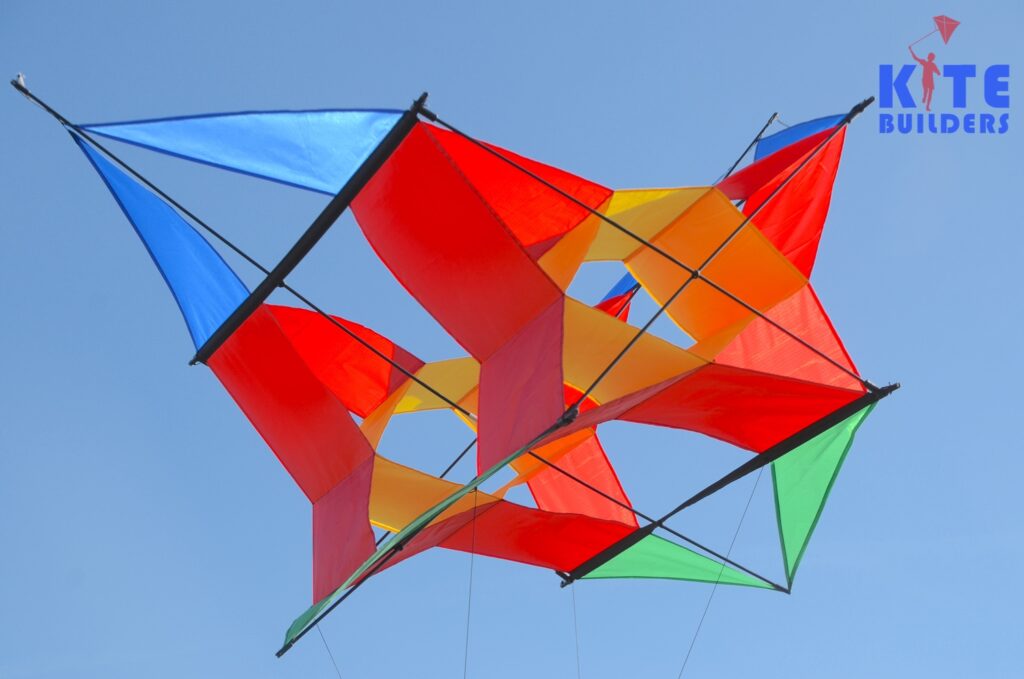
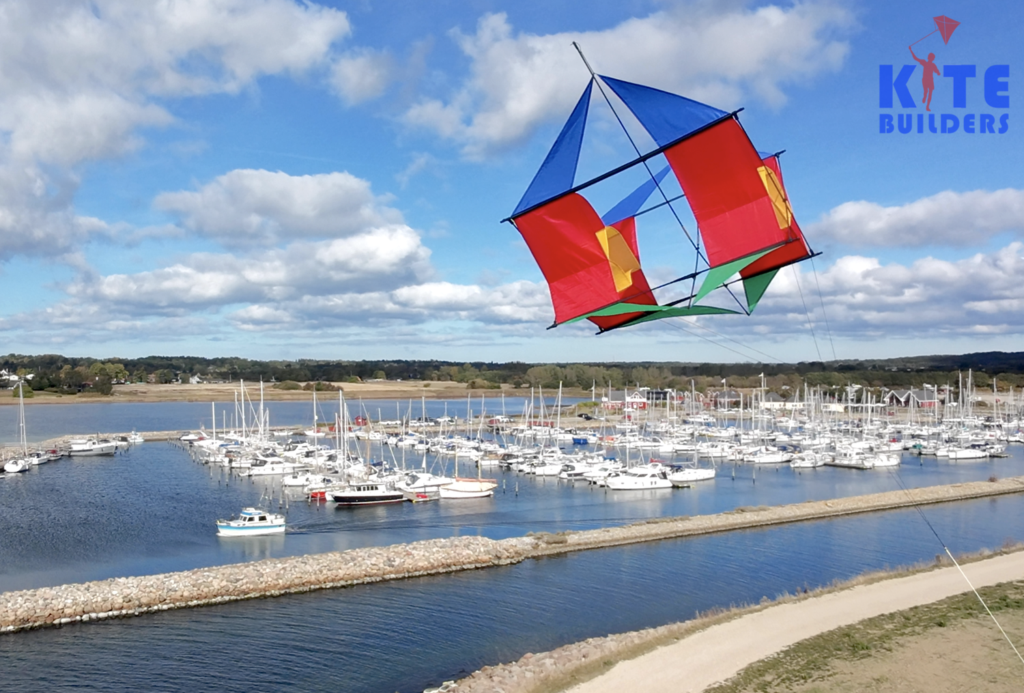
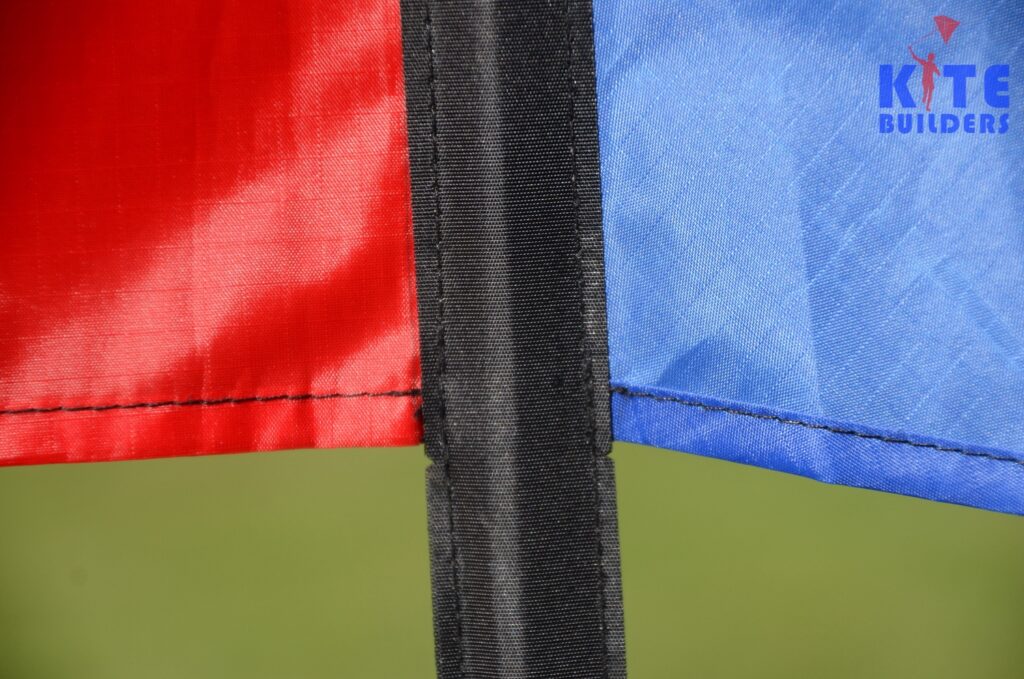
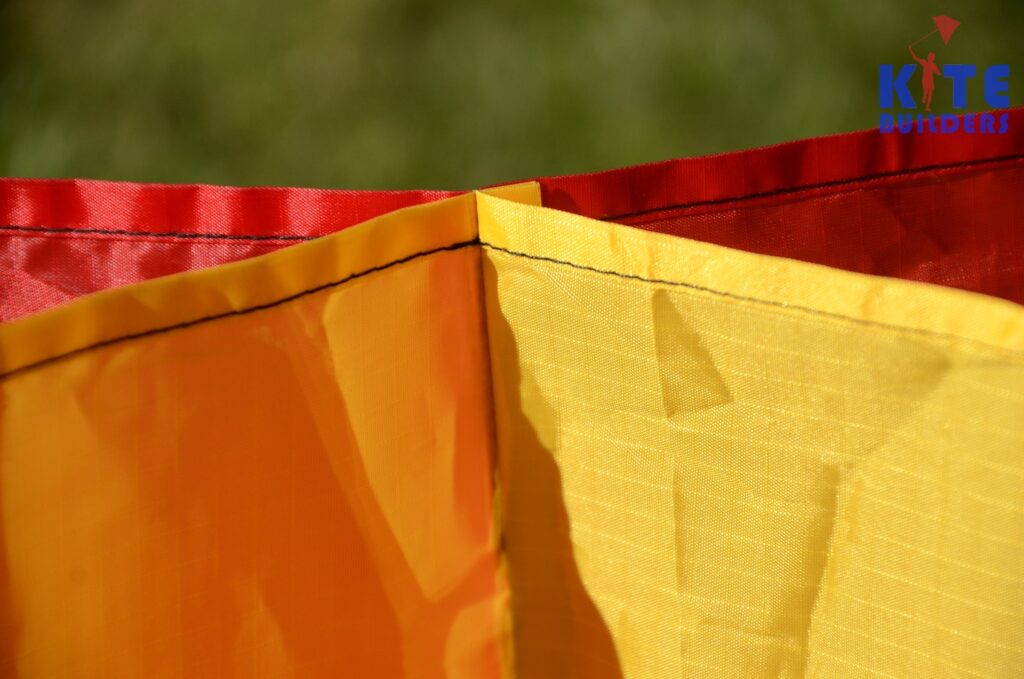
Vier Farben und eine saubere VerarbeitungBlau, Rot, Gelb und Grün – die Winged Box ist farbenfroh und fällt am Himmel entsprechend auf. Die Segel sind als einfache Kappnaht ausgeführt. Natürlich könnte man hier auch eine doppelte Kappnaht verwenden. Das wäre aufwendiger, ist für diesen Drachen aus meiner Sicht aber überhaupt nicht notwendig. Denn die vorhandene Kappnaht ist ordentlich und gleichmäßig ausgeführt. Überhaupt macht die Verarbeitung einen ausgesprochen guten Eindruck. An unserem Testexemplar waren keine Fehler oder auffälligen Schwachstellen zu entdecken. Und genau hier zeigt sich für mich die Philosophie des gesamten Drachens: Die Verarbeitung ist nicht auf maximale Komplexität ausgelegt, sondern auf eine sinnvolle und saubere Lösung. Das gefällt mir. |
Four Colours and Clean WorkmanshipBlue, red, yellow and green – the Winged Box is colourful and certainly stands out in the sky. The sails are finished with a simple flat-felled seam. A double flat-felled seam would of course also be possible, but it would make production more elaborate and, in my view, simply isn’t necessary for this kite. The seam is clean and even. Overall, the workmanship makes an excellent impression. We could not find any noticeable errors or weaknesses on our test kite. And this is where I think the philosophy of the entire kite becomes apparent: the workmanship is not about maximum complexity, but about finding a sensible, clean solution. I like that.
|
|
|
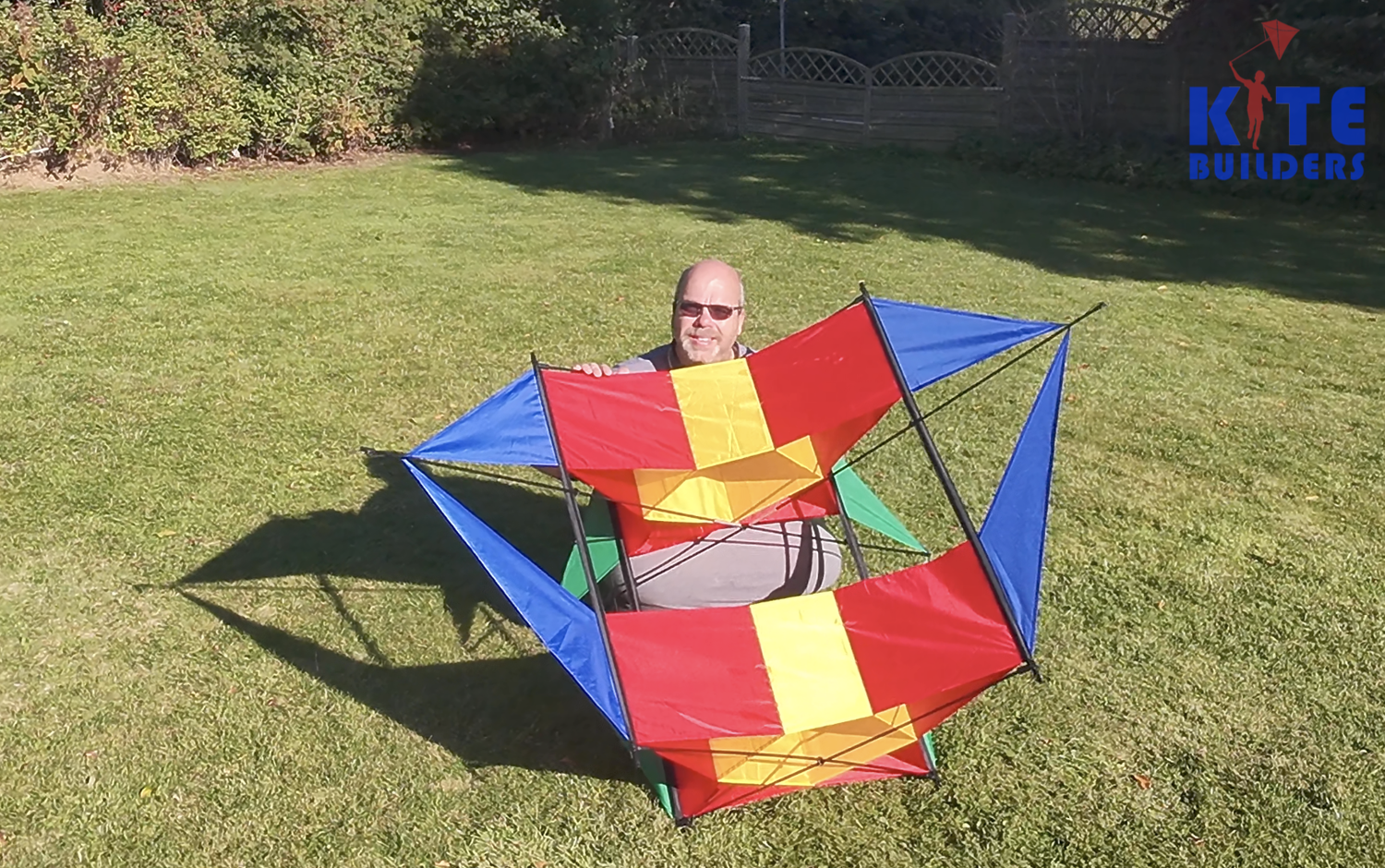
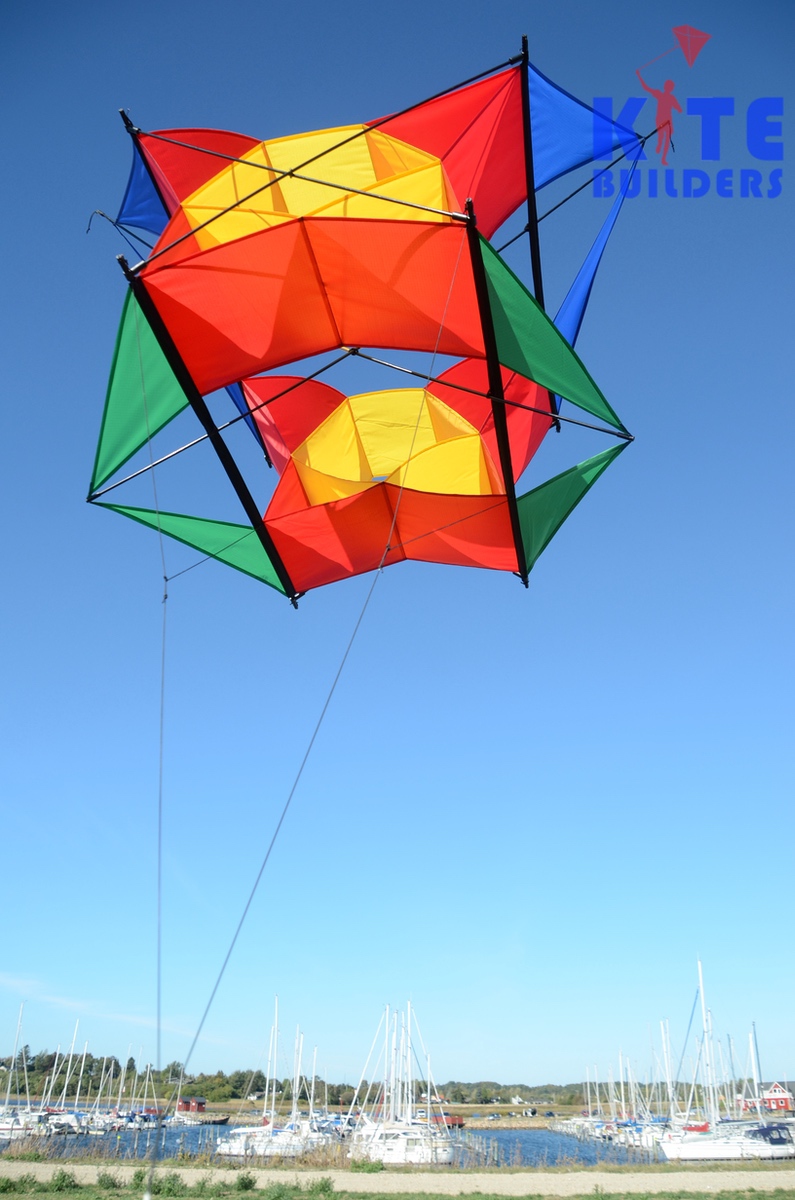
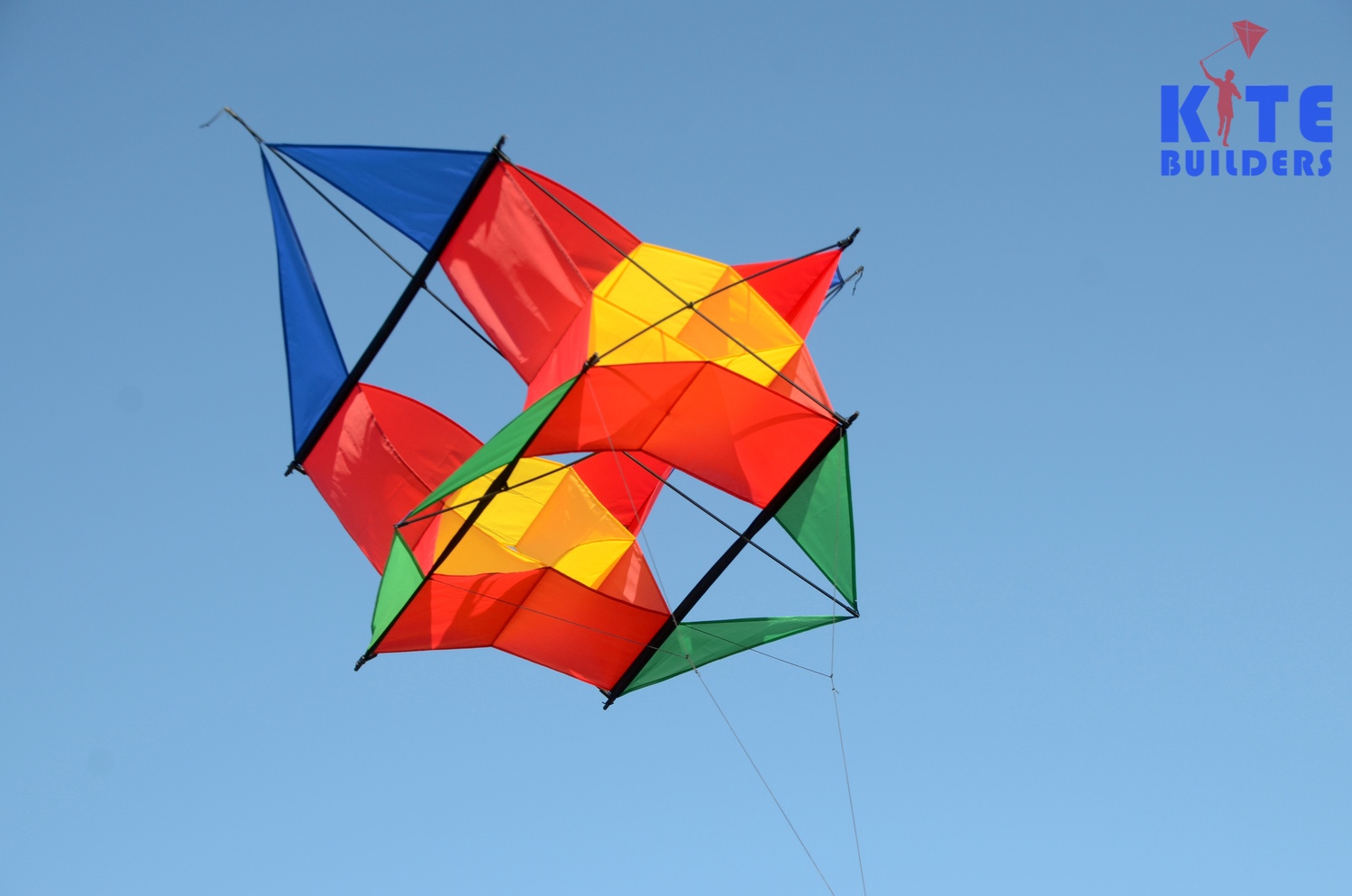
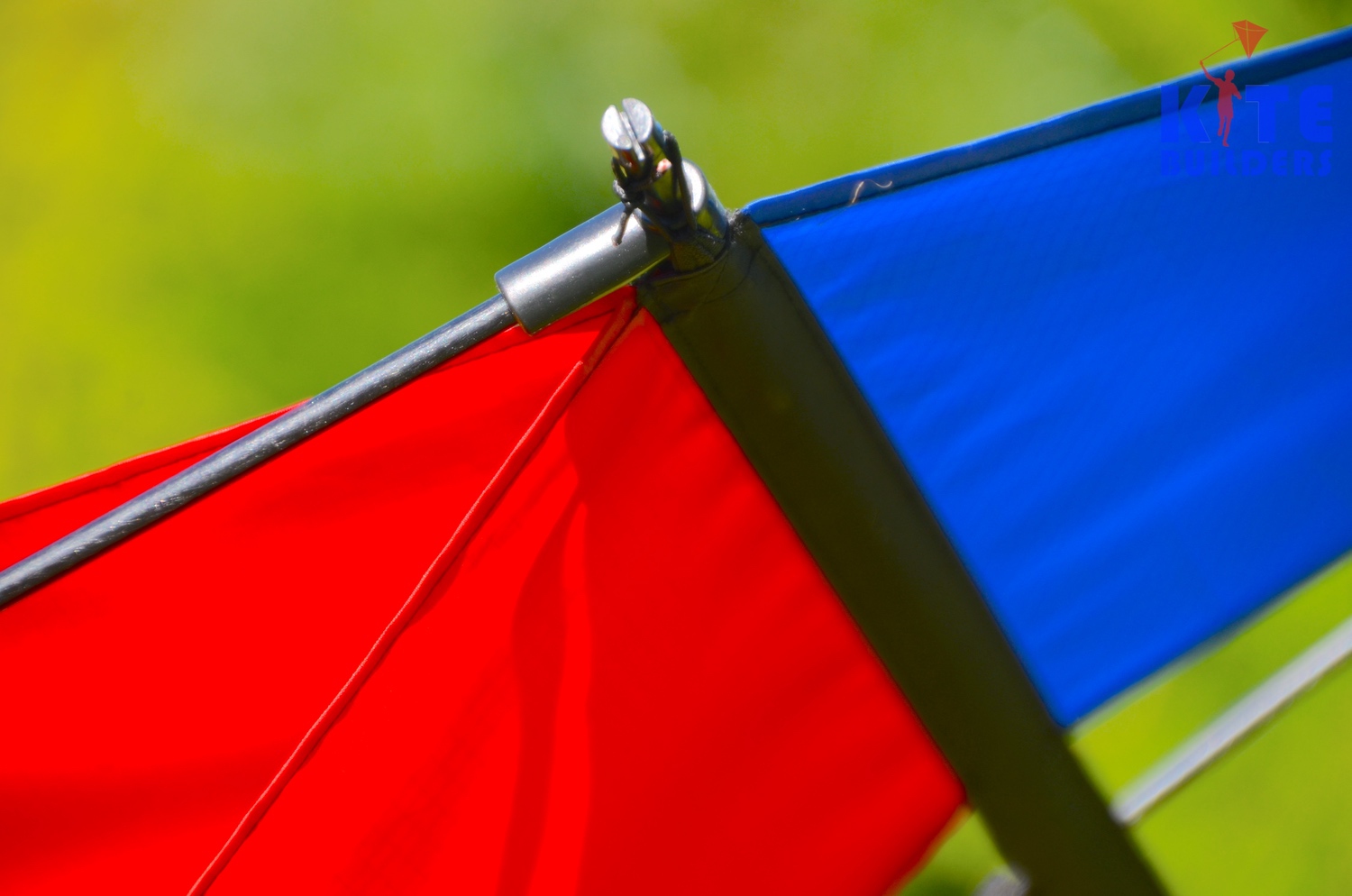
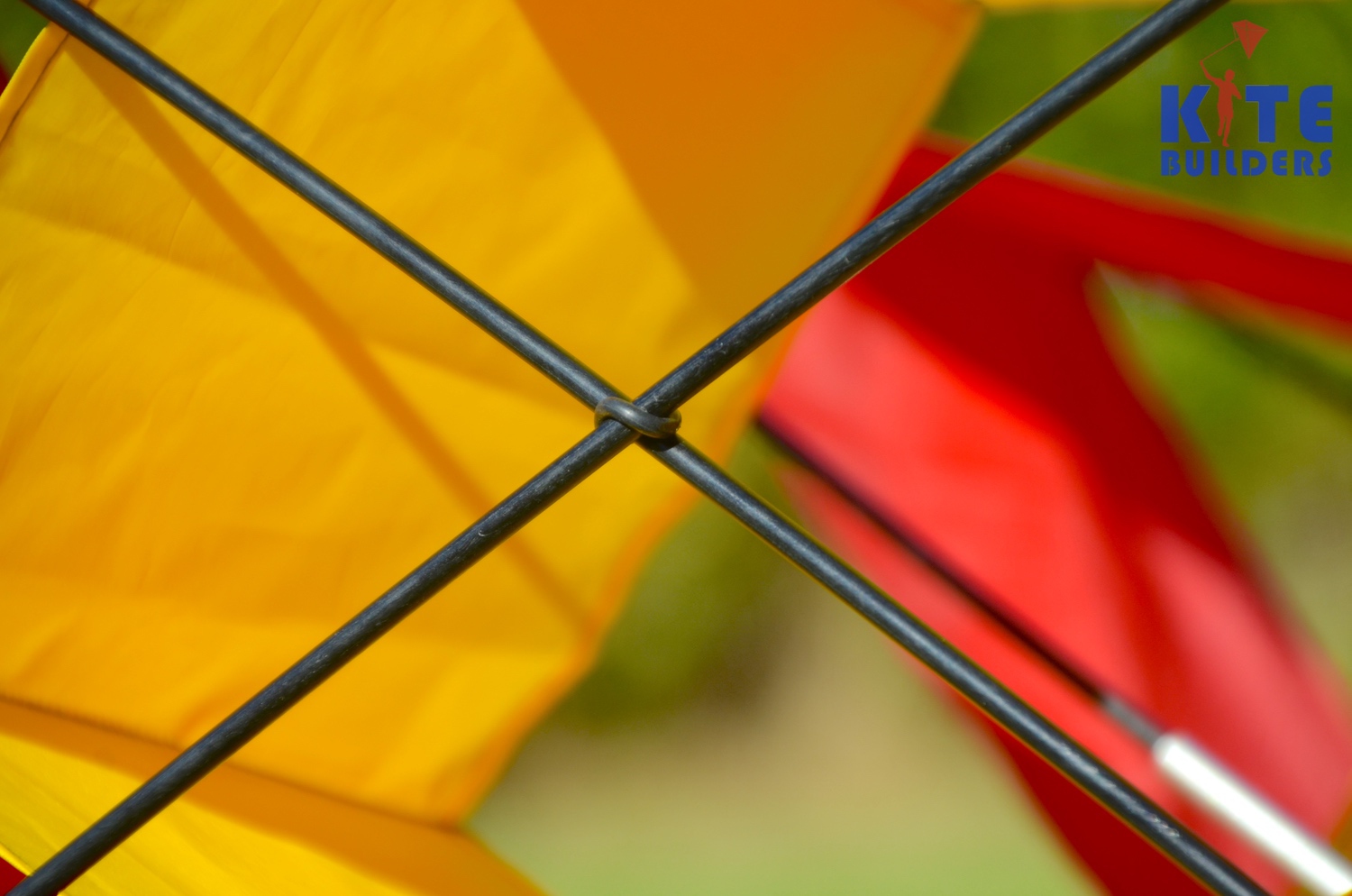
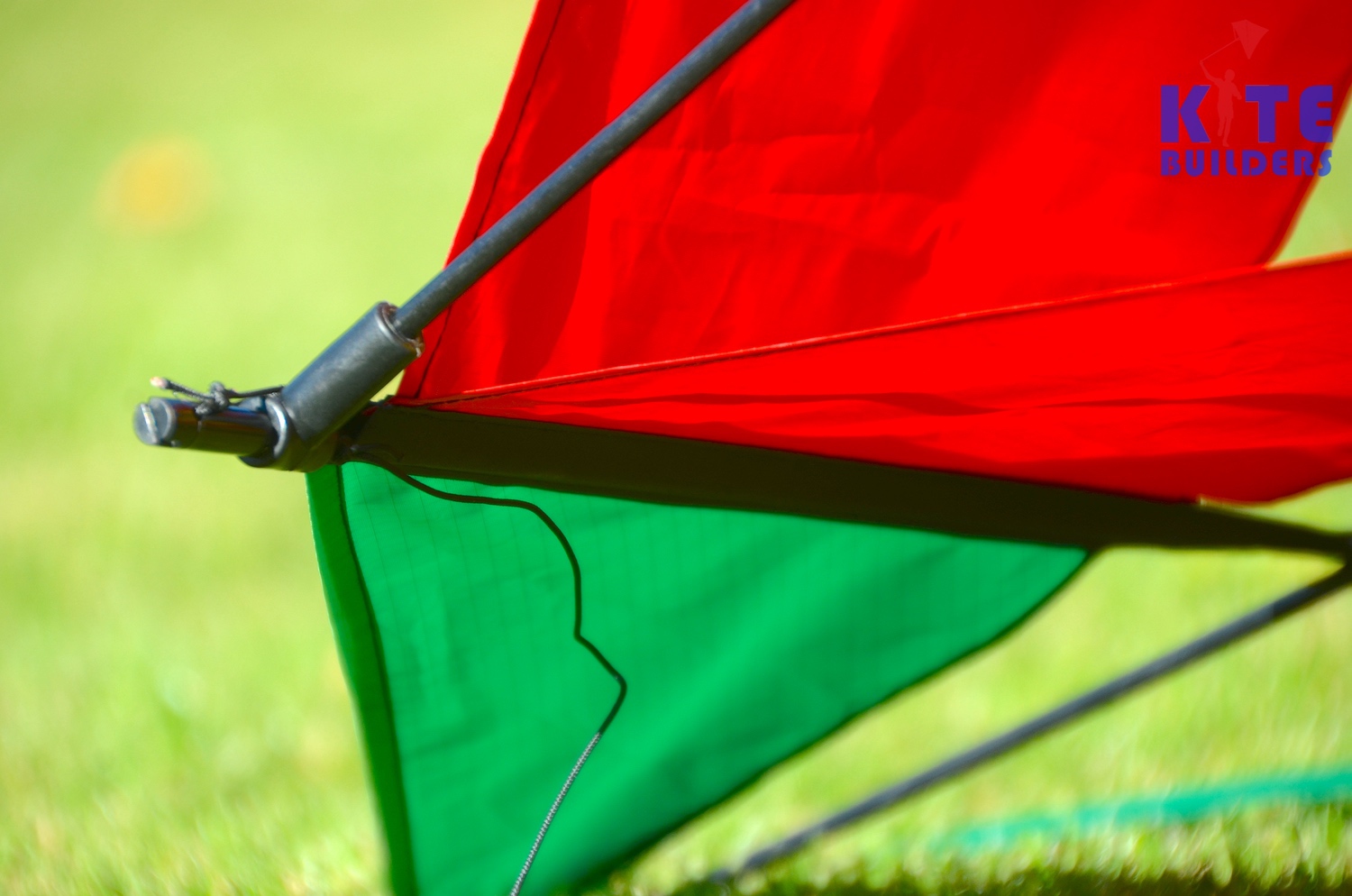
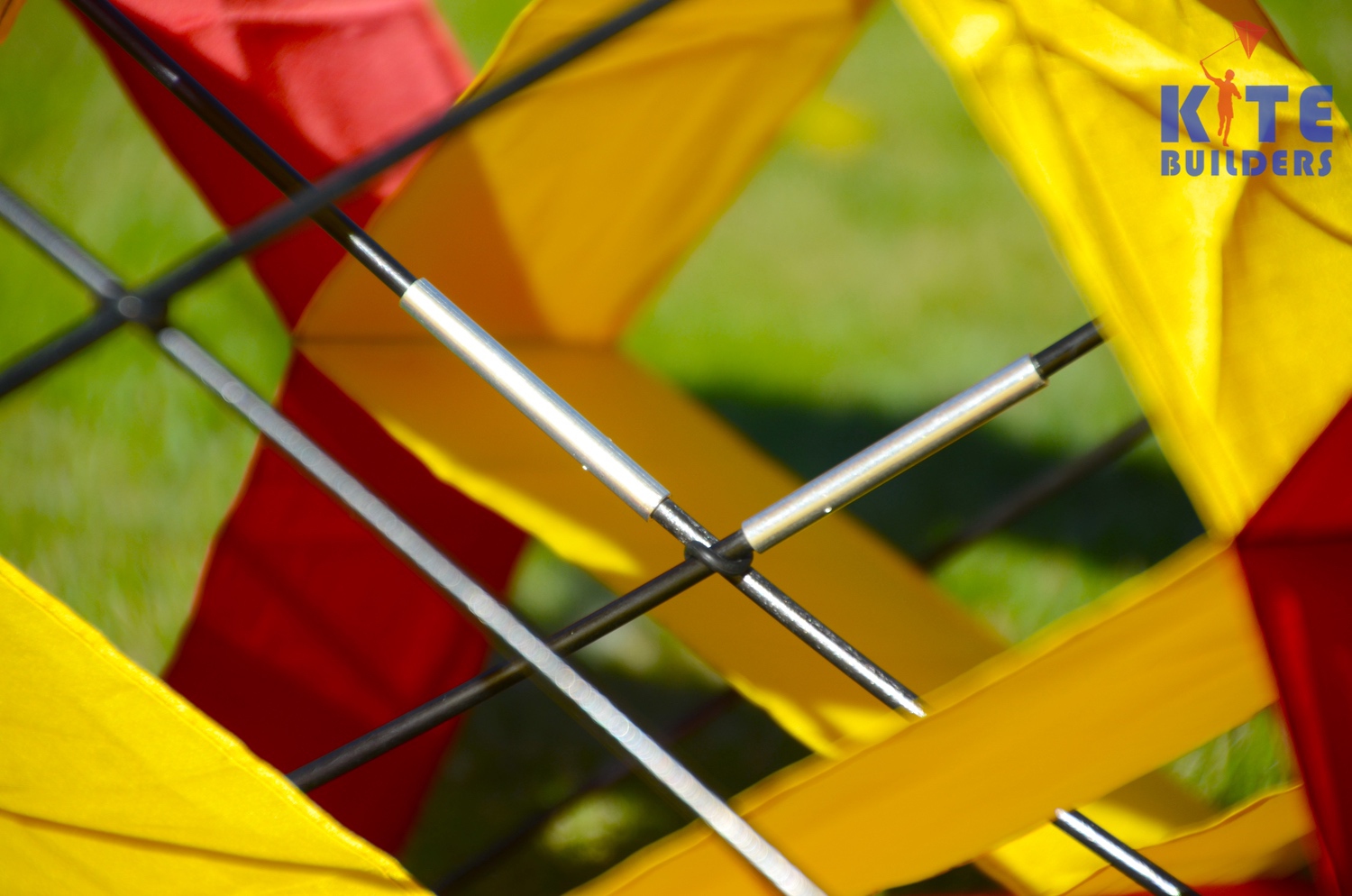
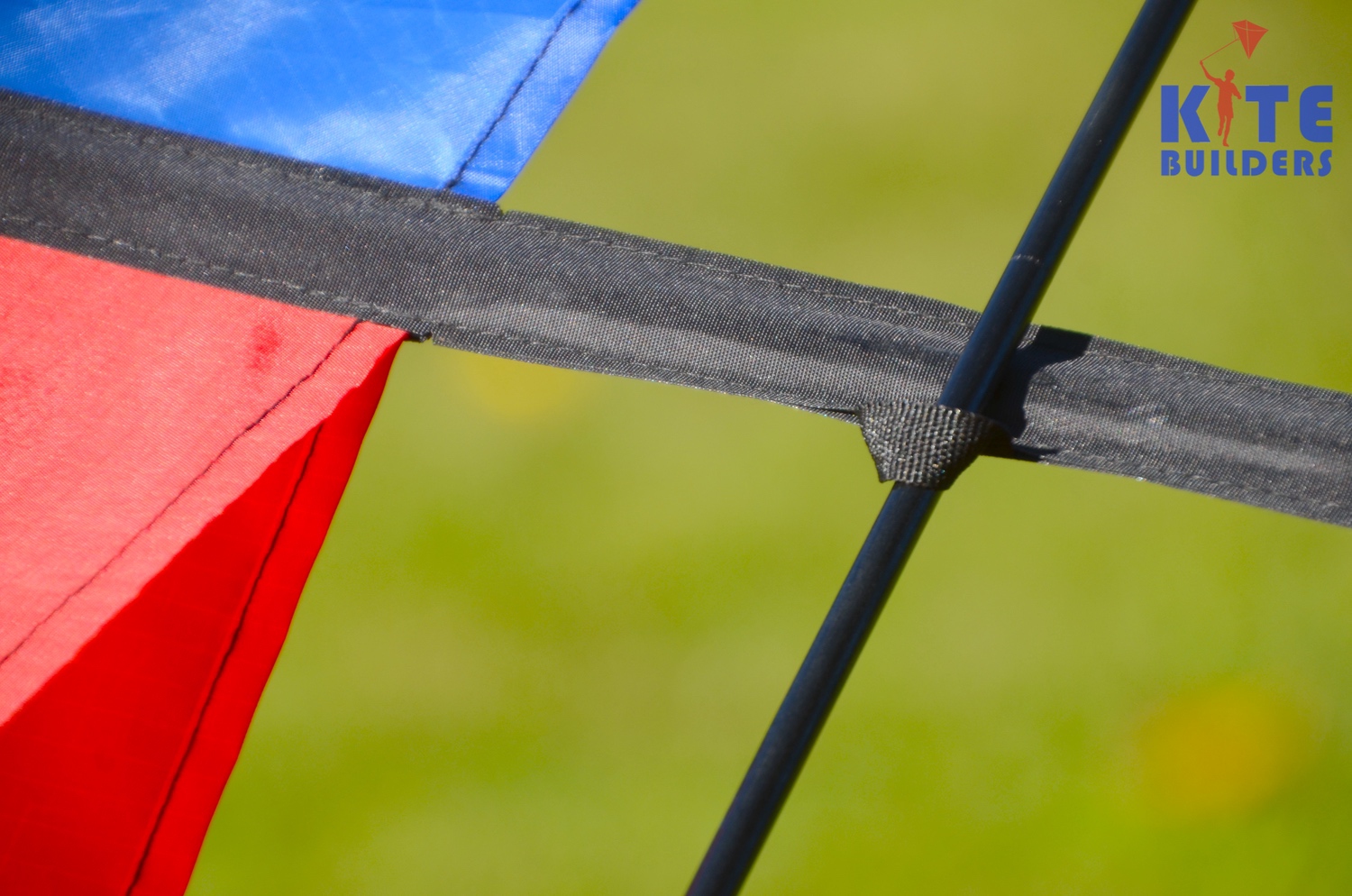
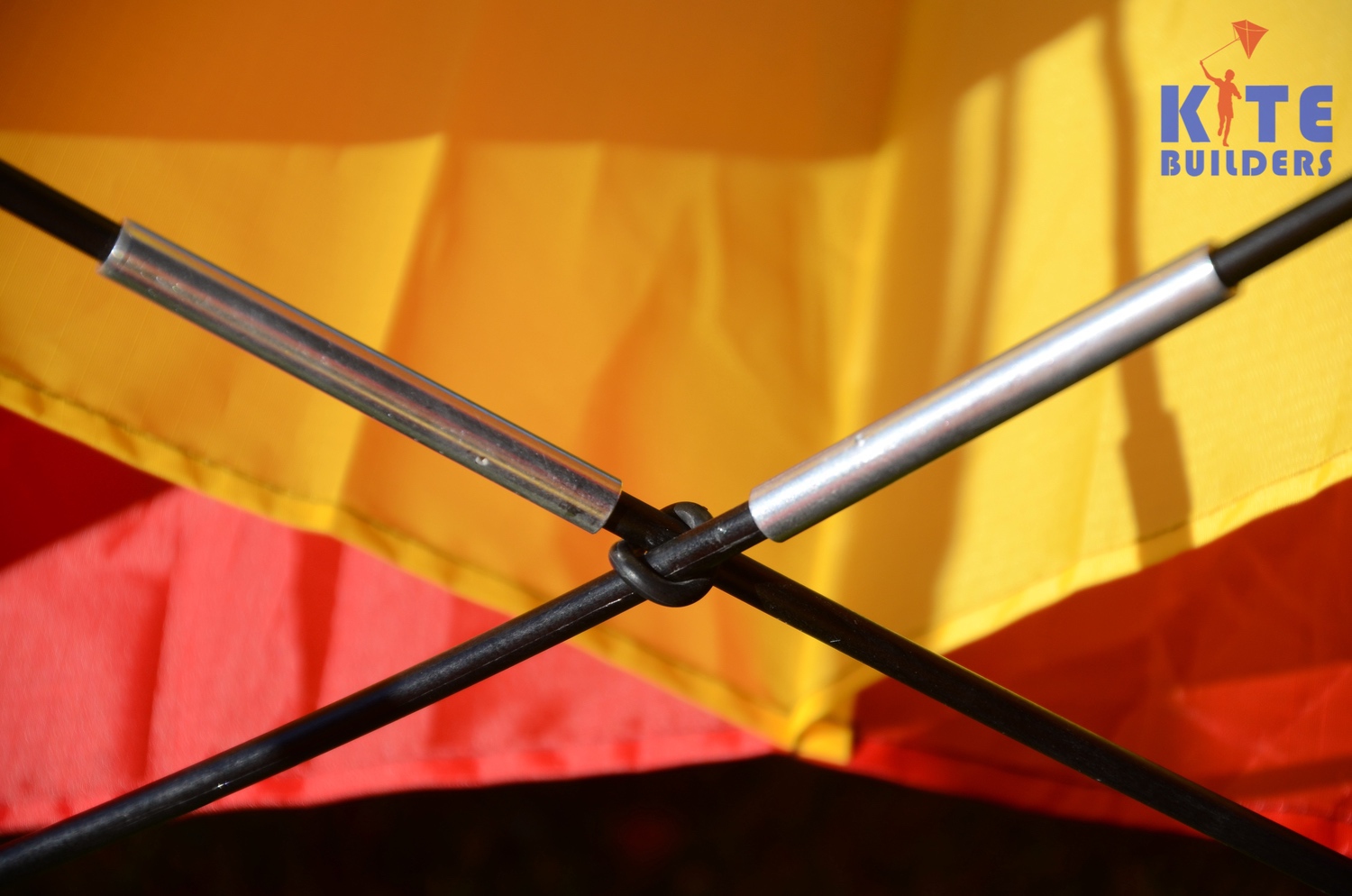
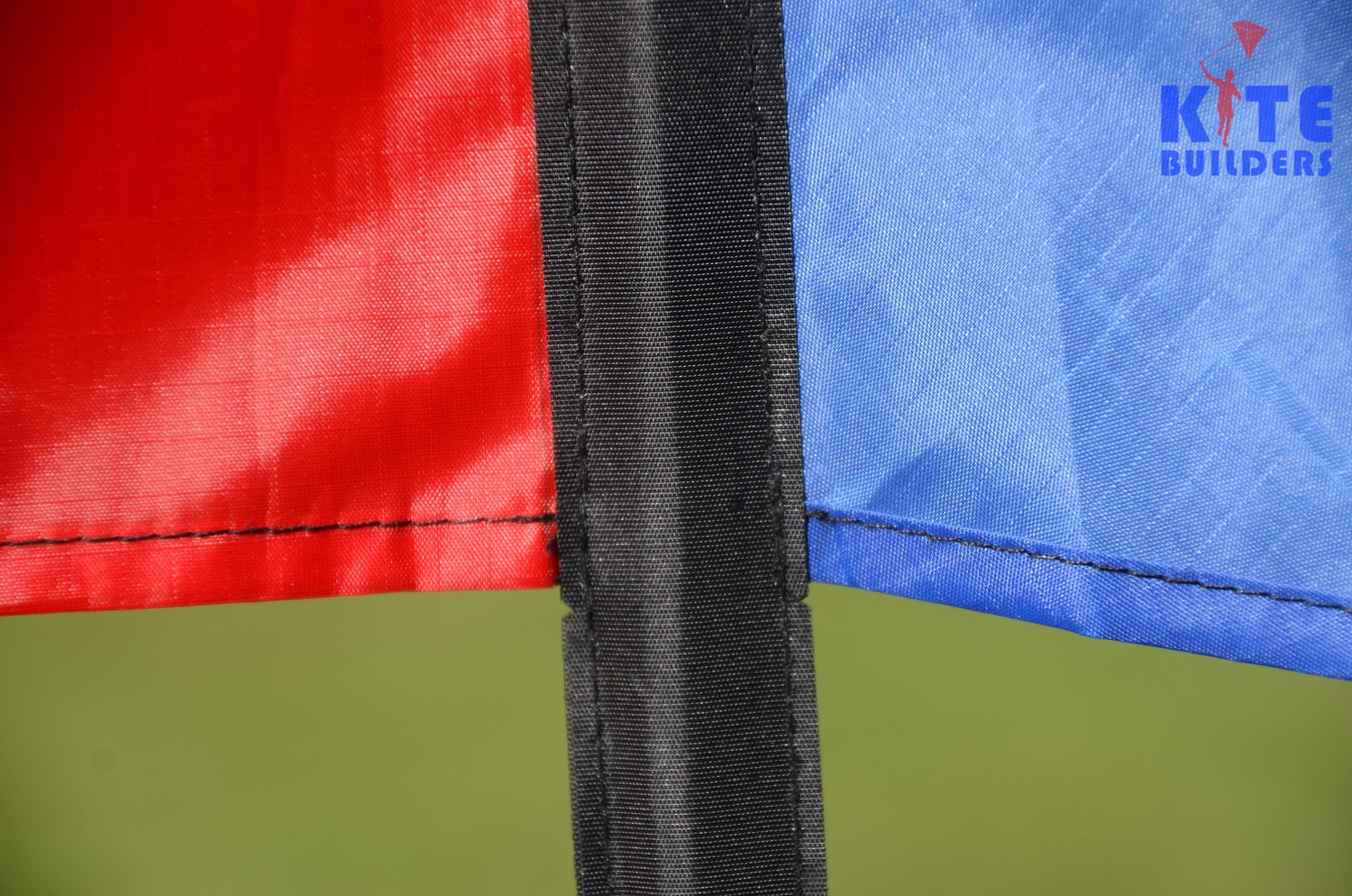
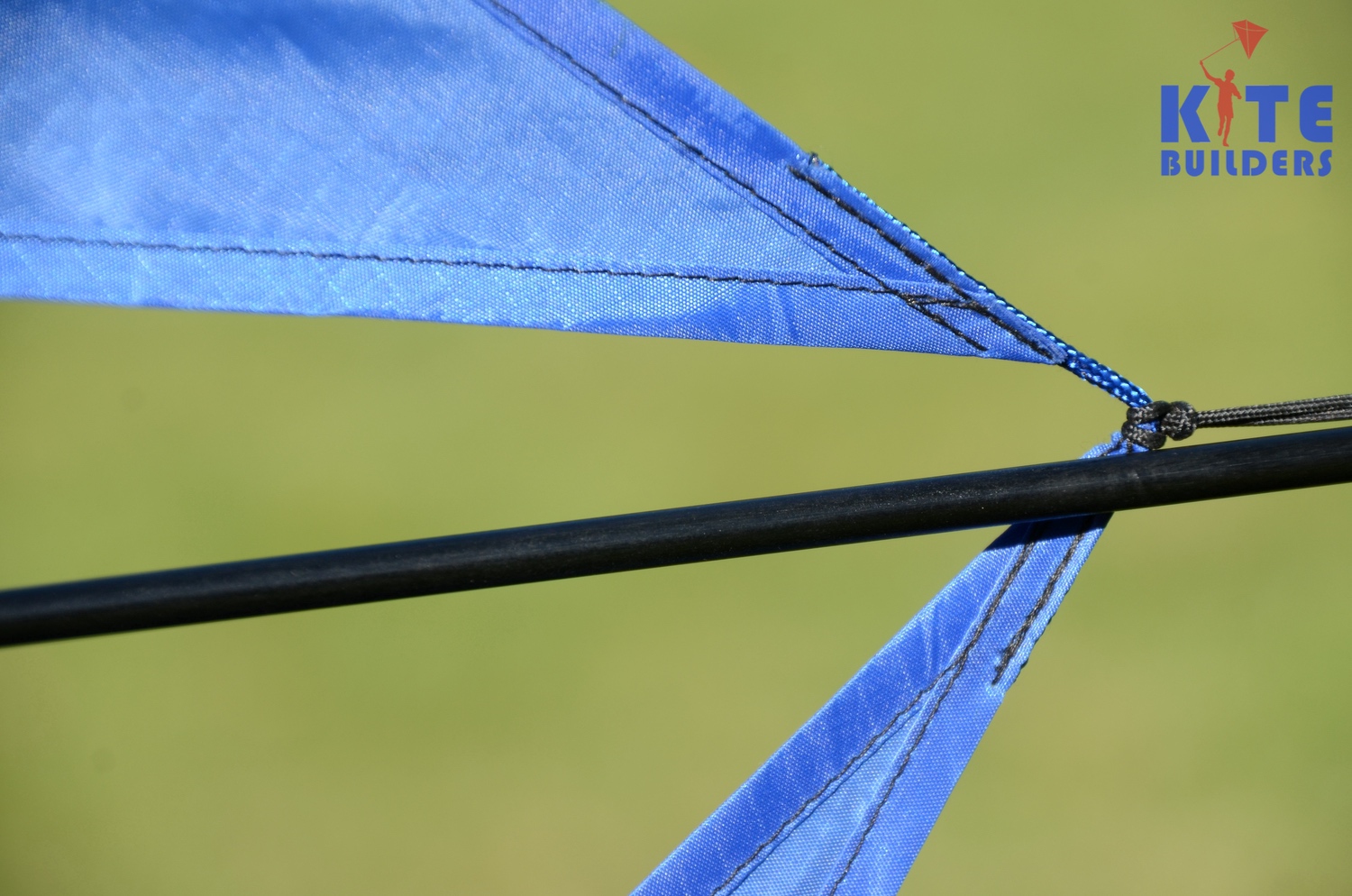
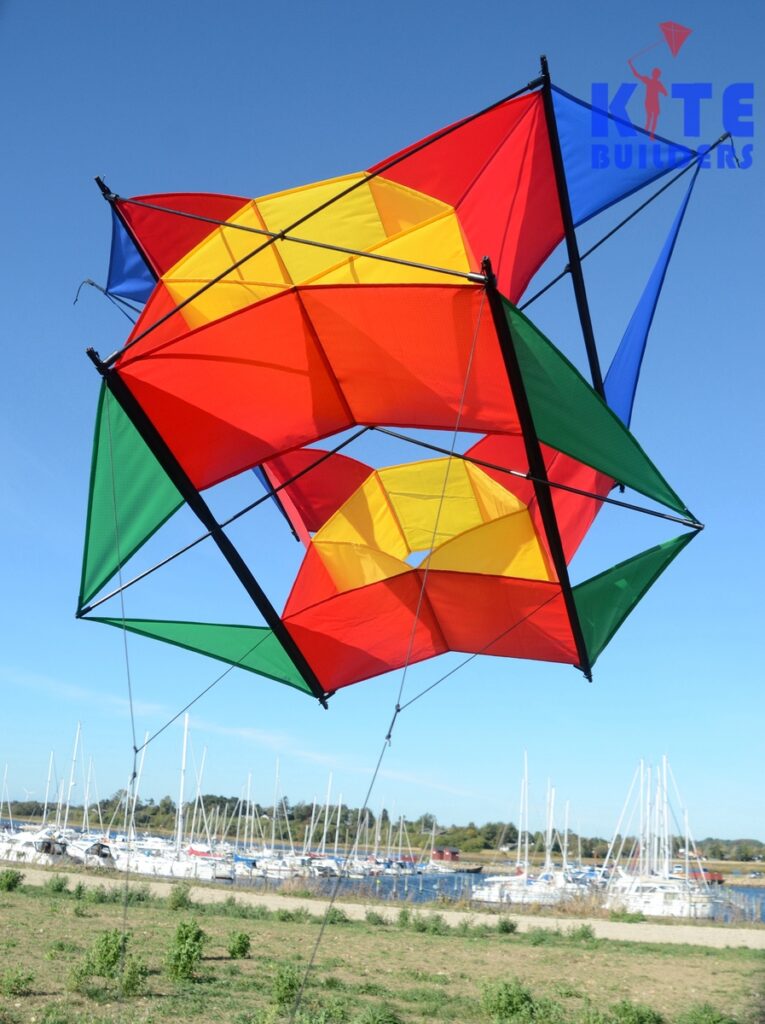
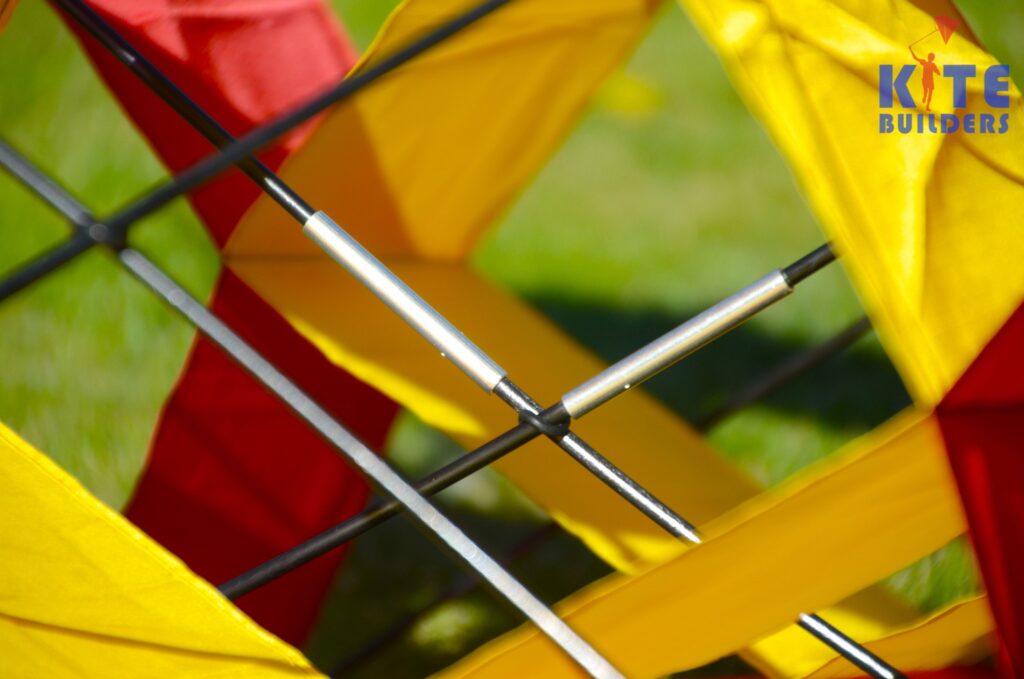
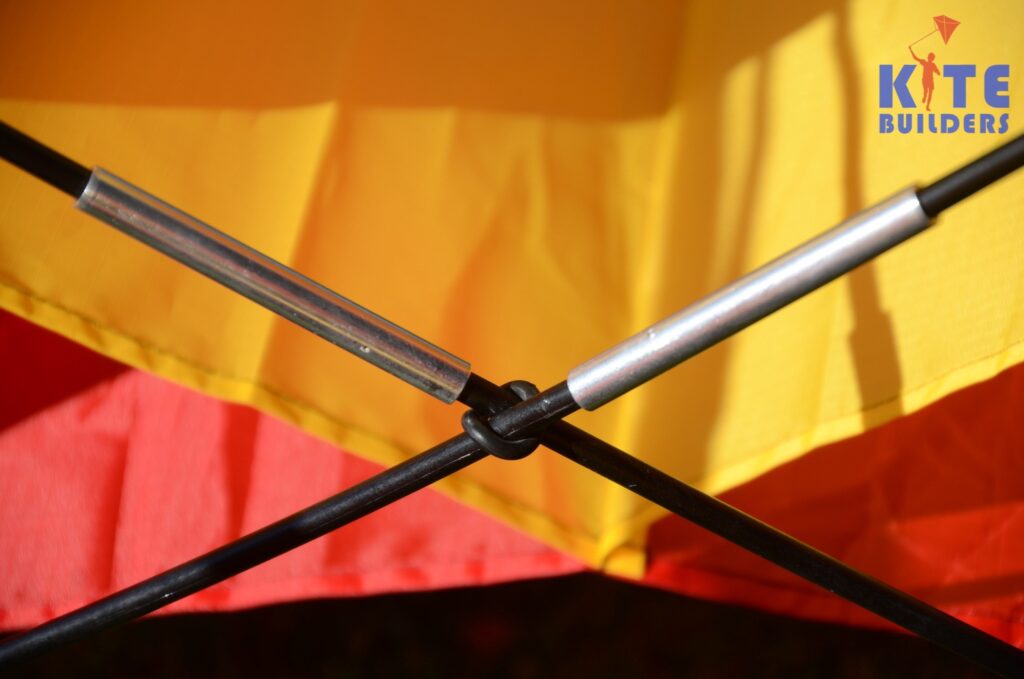
Die KonstruktionVier Hochstäbe geben dem Kasten seine vertikale Struktur. Sie sind in Dacron-Taschen eingefasst, was nicht nur sauber aussieht, sondern auch eine sehr haltbare Lösung ist. In diese Dacron-Taschen sind die Laschen für die Querspreizen integriert. Dazu kommt eine große Spreize, die das Segel in Form bringt. Vorne und hinten sitzen weitere Spreizen, die den Kasten stabilisieren und seine Form halten. Außen laufen die Segel unten auf ein Spannkabel beziehungsweise oben auf eine Spannschnur, die ebenfalls eingestellt werden kann. Das Ganze ist konstruktiv sehr übersichtlich. Man sieht der Winged Box an, dass hier nicht einfach Stäbe zusammengesteckt wurden, sondern dass jemand darüber nachgedacht hat, wie die einzelnen Kräfte durch die Konstruktion laufen. Und genau da wird es richtig interessant. |
The ConstructionFour vertical spars give the box its basic structure. They are enclosed in Dacron sleeves, which is not only neat but also a very durable solution. The tabs for the cross spars are integrated into these Dacron sleeves. A large main spreader gives the sail its shape, while additional spreaders at the front and rear keep the box stable and maintain its geometry. The outer sail edges are tensioned against a lower tension line and, at the top, against an adjustable tension cord. The whole thing is remarkably straightforward from a construction point of view. You can see that this is not simply a matter of putting a few spars together. Someone has clearly thought about how the individual forces move through the structure. And that is where things get really interesting. |
|
|
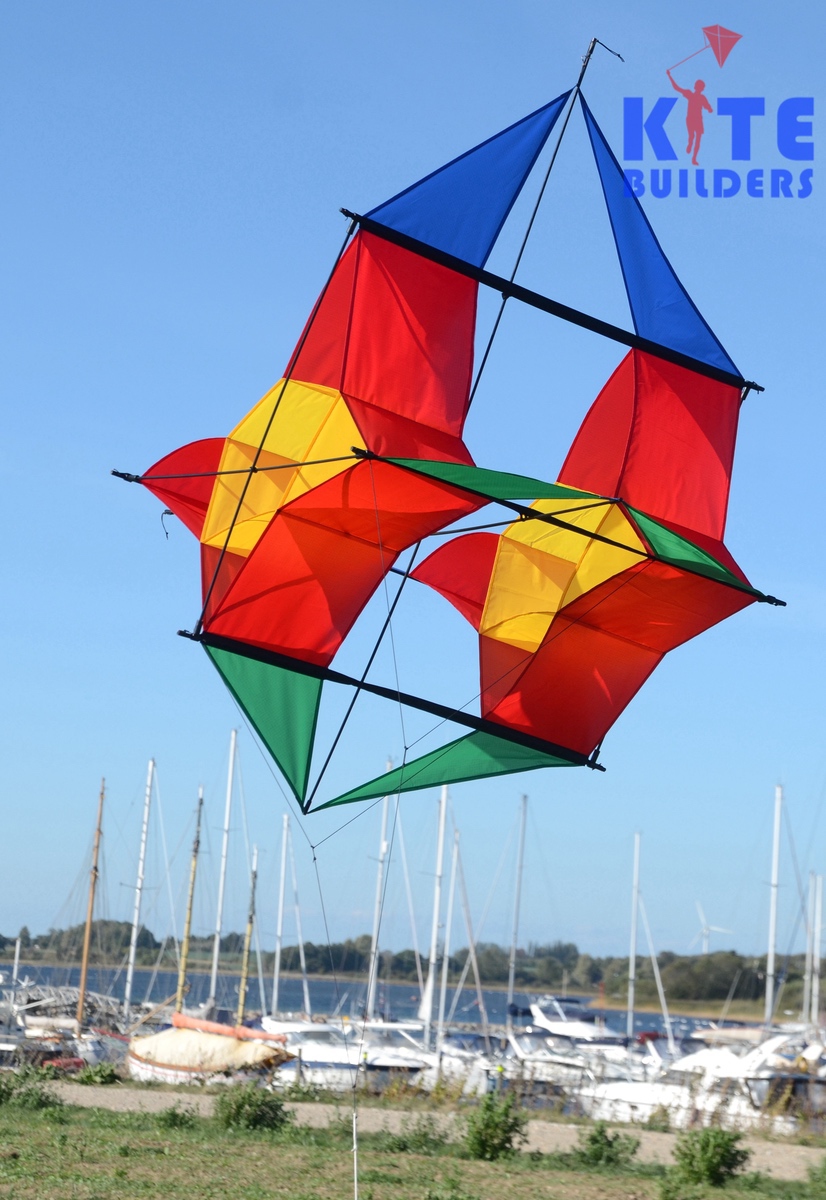
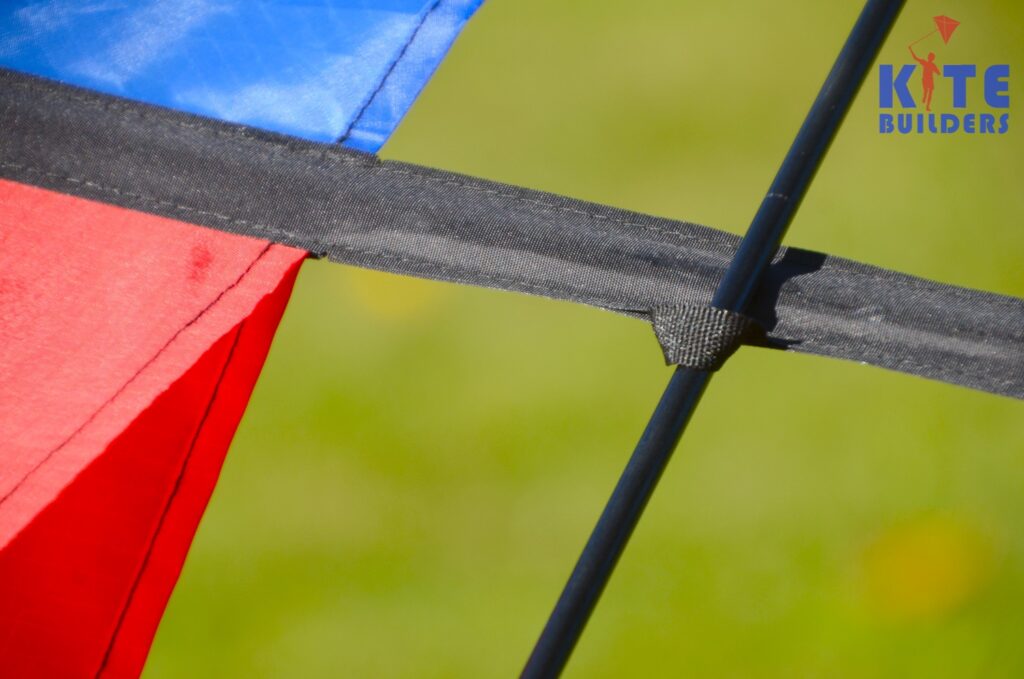
Kett und Schuss – genauer hinschauen lohnt sichWenn man sich die Ausrichtung von Kett und Schuss im Segel zum ersten Mal anschaut, wirkt sie nicht unbedingt stimmig. Man könnte zunächst denken, dass die Orientierung des Gewebes nicht konsequent der Form der einzelnen Segelflächen folgt. Aber genau das ist der Punkt. Schaut man sich an, welche Zugkräfte tatsächlich auf das Segel einwirken, verändert sich das Bild sehr schnell. Kett und Schuss folgen hier nicht einfach der sichtbaren Form des Segels. Sie orientieren sich an den Kraftvektoren, die innerhalb der Konstruktion entstehen. Und das finde ich genial. Denn damit wird das Material so ausgerichtet, dass es dort arbeitet, wo die Kräfte tatsächlich auftreten. Das ist eine dieser kleinen konstruktiven Entscheidungen, die man auf den ersten Blick leicht übersieht. Wenn man sie einmal erkannt hat, bekommt man plötzlich einen ganz anderen Blick auf den gesamten Drachen. Und ganz ehrlich: Bei deutlich teureren Drachen habe ich das in dieser Konsequenz so bisher noch nicht gesehen. Für mich ist das einer der spannendsten Punkte an der Winged Box.
|
Warp and Weft – Look a Little CloserWhen you first look at the orientation of the warp and weft in the sail, it doesn’t necessarily look right. At first, you might think that the orientation of the fabric does not consistently follow the shape of the individual sail panels. But that is precisely the point. Once you start looking at the actual tension forces acting on the sail, the whole thing suddenly makes sense. The warp and weft do not simply follow the visible shape of the sail. Instead, they follow the force vectors generated within the structure. And I think that is brilliant. The fabric is effectively oriented to work where the forces actually occur. This is one of those small design decisions that is easy to miss at first. Once you spot it, however, you suddenly see the whole kite differently. And honestly: I have not seen this done with quite the same consistency on considerably more expensive kites. For me, this is one of the most fascinating aspects of the Winged Box. |
|
|
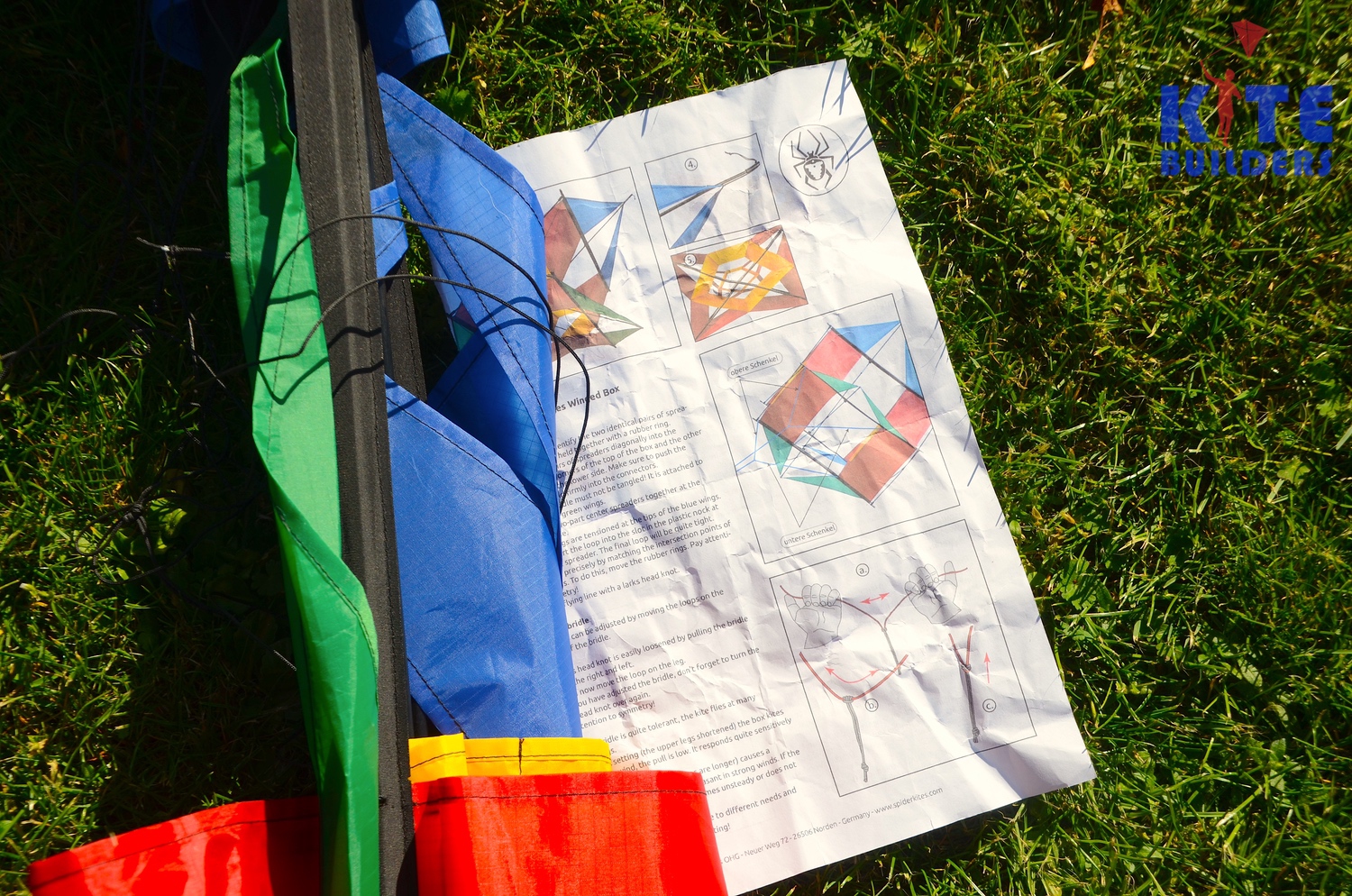
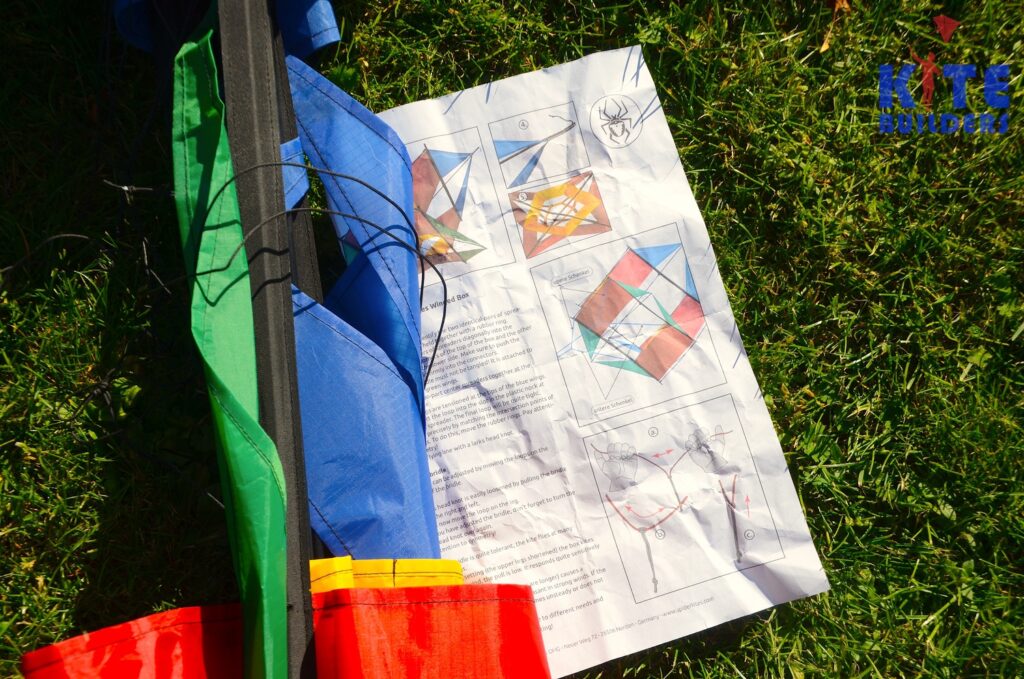
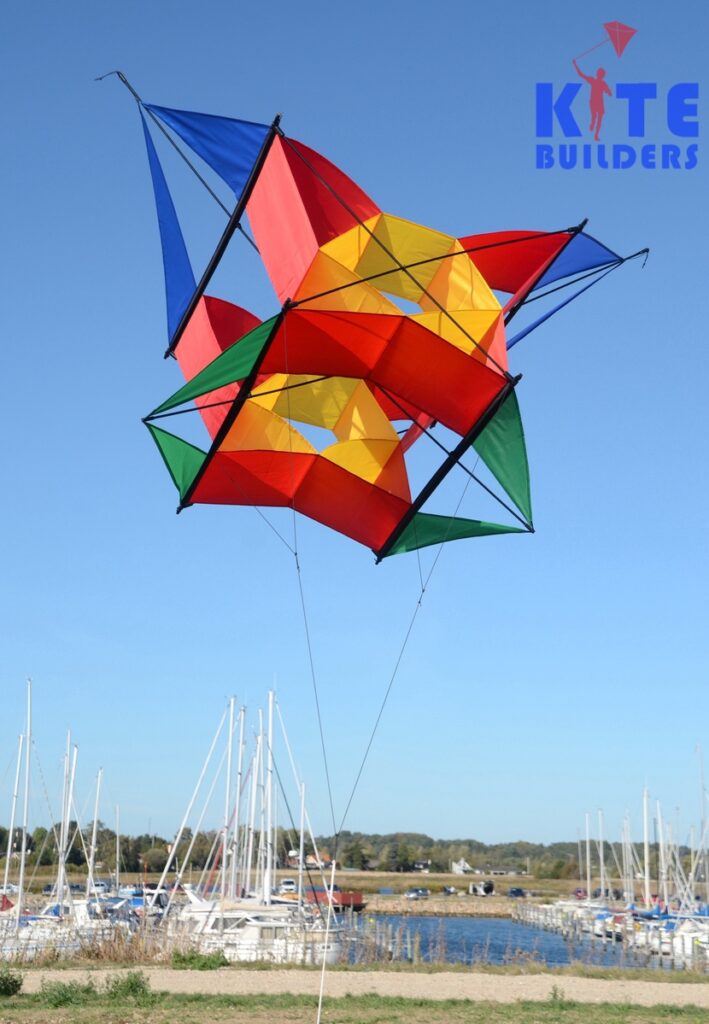
Der AufbauAuch beim Aufbau bleibt die Konstruktion angenehm übersichtlich. Vier Hochstäbe einsetzen, Spreizen einsetzen, Segel spannen, alles sauber ausrichten – und schon steht der Kasten. Dabei hilft Spiderkites dem Einsteiger erfreulich gut: Zum Drachen gehört eine Aufbauanleitung in deutscher und englischer Sprache. Gerade bei einem Kastendrachen finde ich das angenehm. Man muss nicht erst anhand irgendwelcher Bilder herausfinden, welcher Stab wohin gehört. Der Aufbau ist logisch und unkompliziert. Anfängertauglich? Absolut. Und das ist durchaus bemerkenswert. Denn der fertige Drachen sieht wesentlich komplizierter aus, als er tatsächlich aufzubauen ist. |
AssemblyThe construction remains pleasantly straightforward when it comes to assembly. Insert the four vertical spars, fit the spreaders, tension the sails, align everything properly – and the box is standing. Spiderkites also makes life particularly easy for newcomers: the kite comes with assembly instructions in both German and English. I appreciate that, especially with a box kite. You don’t have to work everything out from a handful of pictures or wonder which spar goes where. The assembly is logical and uncomplicated. Suitable for beginners? Absolutely. And that is quite remarkable. The finished kite looks considerably more complicated than it actually is to assemble. |
|
|
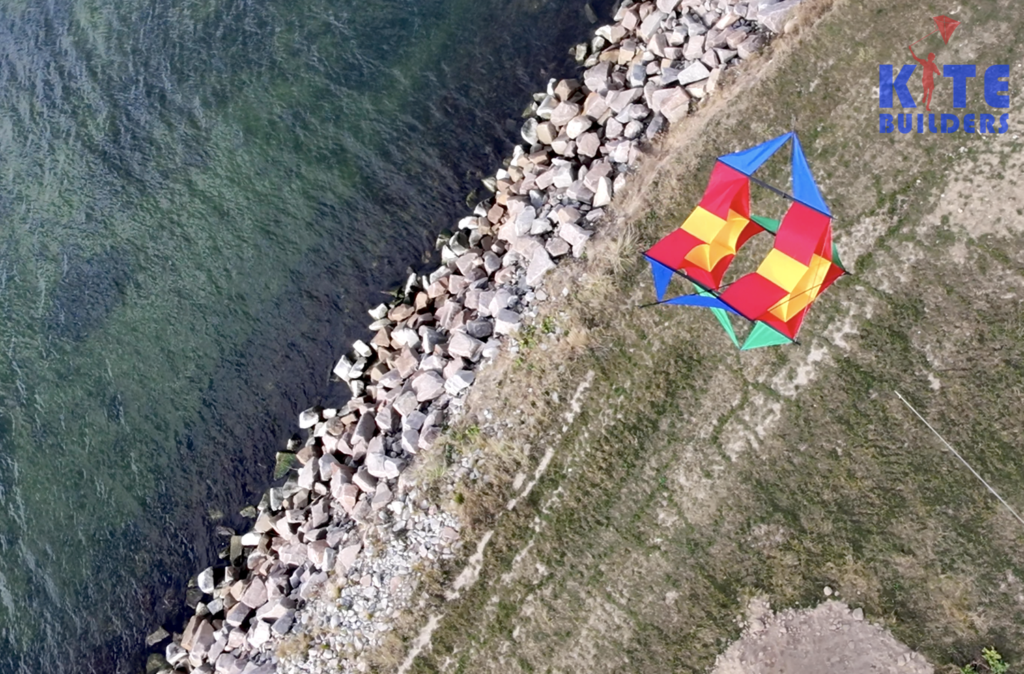
Die WaageBei der Waage wird es für mich etwas interessanter – und hier habe ich tatsächlich einen kleinen Kritikpunkt. Die vorhandene Waage bietet durchaus die Möglichkeit, den Anstellwinkel des Drachens zu verändern. Das ist grundsätzlich gut. Der Anstellwinkel wird allerdings über zwei Punkte eingestellt. Wenn ich den Anstellwinkel verändern möchte, müssen diese beiden Punkte exakt gleich verändert werden. Das ist machbar. Man muss nur wirklich darauf achten, dass beide Einstellungen hundertprozentig identisch sind. Das Rechts-/Links-Verhalten beziehungsweise Gierverhalten wird dagegen nur über einen einzelnen Punkt verändert. Und hier hätte ich mir die Konstruktion genau andersherum gewünscht. Aus meiner Sicht wäre es sinnvoller, das Gierverhalten über die beiden unteren Waagenebenen einzustellen und den Anstellwinkel über die obere Ebene. Denn in der Praxis werde ich wesentlich häufiger den Anstellwinkel an die Windbedingungen anpassen als das Gierverhalten des Drachens. Wenn ich also eine Sache nur an einem Punkt einstellen könnte, dann wäre das für mich eindeutig der Anstellwinkel. Die vorhandene Waage funktioniert. Und sie bietet einen durchaus großen Spielraum, um das Verhalten des Drachens an unterschiedliche Windverhältnisse anzupassen. Aber hier hätte man die Konstruktion meiner Meinung nach noch etwas eleganter lösen können. |
The BridleThe bridle is where things become a little more interesting for me – and this is where I do have one minor criticism. The existing bridle does allow you to change the kite’s angle of attack. That is fundamentally a good thing. The angle of attack is adjusted through two points. If I want to change it, both points have to be moved by exactly the same amount. That is perfectly workable. You simply have to make sure that the two adjustments are absolutely identical. The left/right behaviour, or yaw, on the other hand, is adjusted through a single point. And this is where I would have preferred the construction to work the other way around. Personally, I would rather have the yaw adjustment on the two lower bridle levels and the angle of attack on the upper level. The reason is simple: in practice, I am far more likely to adjust the angle of attack to suit the wind than I am to adjust the kite’s yaw behaviour. So if one of those adjustments is going to be controlled from a single point, I would definitely want that to be the angle of attack. The existing bridle works. It also provides a useful range of adjustment for different wind conditions. But in my view, this is one area where the design could have been made a little more elegant. |
|
|
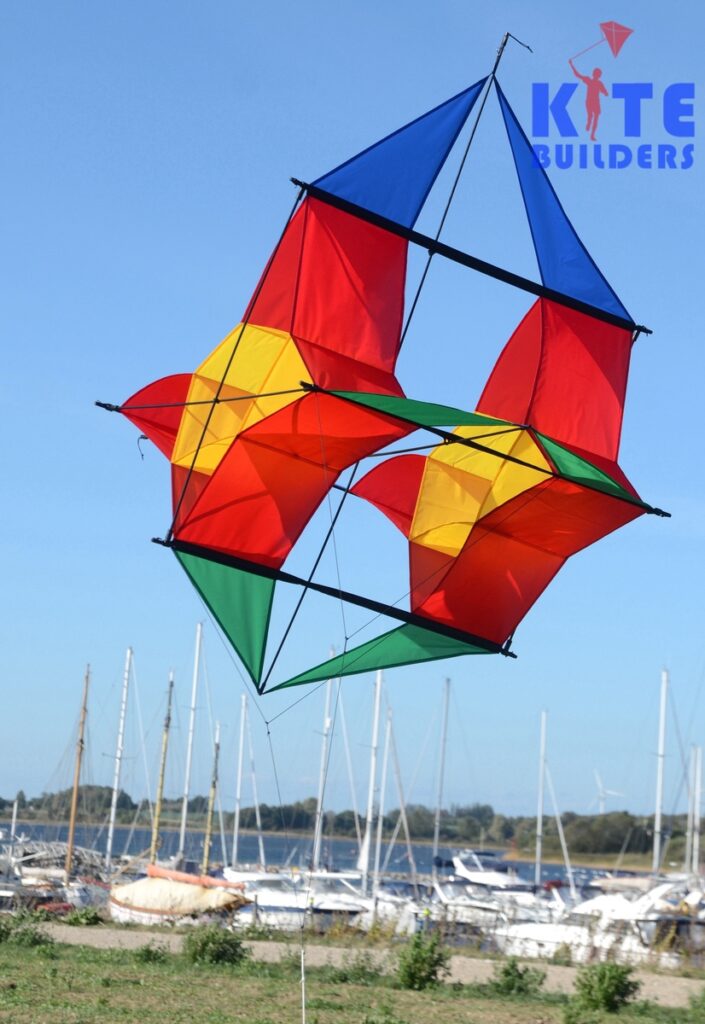
Spannung und StabilitätEin Kastendrachen funktioniert nur dann richtig, wenn seine Geometrie sauber steht. Die einzelnen Zellen müssen ihre Form halten, die Spreizen müssen die Kräfte aufnehmen und das Segel muss ausreichend Spannung bekommen. Die Winged Box ist dabei nicht so stramm gespannt wie beispielsweise ein Cody. Das fällt auf. Ich sehe darin allerdings keinen wirklichen Nachteil, denn die Winged Box muss gar nicht so stramm sein. Die Spannung ist für die Konstruktion völlig ausreichend. Der Kasten steht sauber, die Segelflächen bleiben in Form und das gesamte System wirkt stabil, ohne unnötig hart gespannt zu sein. Besonders gut gefällt mir dabei die Lösung mit den Dacron-Taschen. Die Hochstäbe sitzen geschützt und gleichzeitig stabil im Segel. Die Kräfte werden sauber in die Konstruktion eingeleitet, ohne dass man dafür irgendwelche aufwendigen Beschläge oder komplizierten Verbindungslösungen benötigt. Auch die Spreizen tragen dazu bei, dass der Kasten seine Form zuverlässig hält. Das Ganze fühlt sich nach dem Aufbau nicht wie ein empfindliches Gebilde an, das man bei jedem Handgriff mit Samthandschuhen anfassen muss. Im Gegenteil. Die Winged Box vermittelt einen robusten und belastbaren Eindruck. Und wieder passt die Materialwahl dazu. 6-mm-Fiberglas ist kein spektakuläres High-End-Gestänge. Für diese Konstruktion ist es aber eine sehr vernünftige Wahl: ausreichend stabil, robust, preislich angemessen und unkompliziert im Umgang. |
Tension and StabilityA box kite only works properly if its geometry is right. The individual cells have to maintain their shape, the spreaders have to carry the loads and the sail needs sufficient tension. The Winged Box is not tensioned quite as tightly as, for example, a Cody. You notice that. I don’t consider this a real disadvantage, though, because the Winged Box simply doesn’t need to be tensioned that tightly. There is plenty of tension for the job. The box stands properly, the sail panels retain their shape and the whole structure feels stable without being unnecessarily rigid. I particularly like the solution with the Dacron sleeves. The vertical spars are protected while also being held securely within the sail. The loads are transferred cleanly into the structure without requiring elaborate fittings or complicated connection systems. The spreaders also do their job well, keeping the box in shape. Once assembled, the kite does not feel like a delicate structure that has to be handled with kid gloves. Quite the opposite. The Winged Box feels robust and capable of taking some punishment. And once again, the choice of materials makes sense. Six-millimetre fibreglass is hardly exotic high-end technology. For this particular construction, however, it is a very sensible choice: sufficiently strong, robust, affordable and easy to handle. |
|
|
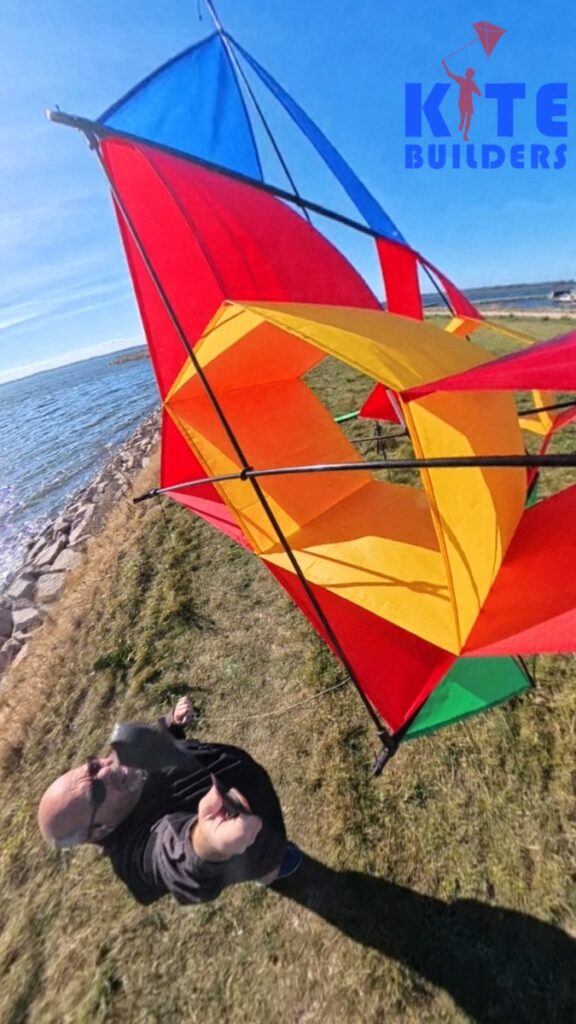
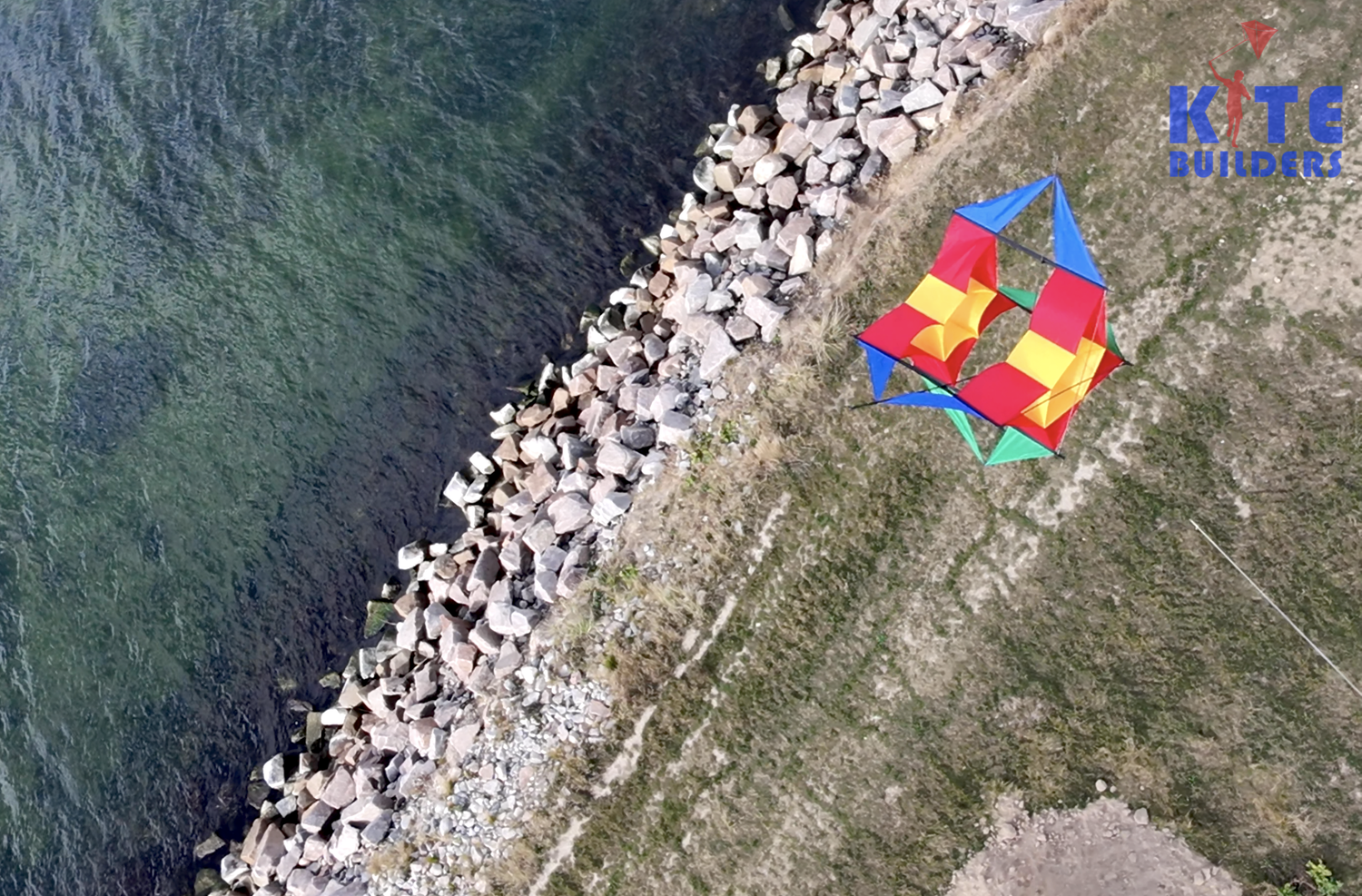
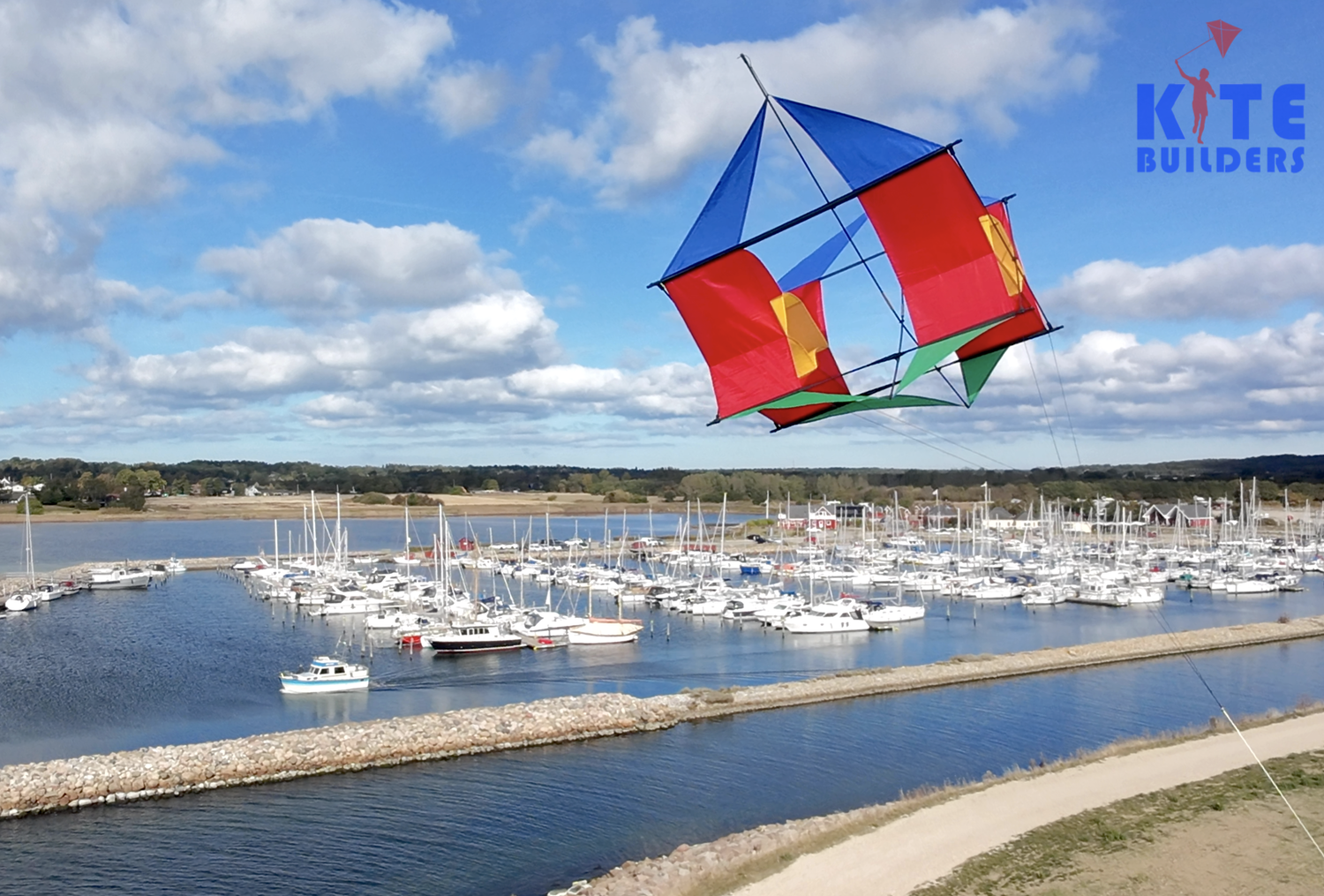
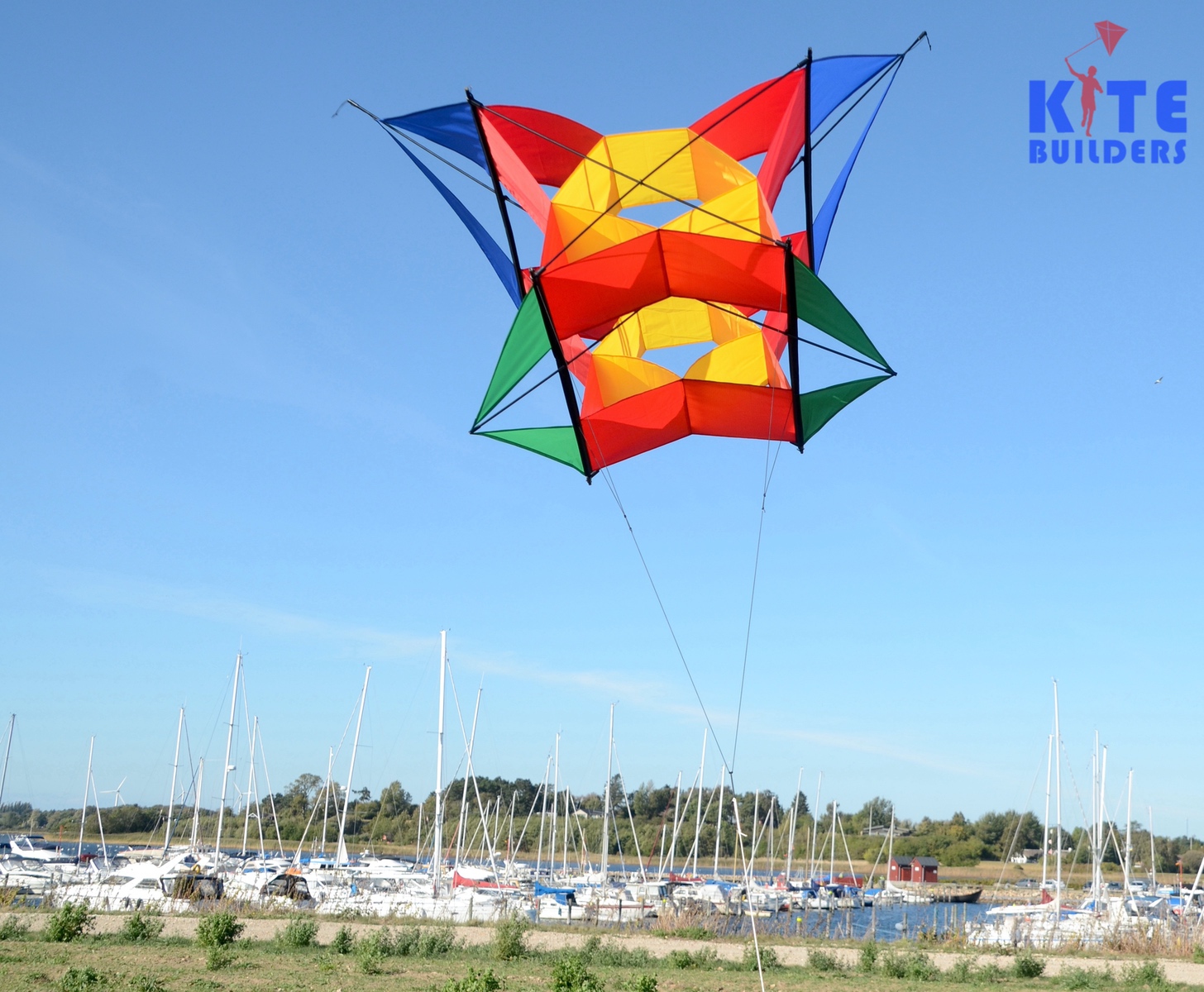
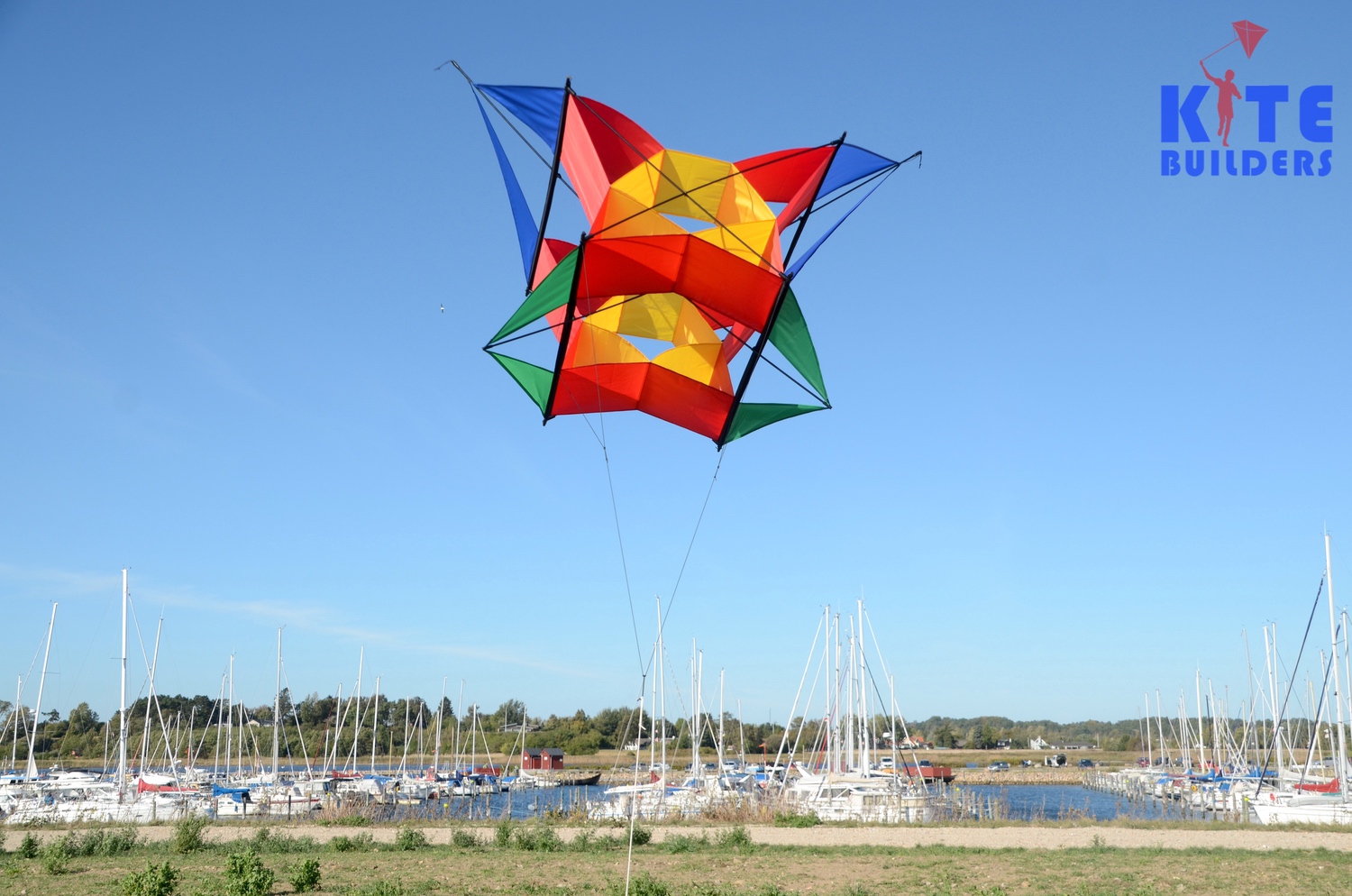
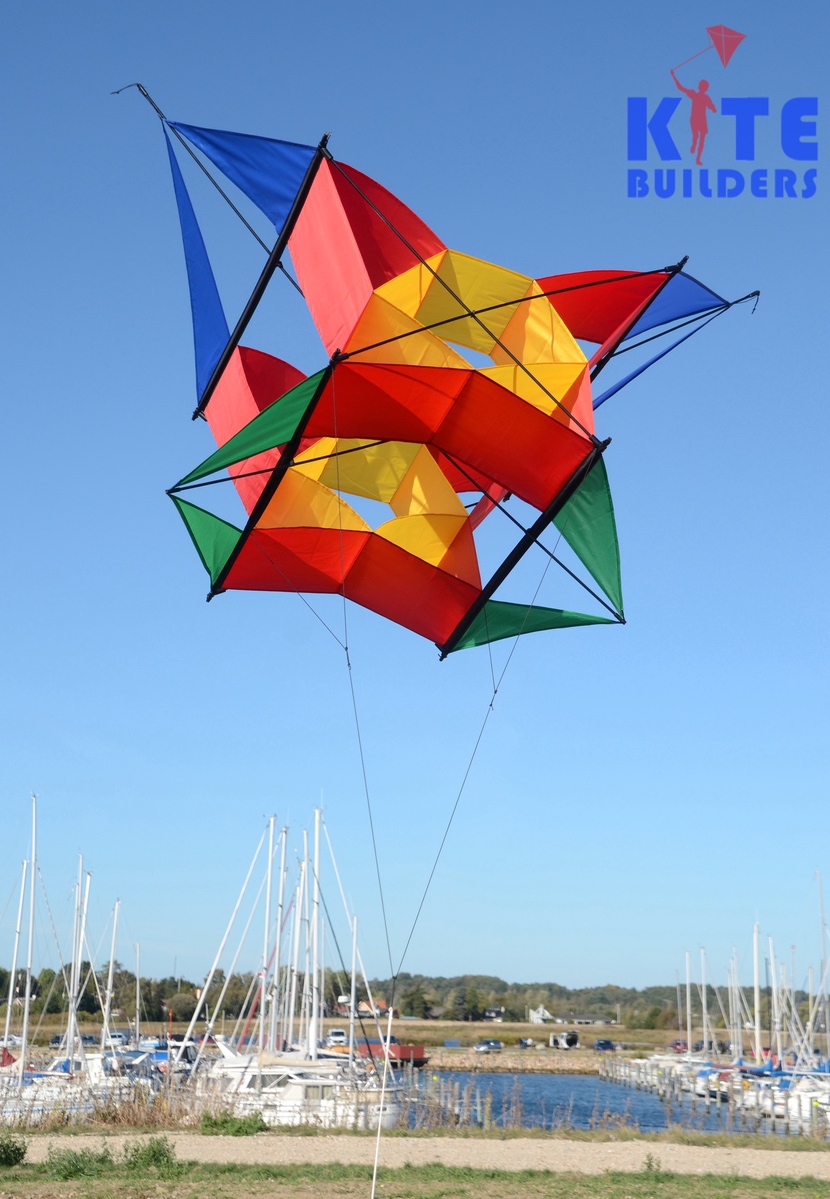
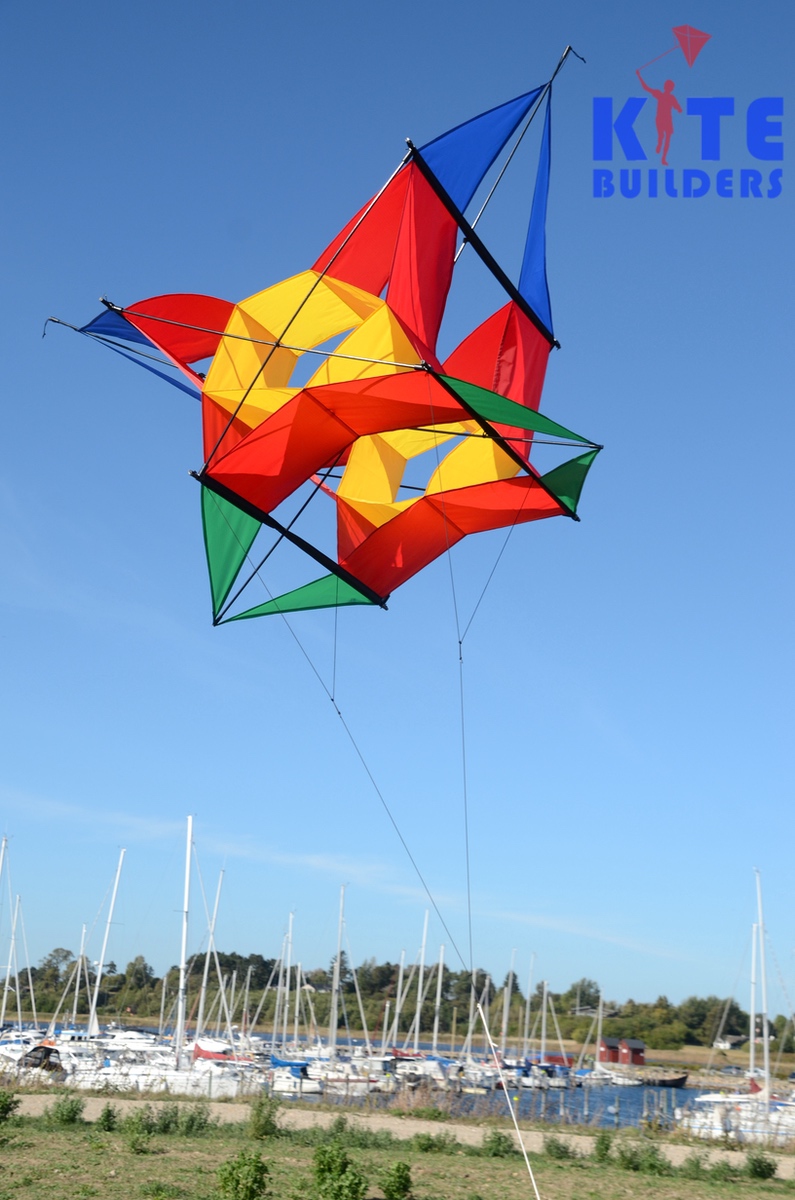
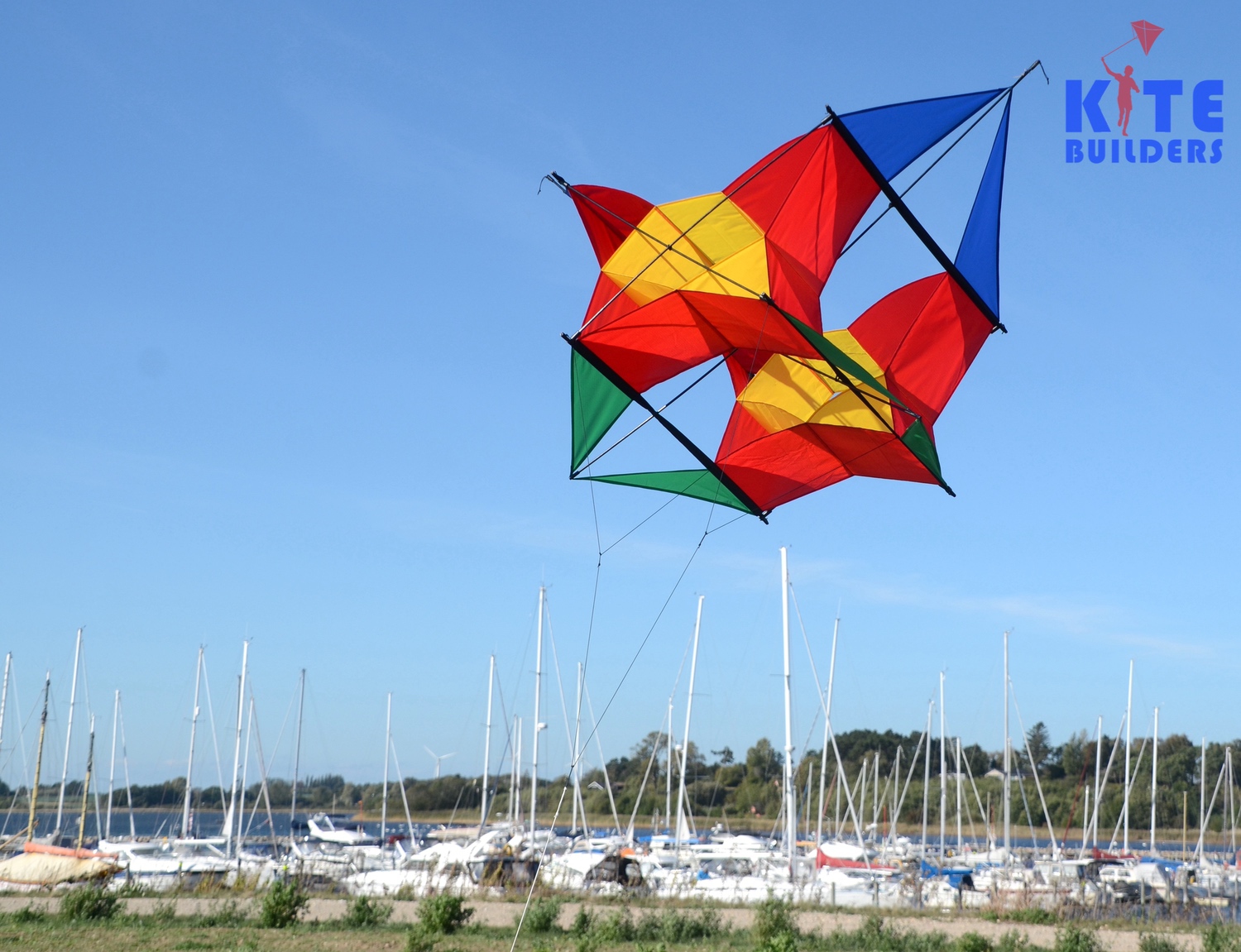
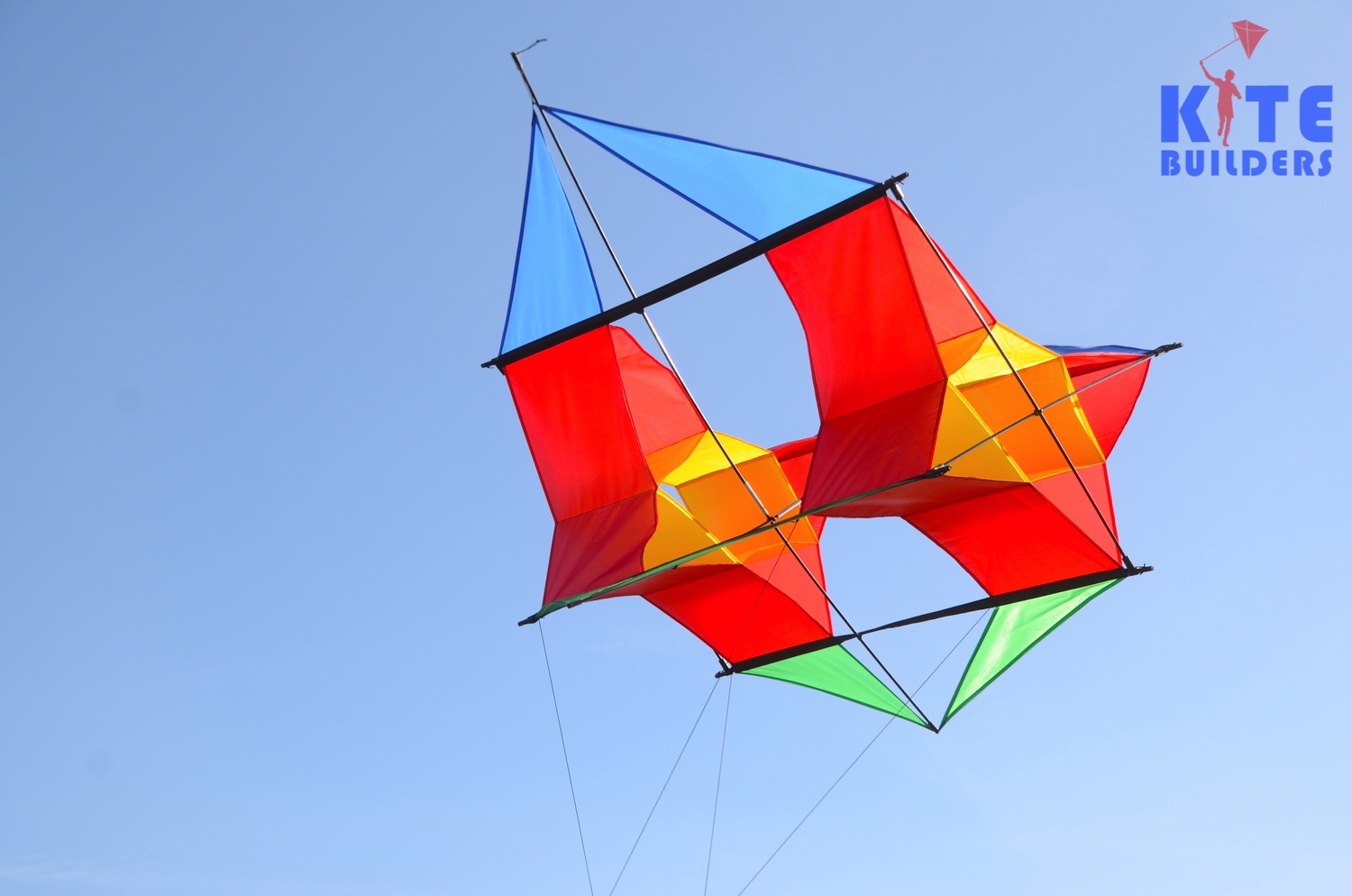
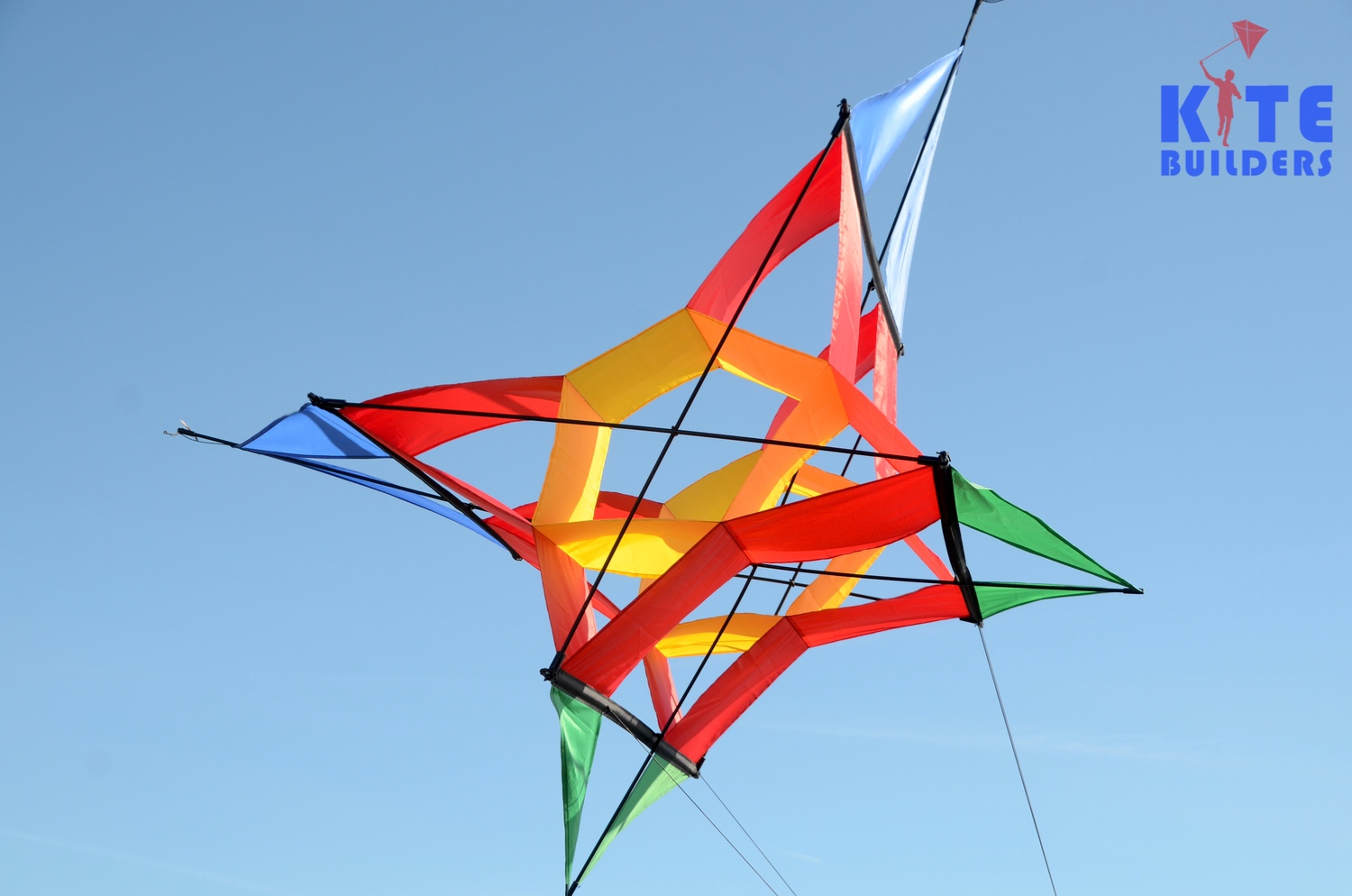
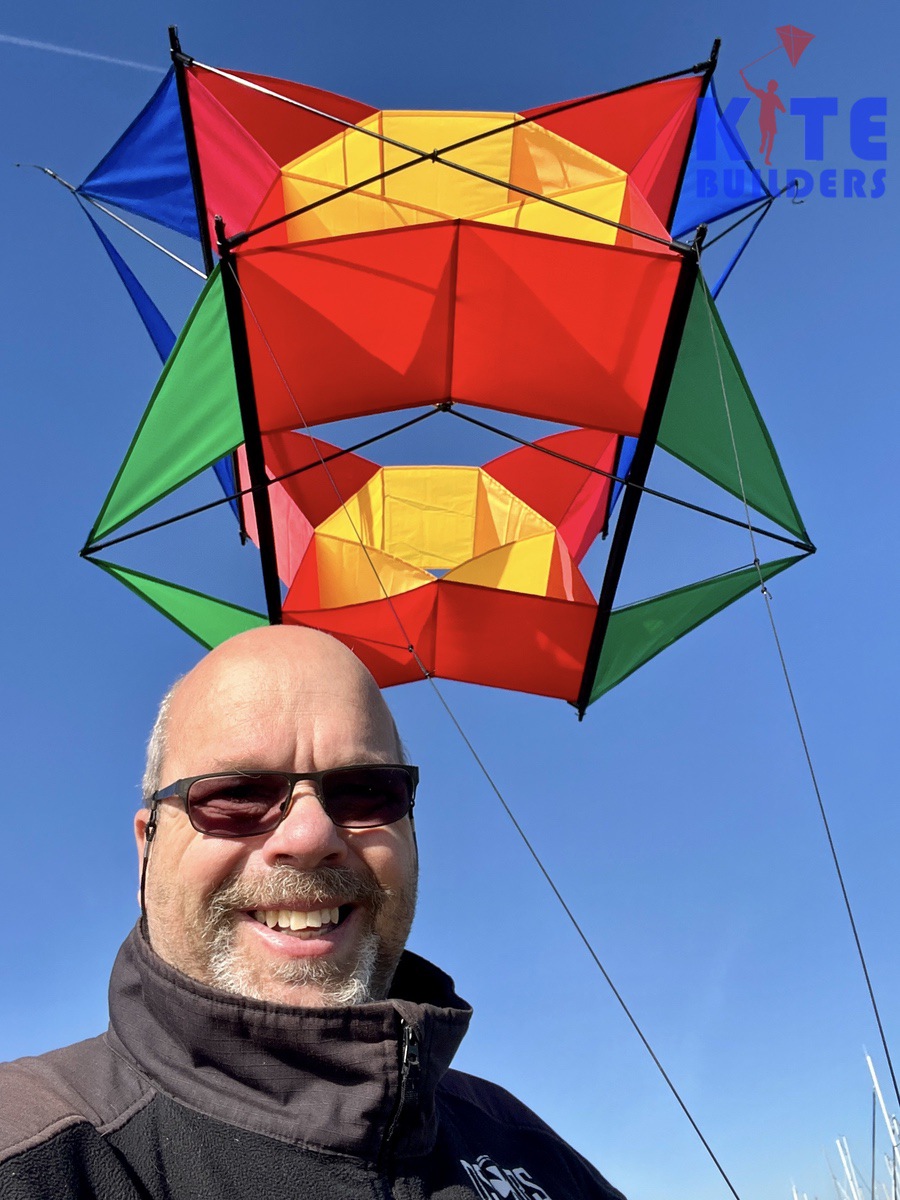
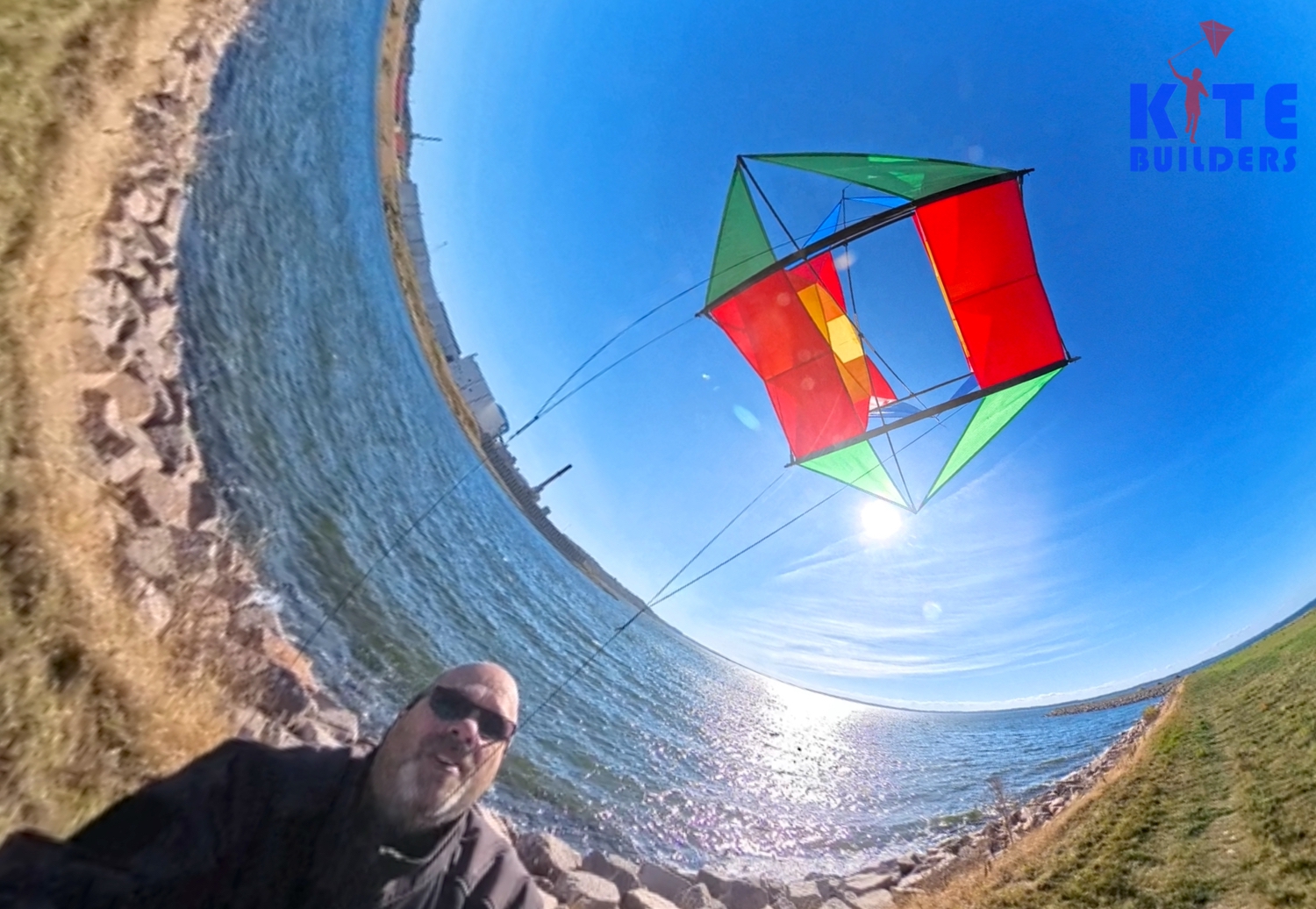
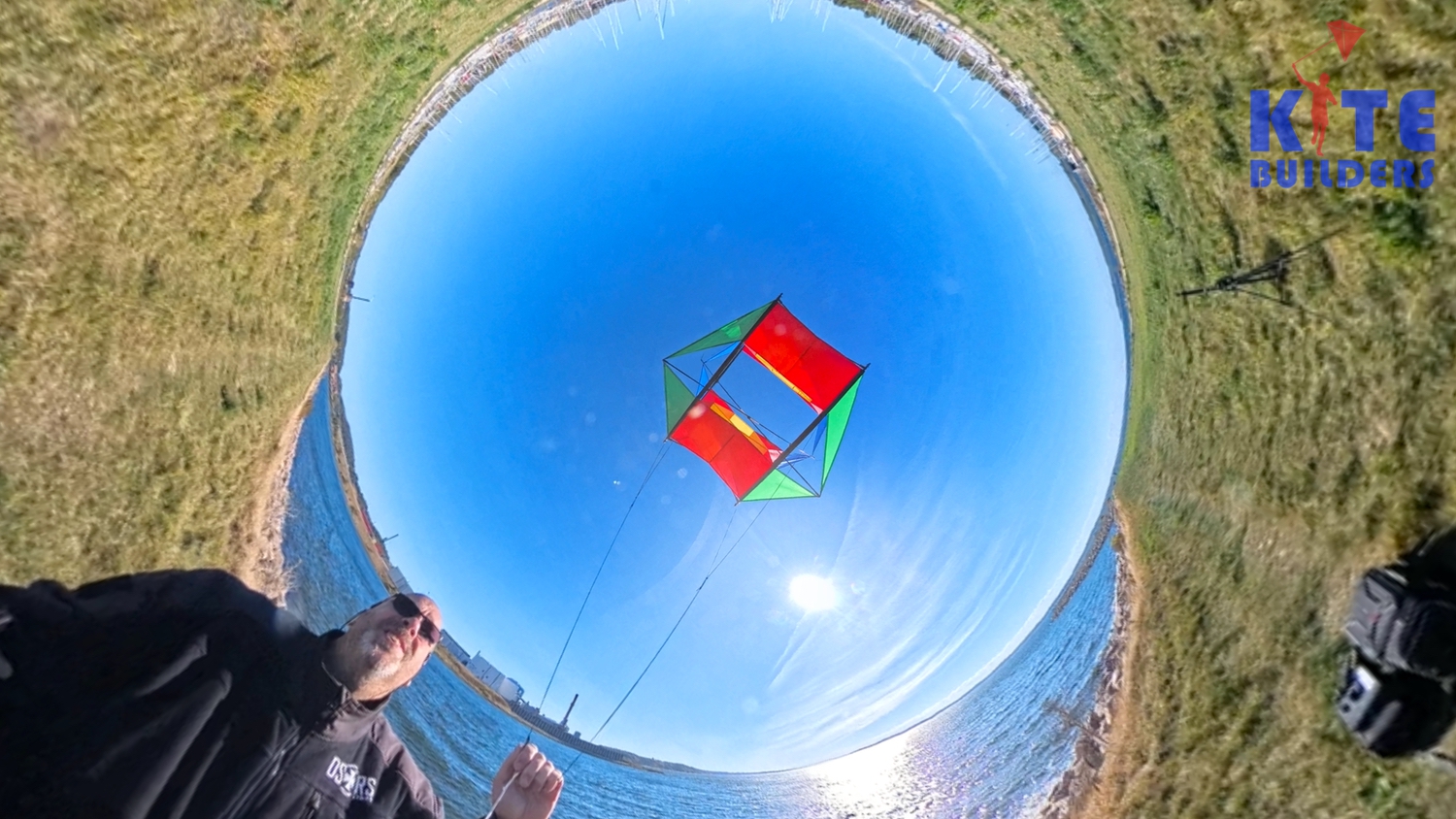
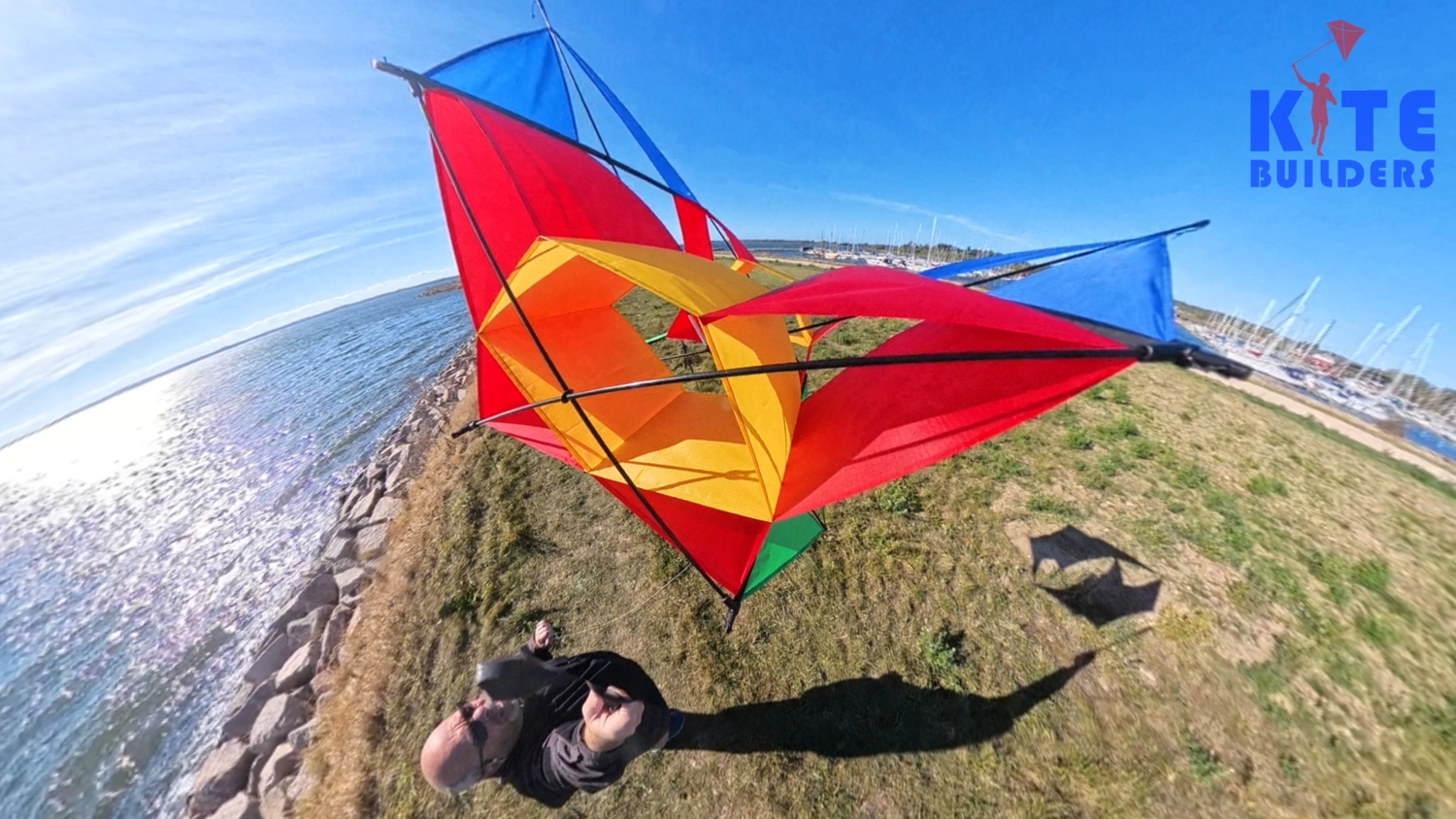
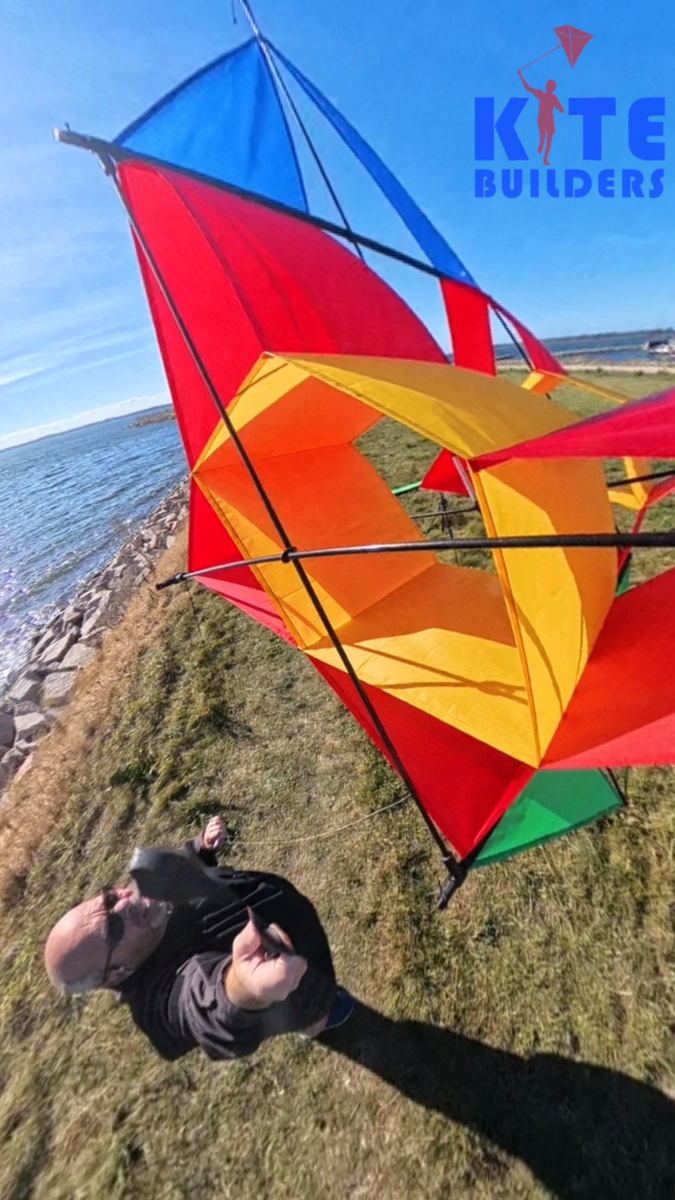
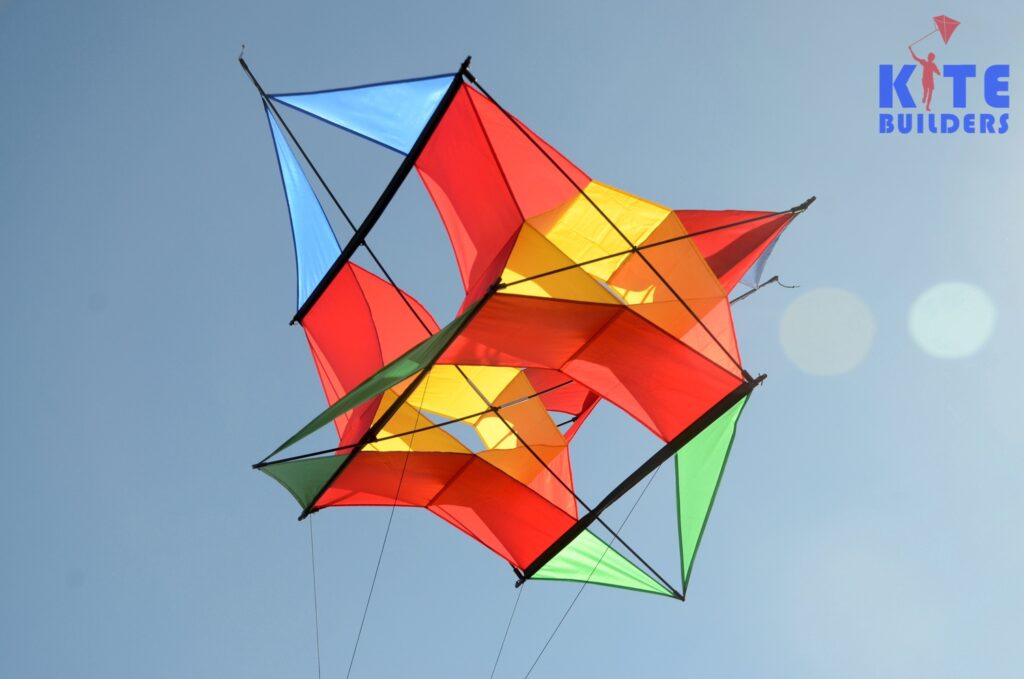
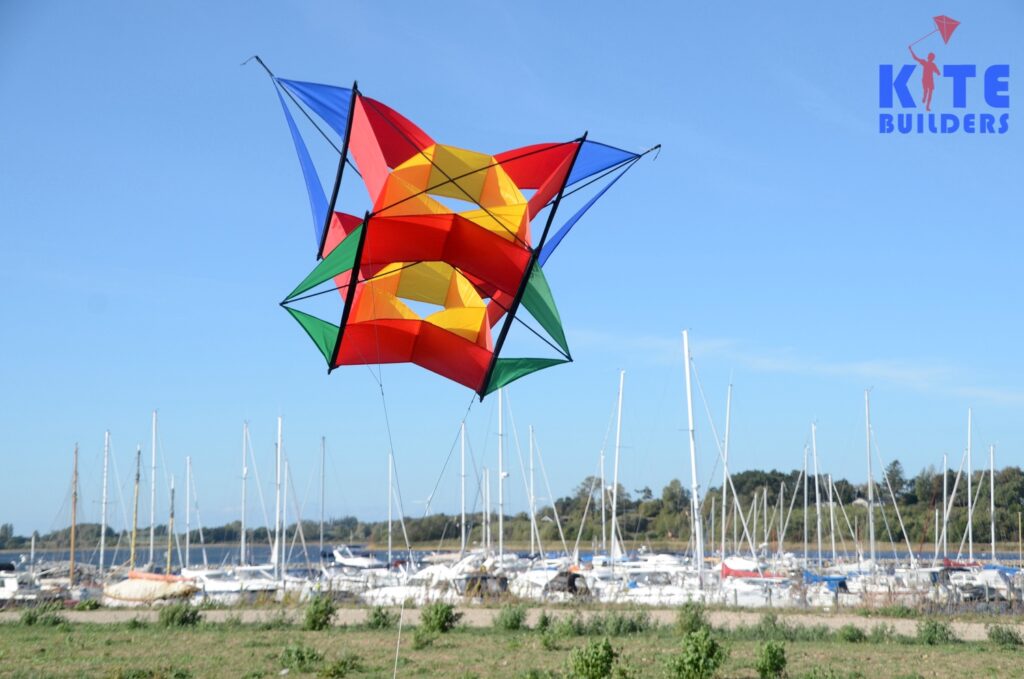
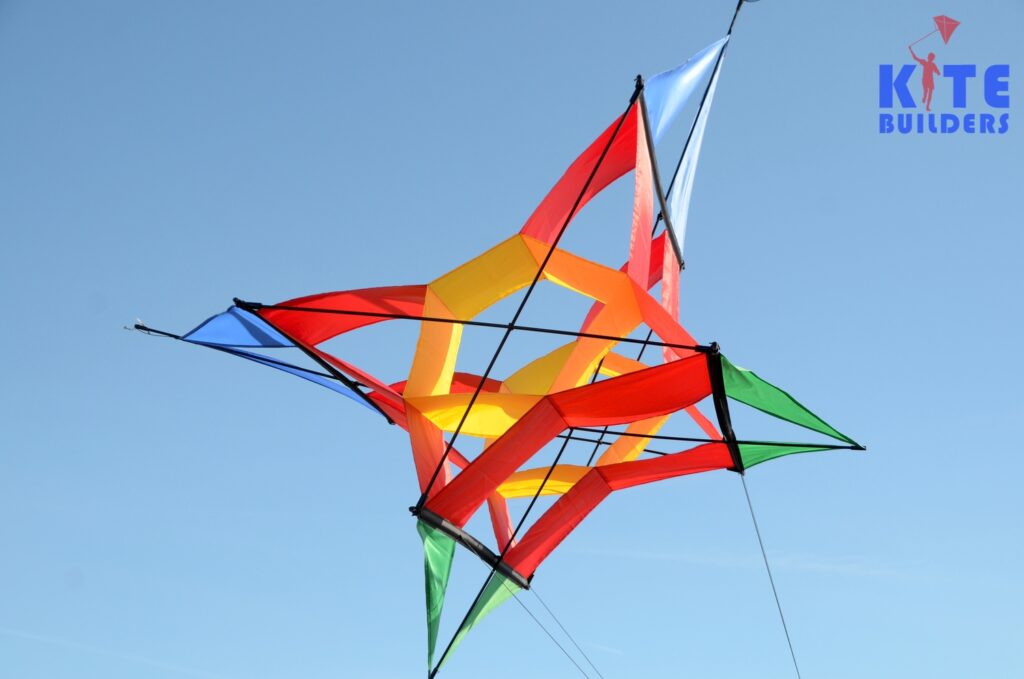
Und wie fliegt sie?Jetzt wird es persönlich. Für mich ist die Winged Box ein Top-Allrounder. Der von Spiderkites angegebene Windbereich von 2 bis 5 Bft. passt aus meiner Erfahrung sehr gut. Der Drachen lässt sich ohne großen Aufwand an den Himmel stellen und macht dort genau das, was ich mir von einem guten Kastendrachen wünsche: Er steht zuverlässig und ist dabei ein echter Hingucker. Ich liebe das Schattenspiel in den Segeln. Genau das ist für mich einer der besonderen Reize von Kasten- und Zellendrachen. Je nachdem, aus welcher Richtung man auf die Winged Box schaut, verändert sich das Bild. Licht und Schatten wandern durch die Zellen, die verschiedenen Segelflächen treten unterschiedlich hervor und der Drachen sieht immer wieder ein bisschen anders aus. Man kann tatsächlich nicht müde werden, ihn aus verschiedenen Perspektiven zu beobachten. Und irgendwann steht man einfach da und genießt ihn. Das Schöne ist: Die Winged Box hat nicht nur ein breites Windspektrum. Sie hat auch ein breites Benutzerspektrum. Dieser Drachen überfordert keine Altersklasse und keine Wissensklasse. Man muss kein erfahrener Drachenflieger sein. Man muss kein Konstrukteur sein. Man muss sich nicht erst lange mit Kastendrachen beschäftigen, bevor man Freude an ihm haben kann. Man baut ihn auf, hängt ihn an die Leine und kann loslegen. Gleichzeitig ist er für jemanden wie mich interessant genug, dass ich mich mit seiner Konstruktion beschäftigen möchte. Und wenn man genauer hinschaut, entdeckt man eben Dinge wie die Ausrichtung von Kett und Schuss oder die Überlegung hinter der Waage. Das finde ich eine ausgesprochen gelungene Kombination. Ich habe eine Vorliebe für Kasten- und Zellendrachen. Das gebe ich offen zu. Aber so objektiv, wie es mir bei einem solchen Test eben möglich ist, betrachtet, macht mir die Winged Box richtig Spaß. |
So How Does It Fly?Now it gets personal. For me, the Winged Box is a top all-rounder. The 2–5 Bft. wind range specified by Spiderkites fits my experience very well. The kite can be put into the sky without much effort and does exactly what I want a good box kite to do: it sits there reliably and looks fantastic while doing it. I love the play of light and shadow across the sails. That is one of the particular attractions of box and cellular kites for me. Depending on where you stand, the Winged Box looks different. Light and shadow move through the cells, different sail surfaces become more or less prominent, and the kite keeps changing its appearance. You simply don’t get tired of watching it from different angles. And at some point, you just stand there and enjoy it. The great thing is that the Winged Box doesn’t just have a broad wind range. It also has a broad range of users. This kite does not overwhelm you, regardless of your age or your level of experience. You don’t need to be an experienced kite flyer. You don’t need to be a designer or engineer. You don’t need years of experience with box kites before you can enjoy it. Put it together, attach the line and fly it. At the same time, it is interesting enough for someone like me to want to look more closely at its construction. And when you do, you discover things such as the orientation of the warp and weft or the thinking behind the bridle. I think that is a very successful combination. I have a particular weakness for box and cellular kites. I freely admit that. But even allowing for that personal preference, and trying to be as objective as I can in a test like this, the Winged Box gives me a lot of fun. |
|
|
FazitDie Winged Box ist für mich ein schönes Beispiel dafür, dass eine gute Konstruktion nicht zwangsläufig kompliziert oder materialintensiv sein muss. Spiderkites hat hier sehr konsequent gearbeitet: Die Materialien sind sinnvoll gewählt, die Verarbeitung ist sauber, der Aufbau ist unkompliziert und die Konstruktion funktioniert. Besonders beeindruckt hat mich die Ausrichtung von Kett und Schuss. Was zunächst nicht ganz stimmig aussieht, wird bei genauerer Betrachtung zu einem konstruktiv ausgesprochen cleveren Detail: Das Gewebe orientiert sich an den auftretenden Kraftvektoren und nicht einfach an der sichtbaren Form der Segelflächen. Das ist für mich echte Konstruktionsarbeit. Die Waage könnte ich mir persönlich anders aufgebaut vorstellen. Die Möglichkeit, den Anstellwinkel über zwei exakt synchron zu verändernde Punkte einzustellen, während das Gierverhalten über einen einzelnen Punkt verändert wird, halte ich nicht für die optimale Lösung. Das bleibt allerdings ein Detail. Denn insgesamt ist die Winged Box ein ausgesprochen gelungener Kastendrachen. Sie ist robust, gut verarbeitet, einfach aufzubauen, fliegt in einem breiten Windbereich und sieht am Himmel großartig aus. Und dann ist da noch der Preis. 79 Euro. Für dieses Geld bekommt man einen Drachen, der nicht nur funktioniert, sondern Freude macht. Für mich ist die Winged Box deshalb mein persönlicher „Volkskasten“. Ein Kastendrachen für eigentlich jeden. Und einer, den ich immer wieder gerne an den Himmel stelle. |
ConclusionFor me, the Winged Box is a great example of how a good design does not necessarily have to be complicated or material-intensive. Spiderkites has been remarkably consistent here: the materials are sensibly chosen, the workmanship is clean, the assembly is straightforward and the construction works. What impressed me most is the orientation of the warp and weft. What initially looks slightly odd turns out, on closer inspection, to be a very clever piece of engineering: the fabric follows the actual force vectors rather than simply following the visible shape of the sail panels. To me, that is genuine kite design. I would personally prefer the bridle to be arranged differently. Having to adjust two points in perfect synchronisation to change the angle of attack, while yaw is controlled from a single point, is not the solution I would have chosen. But that remains a detail. Overall, the Winged Box is a very successful box kite. It is robust, well made, easy to assemble, flies across a broad wind range and looks fantastic in the sky. And then there is the price. €79. For that money, you get a kite that doesn’t just work – it is genuinely enjoyable to fly. For me, the Winged Box is therefore my personal “people’s box kite”. A box kite for pretty much everyone. And one I will happily put back into the sky again and again. |