|
 |
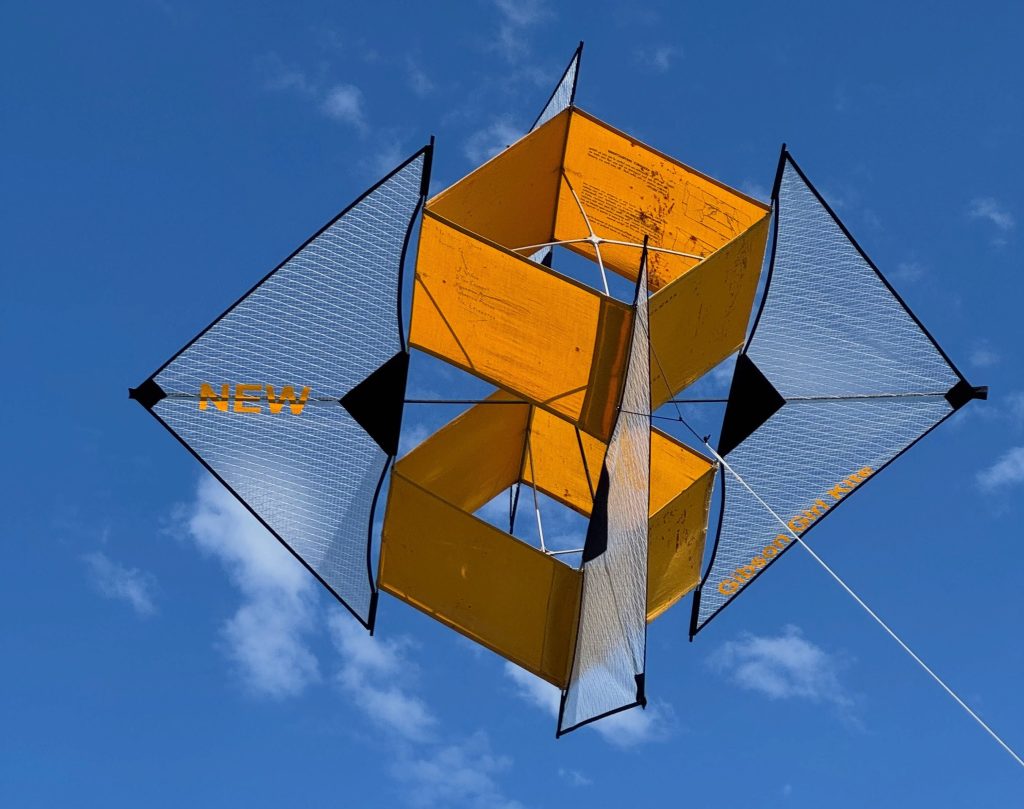
Darf Geschichte fliegen?Vom Gibson Girl, einem Aufschrei und der Frage, wem die Vergangenheit gehörtEs gibt Dinge, bei denen man in der Drachenszene besser zweimal überlegt, bevor man sie anfasst. Historiker gegen Künstler. Kurz gesagt: Der Drachen fliegt – und die Gemüter gehen hoch. Ich muss gestehen: Ich finde das ziemlich spannend. Und ich finde Rainers Idee ziemlich gut. |
Keep Your Hands Off the Original?Kites, Heritage Guardians and the Art of Thinking ForwardThere are certain things in the kite world that you really should think twice about before touching. Historians versus artists. In short: the kite is flying – and tempers are rising. I have to admit: I find that rather fascinating. And I rather like what Rainer has done. |
|
|
Erst einmal: Was zum Teufel ist ein Gibson Girl?Das Gibson Girl gehört zu den faszinierendsten Kapiteln der Drachengeschichte. Während des Zweiten Weltkriegs gehörte ein zusammenklappbarer Boxdrachen zu einem amerikanischen Seenotfunk-Set. Der Drachen sollte die Antenne des Notfunksenders in die Höhe bringen. Die Flugleine war dabei gleichzeitig die Antenne. Wenn kein ausreichender Wind vorhanden war, konnte alternativ ein Ballon verwendet werden. Der Name „Gibson Girl“ bezog sich ursprünglich nicht auf den Drachen, sondern auf das charakteristisch taillierte Gehäuse des Funkgeräts BC-778/SCR-578. Seine Form erinnerte an die von Charles Dana Gibson geprägte Darstellung des damaligen weiblichen Schönheitsideals: schmale Taille, ausgeprägte Hüfte – die berühmte Gibson-Girl-Silhouette. Der Name wanderte später gewissermaßen vom Funkgerät zum gesamten Rettungssystem – und schließlich auch zum dazugehörigen Drachen. Und dieser Drachen war alles andere als ein Spielzeug. Er war ein Stück Überlebenstechnik. |
First things first: What the hell is a Gibson Girl?The Gibson Girl is one of the most fascinating chapters in kite history. During the Second World War, a collapsible box kite formed part of an American emergency radio system. The kite was used to raise the antenna of the emergency transmitter into the air. The flying line itself served as the antenna. If there wasn’t enough wind, a balloon could be used instead. The name “Gibson Girl” originally referred not to the kite, but to the characteristic waist-shaped casing of the BC-778/SCR-578 emergency transmitter. Its shape was inspired by the female beauty ideal popularised by Charles Dana Gibson: a tiny waist and pronounced hips – the famous Gibson Girl silhouette. The name somehow migrated from the radio itself to the entire survival system – and eventually to the kite that went with it. And this was no toy. It was a piece of survival technology. |

|
|
Und dann kam RainerRainer Hoffmann ist nun wirklich niemand, der gestern seinen ersten Drachen gebaut hat. Der gebürtige Husumer beschäftigt sich seit Jahrzehnten mit Drachen, Wind und bewegten Objekten. Die Stadt Husum stellte 2022 sogar eine eigens von ihm entwickelte Ausstellung mit großformatigen Luftobjekten aus. Und auch seine Karriere als Drachendesigner ist alles andere als unbedeutend: Rund 300 Drachen hatte Hoffmann bereits vor Jahren entworfen, zahlreiche davon gingen in die Serienproduktion. Rainer kennt also Drachen. Oder genauer gesagt: Er hat es stehen lassen. |
And then along came RainerRainer Hoffmann is hardly someone who built his first kite yesterday. The Husum-based designer has spent decades working with kites, wind and moving structures. His career as a kite designer is anything but insignificant: he has designed hundreds of kites, many of which have gone into serial production. Rainer knows kites. Or, to be more precise: He left it there. |

|
|
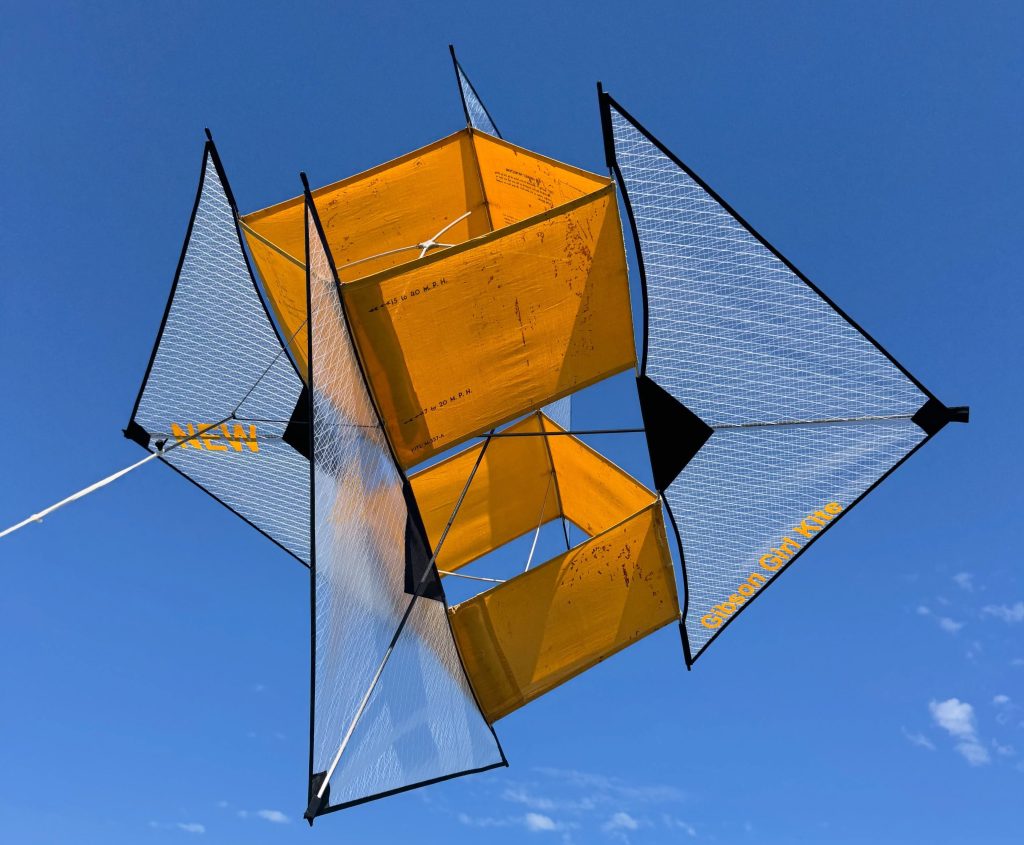
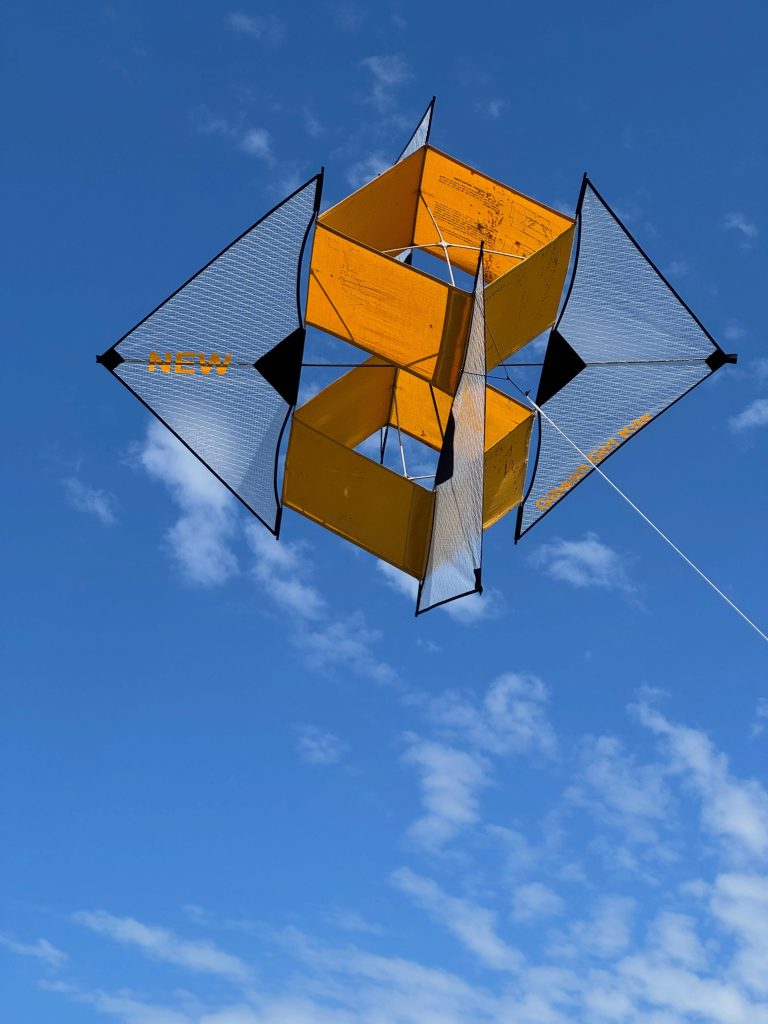
Alt bleibt alt – und bekommt trotzdem FlügelDas ist für mich der entscheidende Punkt. Schaut man sich Rainers Konstruktion an, sieht man in der Mitte den historischen Gibson-Girl-Boxdrachen. Der gelbe Kasten. Und dieser historische Kern wurde nicht einfach durch Carbon ersetzt. Und dann hat er ihm etwas hinzugefügt. Das Ergebnis ist deshalb weder ein restauriertes Gibson Girl noch ein neuer Drachen, der nur zufällig ein paar historische Teile spazieren fliegt. |
The old stays old – and still gets wingsThis, to me, is the crucial point. Look at Rainer’s construction and you can still clearly see the historic Gibson Girl box kite in the centre. The yellow box. And that historic core has not simply been replaced with carbon fibre. And then he added something. The result is therefore neither a restored Gibson Girl nor a completely new kite wearing a few historical accessories. And that, to me, is where the interesting discussion really begins. |

|
|
Original oder originell?Ich kann die Empörung der Historiker durchaus verstehen. Wenn ein wirklich seltenes historisches Artefakt verändert wird, ist das nicht banal. Genau deshalb arbeiten Museen bei historischen Flugzeugen oft mit großer Vorsicht. Das ist richtig. |
Original or just original-ish?I can actually understand the outrage from the historians. If you are dealing with a genuinely rare historical artefact, changing it is not a trivial matter. That is precisely why museums take enormous care when dealing with historic aircraft and other artefacts. Fair enough. |
|
|
Der Reichstag darf das. Warum der Drachen nicht?Nehmen wir den Reichstag. Und heute? Wir akzeptieren, dass ein historisches Gebäude eine neue Zeitschicht bekommen kann. |
The Reichstag gets to do it. Why shouldn’t the kite?Take the Reichstag in Berlin. And today? We accept that a historic building can acquire a new layer of time. |

|
|
Oder der Louvre. Da wurde auch erst gemeckert.Noch schöner ist die Geschichte der Glaspyramide vor dem Louvre. Heute ist die Pyramide eines der Wahrzeichen des Louvre. |
Or the Louvre. People complained there, too.The story of the glass pyramid at the Louvre is even better. Today, the pyramid is one of the symbols of the Louvre. Today, the pyramid is one of the defining landmarks of the Louvre. Which is actually rather remarkable. |

|
|
Und dann ist da noch KintsugiDie Japaner haben für eine ähnliche Frage schon vor Jahrhunderten eine bemerkenswerte Antwort gefunden. Kintsugi. Und vielleicht ist genau das auch der Gedanke hinter Rainers Gibson Girl. Es sagt: |
And then there is KintsugiThe Japanese have had a fascinating answer to a similar question for centuries. Kintsugi. A broken vessel isn’t repaired so that the repair becomes invisible. And perhaps that is exactly what is happening with Rainer’s Gibson Girl. They are saying: |

|
|
Carbon trifft WeltkriegIch gebe zu: Ich mag diesen Kontrast. Da sitzt mitten im Drachen ein Stück Technikgeschichte. Und genau deshalb funktioniert es für mich. |
Carbon meets World War III’ll admit it: I like the contrast. In the middle of the kite sits a piece of technological history. And that’s precisely why it works for me. |

|
|
Aber ist das dann noch ein Gibson Girl?Hier würde ich den Historikern sogar ausdrücklich Recht geben: Wenn man das neue Objekt als originalgetreues Gibson Girl aus dem Zweiten Weltkrieg verkaufen würde, wäre das natürlich etwas völlig anderes.
|
But is it still a Gibson Girl?Here I would actually agree with the historians: If someone presented the new object as an untouched, original Second World War Gibson Girl, that would obviously be a completely different matter. And that creates a clear dividing line: History isn’t a museum with a no-fly zonePerhaps that is where the real problem lies. We sometimes have this strange idea that history has to look historical. But why? |
|
|
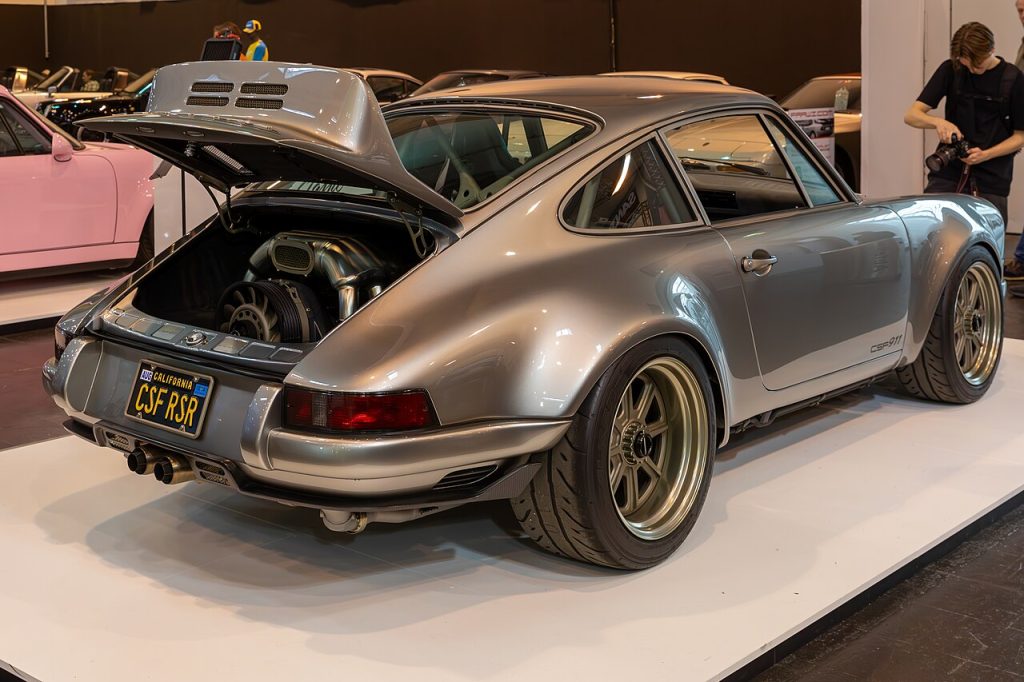
Und die Luftfahrt macht es ebenfallsAuch dort ist die Sache keineswegs schwarzweiß. Das finde ich bemerkenswert. Und genau diese Frage könnte man auch beim Gibson Girl stellen. |
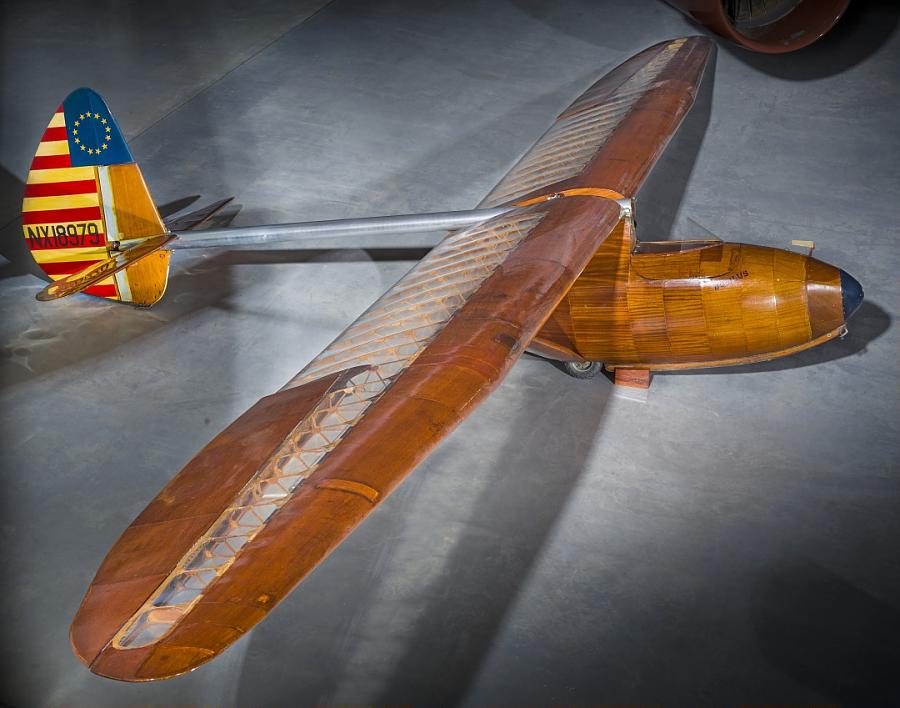
Aviation does it tooAnd aviation is no different. That’s rather interesting. And that is a perfectly reasonable question to ask about the Gibson Girl too. |
|
|
Drei Arten, mit Geschichte umzugehenVielleicht sollten wir deshalb drei Dinge unterscheiden. Der Restaurator sagt: „Ich möchte erhalten, was war.“ Der Rekonstrukteur sagt:„Ich möchte zeigen, wie es einmal war.“ Der Künstler sagt:„Ich möchte sehen, was daraus werden kann.“ Das Problem beginnt erst, wenn wir diese drei Dinge miteinander verwechseln. |
Three ways of dealing with historyPerhaps we should therefore distinguish between three different approaches. The conservator says:“I want to preserve what was.” The reconstructionist says:“I want to show what it once looked like.” The artist says:“I want to see what it could become.” The trouble starts when we confuse the three. |

|
|
Und genau deshalb bin ich bei RainerIch habe großen Respekt vor Menschen, die historische Drachen sammeln, dokumentieren und bewahren. Aber ich habe genauso großen Respekt vor jemandem, der sich ein historisches Objekt nimmt und fragt: |
And that’s exactly why I’m on Rainer’s sideI have enormous respect for people who collect, document and preserve historic kites. But I have just as much respect for someone who takes a historic object and asks: |

|
|
Darf man Geschichte weiterschreiben?Vielleicht ist das die eigentliche Frage hinter dem ganzen Streit. Nicht: Meine Antwort ist ziemlich eindeutig: Solange er nicht behauptet, das Ergebnis sei das unveränderte Original. Und vielleicht ist Rainers neuer Drachen genau das: Vielleicht ist das keine Verfälschung von Geschichte. Vielleicht ist es einfach: |
Are we allowed to rewrite history?Perhaps that is the real question behind the whole argument. Not: My answer is pretty straightforward: As long as they don’t pretend the result is the untouched original. And perhaps that is exactly what Rainer’s new kite is: Perhaps that’s not the falsification of history. Perhaps it is simply: |